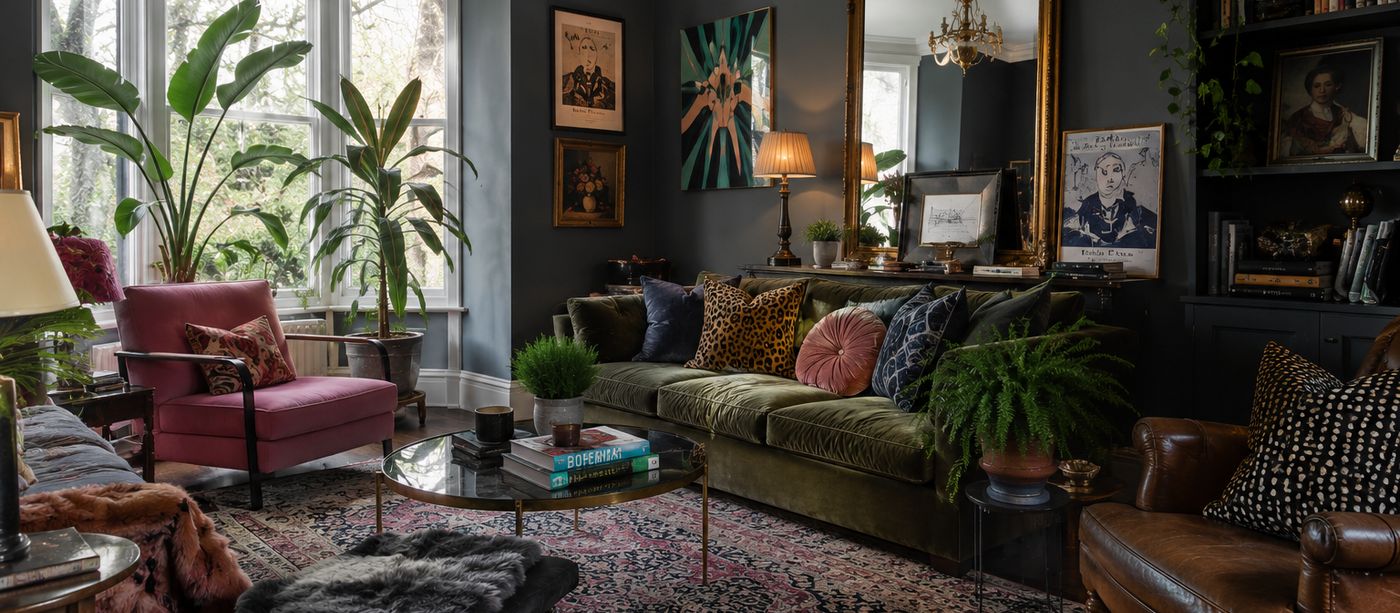
Eclectic Interior Design – A Complete Guide
Design Lens
Eclectic interior design proves that the most memorable interiors don't follow a single style. Their beauty comes from thoughtfully combining different influences into one harmonious space.
Eclectic interior design is one of the most creative approaches to designing a home. Contrary to popular belief, however, it isn't about randomly mixing furniture, colours and decorative objects from different periods.
Quite the opposite.
A successful Eclectic interior is built on intention and balance.
A contemporary sofa can sit comfortably beside a vintage cabinet, industrial lighting can complement Mid-Century Modern furniture, and minimalist architecture can provide the perfect backdrop for bold artwork.
It is these carefully considered contrasts that give the space its unique personality.
The key is harmony.
Different colours, materials and design styles should work together rather than compete with one another, creating interiors that feel original without becoming chaotic.
In this guide, you'll discover what defines Eclectic interior design, which materials and colours work best within the style, and how to confidently combine different design influences into a home that feels personal, balanced and timeless.
What Is Eclectic Interior Design?
Eclectic interior design is the art of intentionally combining elements from different design styles, historical periods and creative influences.
There is no single collection of furniture or materials that defines the style.
Instead, Eclectic interiors are shaped by the relationships between carefully selected pieces.
A traditional sideboard may stand beside a contemporary sofa.
An industrial pendant light might complement minimalist architecture.
A sculptural chair can become the focal point within an otherwise understated room.
Although these combinations may appear unexpected, the best Eclectic interiors are always united by a common thread.
That connection may come from a shared colour palette, repeated materials, balanced proportions or recurring shapes.
These design principles allow very different objects to feel naturally connected.
Design Lens
Eclectic interior design isn't about mixing everything together. It's about creating harmony from contrast.
The Key Characteristics of Eclectic Interior Design
Eclectic interiors offer enormous creative freedom, but their strongest designs are built upon a few essential principles.
Combining Different Styles
This is the defining characteristic of Eclectic design.
Modern, Classic, Industrial, Scandinavian, Glamour and many other styles can coexist within a single interior when they are connected through a thoughtful overall concept.
Personal Expression
Eclectic interiors often reflect the personality of the people who live in them.
Travel souvenirs, original artwork, handcrafted objects, vintage finds and family heirlooms all contribute to spaces that feel unique rather than copied from a catalogue.
Balance
Although Eclectic design embraces contrast, it never embraces chaos.
Colours, materials and furniture should complement one another to create a coherent composition.
Harmony is always more important than the number of styles being combined.
Confidence
Eclectic interiors encourage experimentation.
Unexpected combinations of colours, textures and forms often become the most memorable elements of the room.
The difference is that every decision is intentional rather than accidental.
Colour Palette
Eclectic interior design doesn't rely on a single colour palette.
It can feel calm and understated or bold and expressive, depending on the overall concept.
Common colours include:
- warm white,
- beige,
- soft grey,
- navy blue,
- emerald green,
- terracotta,
- burgundy,
- mustard yellow,
- black.
One of the most effective approaches is to build the room around a neutral foundation before introducing stronger colours that visually connect furniture, artwork and decorative objects from different styles.
Design Lens
In Eclectic interiors, colour helps unite contrasting design influences into one harmonious composition.
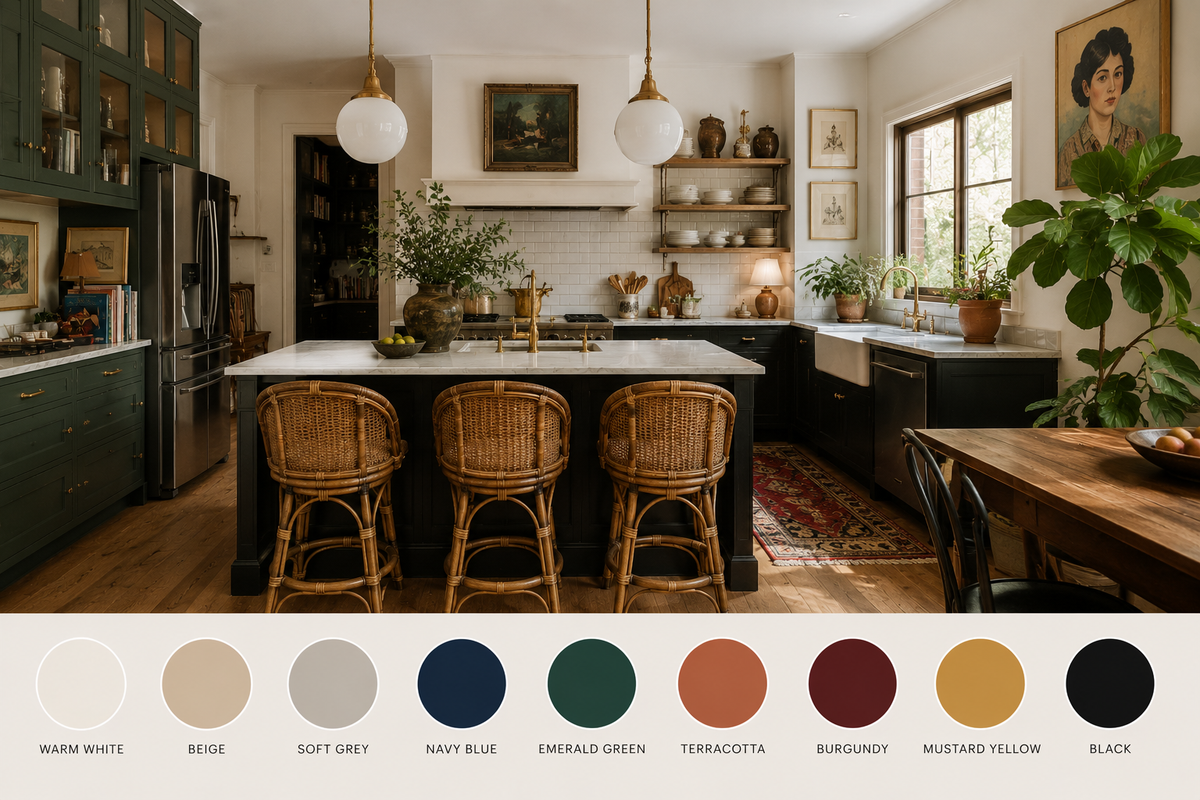 Eclectic Interior Design colors
Materials
One of the greatest strengths of Eclectic interiors is the freedom to combine different materials.
Rather than following strict rules, the style creates visual interest through contrast while maintaining an overall sense of balance.
Natural materials often provide the foundation, while more expressive textures introduce personality.
Wood
Wood frequently acts as the element that ties different styles together.
Oak, walnut, ash and teak work equally well alongside contemporary furniture, vintage pieces and industrial accents.
Its natural warmth helps create continuity throughout the interior.
Stone
Natural stone introduces elegance and permanence.
Marble, travertine, limestone and granite often appear on worktops, coffee tables or decorative accessories.
Their distinctive textures contrast beautifully with softer textiles and natural timber.
Textiles
Eclectic interiors embrace a wide variety of fabrics.
Linen, cotton, wool, velvet and bouclé can all exist within the same room when united through colour or proportion.
Layering different textures adds depth and individuality without overwhelming the space.
Metal and Glass
Metal and glass introduce contrast while connecting different design influences.
Black steel, brass, chrome and brushed nickel complement both traditional and contemporary furniture, making them particularly versatile in Eclectic interiors.
Design Lens
In Eclectic interiors, materials don't need to match. They need to complement one another.
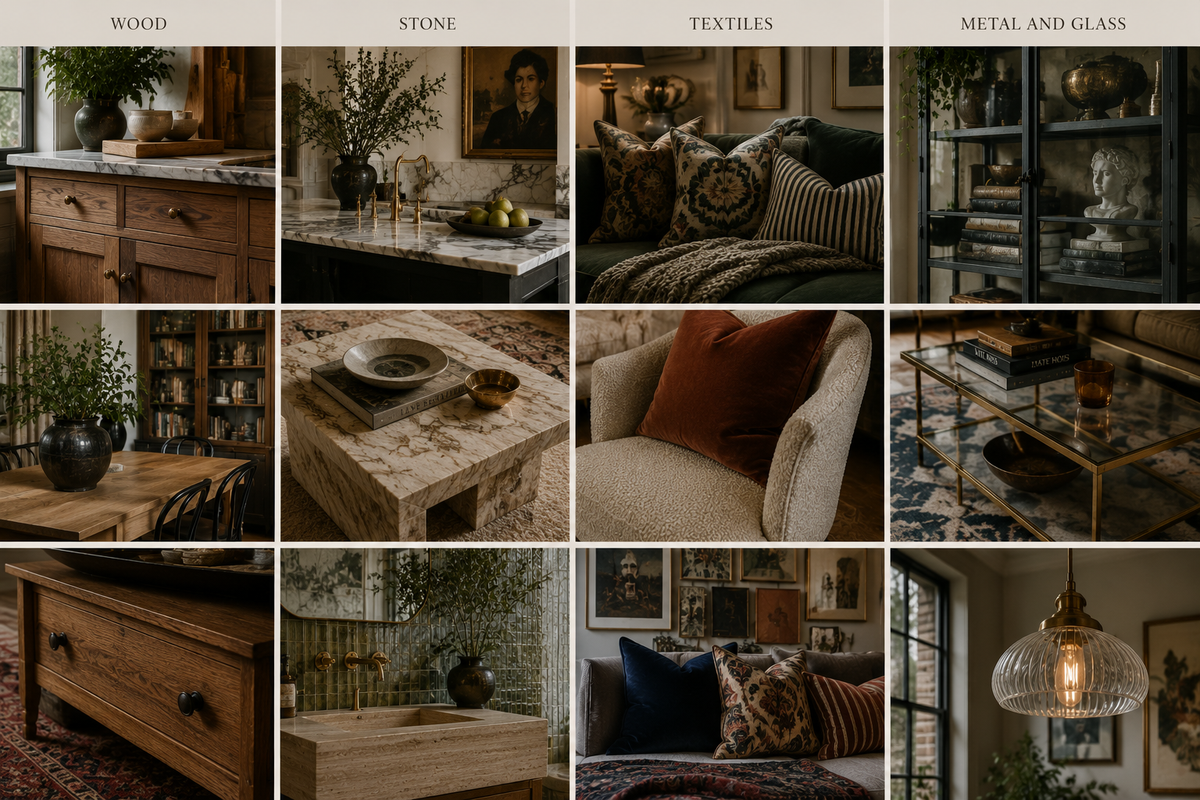 Eclectic Interior Design materials
Furniture
Furniture plays the central role in defining an Eclectic interior.
The way different pieces relate to one another determines whether the room feels curated or chaotic.
Mixing Different Eras
One of the defining characteristics of Eclectic design is combining furniture from different periods.
A contemporary sofa may sit beside a vintage cabinet, while a Mid-Century Modern dining table can be paired with industrial chairs.
These contrasts create personality while maintaining visual balance.
Statement Pieces
Many Eclectic interiors feature one or two distinctive furniture pieces that immediately attract attention.
This could be a sculptural armchair, an antique sideboard or an unusual dining table.
The remaining furniture supports these focal points without competing for attention.
Balance
Although Eclectic interiors celebrate variety, proportion remains essential.
Not every piece should try to become the centre of attention.
Carefully balancing bold furniture with quieter elements allows the overall composition to feel harmonious.
Design Lens
In Eclectic interiors, furniture creates contrast—but balance creates beauty.
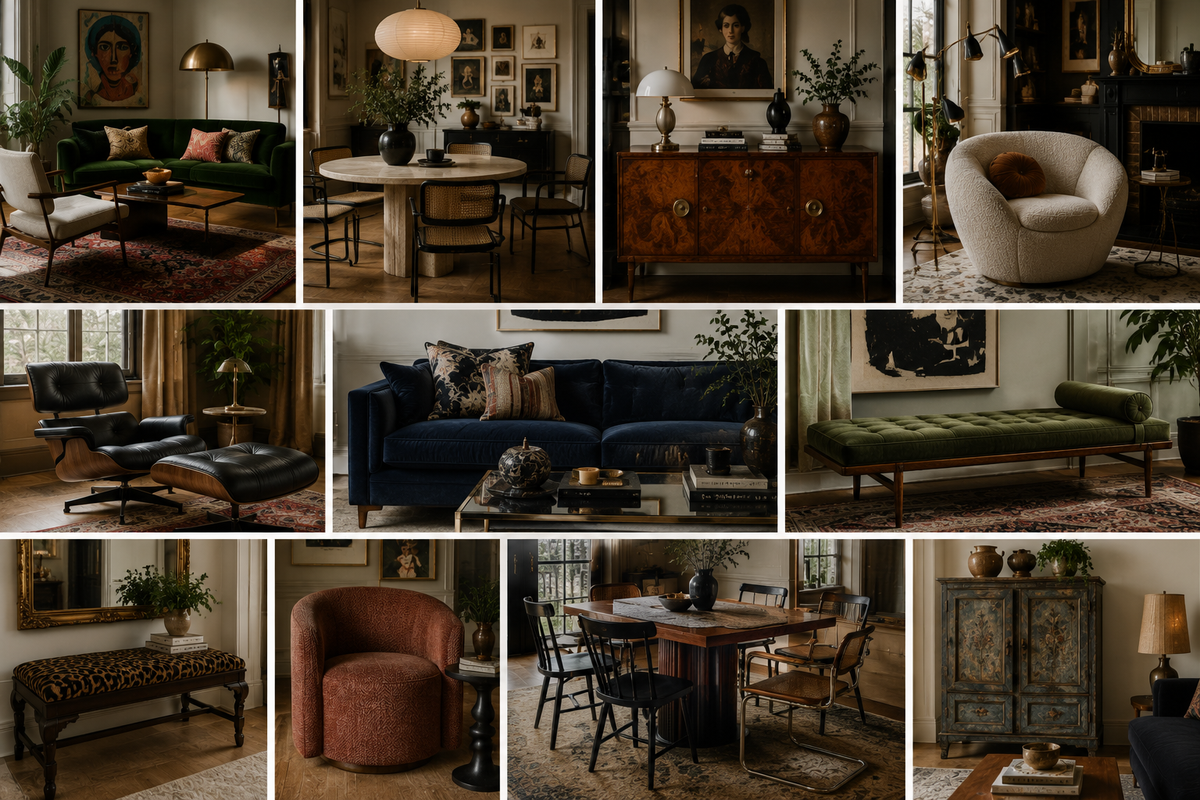 Eclectic Interior Design furniture
Lighting
Lighting helps unify different design influences within an Eclectic interior.
It can quietly support the architecture or become one of the room's most expressive design features.
Typical lighting includes:
- pendant lights,
- table lamps,
- floor lamps,
- wall lights,
- decorative accent lighting.
Using several light sources allows different materials, furniture and decorative objects to work together more naturally.
Colour Temperature
Warm lighting between 2700 K and 3000 K creates a welcoming atmosphere while visually connecting materials with very different textures and finishes.
Lighting as a Design Statement
Eclectic interiors encourage creativity when choosing lighting.
A contemporary pendant may complement traditional furniture, while an industrial floor lamp can work beautifully beside a minimalist sofa.
The key is ensuring that every lighting choice contributes to the overall composition rather than feeling disconnected.
Decorative Objects
Decorative objects are often what give Eclectic interiors their strongest sense of identity.
They reflect personal interests, experiences and individual taste rather than following a single design trend.
Typical decorative objects include:
- decorative trays,
- ceramics,
- artwork,
- sculptures,
- books,
- travel souvenirs,
- indoor plants.
Every object should feel intentional.
The most successful Eclectic interiors look as though each piece has been collected over time rather than purchased all at once.
Design Lens
In Eclectic interiors, decorative objects tell the story of the people who live there.
Common Mistakes
Eclectic interior design offers enormous creative freedom, but that also makes it one of the most challenging styles to master. Combining different influences requires intention, balance and a clear design vision.
Mixing Styles Randomly
The most common misconception is that Eclectic design means anything goes.
Randomly combining furniture, colours and decorative objects without a unifying idea usually creates visual chaos rather than character.
The best Eclectic interiors are always connected by a common thread—whether that's a colour palette, repeated materials, consistent proportions or recurring shapes.
Too Many Statement Pieces
Every room needs visual hierarchy.
If every chair, lamp and artwork demands attention, the space quickly becomes overwhelming.
Choosing one or two focal points allows the remaining furniture and accessories to support the overall composition.
Ignoring Colour Harmony
Eclectic interiors can embrace bold colours, but they still need a coherent palette.
A neutral foundation combined with a few repeated accent colours helps unite furniture and decorative objects from different styles into one balanced interior.
Overdecorating
Eclectic interiors often include artwork, collections, travel souvenirs and handcrafted objects.
However, displaying everything at once can make the room feel cluttered.
Leaving enough empty space allows the most meaningful objects to stand out.
Copying Instead of Curating
The most successful Eclectic interiors feel personal.
Simply recreating interiors seen online often results in beautiful spaces that lack individuality.
Collecting objects over time creates interiors with much greater depth and authenticity.
Design Lens
Eclectic interior design isn't about breaking every rule. It's about creating new harmony through thoughtful combinations.
How to Create an Eclectic Interior on a Budget
One of the greatest advantages of Eclectic design is that it evolves naturally over time.
There's no need to replace all of your furniture at once.
Instead, focus on combining existing pieces with carefully selected new additions.
A good place to begin includes:
- creating a neutral colour palette,
- combining one contemporary piece with one vintage element,
- introducing natural materials,
- displaying meaningful decorative objects,
- using warm layered lighting,
- allowing the interior to develop gradually.
Many of the most beautiful Eclectic interiors have been shaped over many years.
Their character comes from the stories behind the objects rather than their price.
How Decorative Objects Complete Eclectic Interiors
Decorative objects play a particularly important role in Eclectic interiors.
They often express the personality, interests and experiences of the people living in the home.
Ceramics, decorative trays, artwork, sculptures, books, travel souvenirs, designer lighting and indoor plants all contribute to a layered and personal atmosphere.
The key is careful curation rather than accumulation.
Every object should have enough surrounding space to be appreciated, allowing the room to feel collected rather than cluttered.
Design Lens
In Eclectic interiors, decorative objects don't simply decorate the space. They tell its story.
Frequently Asked Questions
What is Eclectic interior design?
Eclectic interior design is a style that intentionally combines furniture, materials and decorative objects from different design styles and historical periods. The goal is to create interiors that feel personal, balanced and harmonious rather than random.
What colours work best in Eclectic interiors?
Eclectic interiors often begin with a neutral foundation of warm white, beige or soft grey, complemented by stronger accent colours such as navy blue, emerald green, terracotta, burgundy, mustard yellow or black.
What materials define Eclectic interiors?
Natural timber, stone, glass, metal, linen, cotton, wool, velvet, bouclé and handcrafted ceramics all work beautifully together when united by a thoughtful overall design concept.
Can Eclectic interior design work in a small apartment?
Absolutely.
A restrained colour palette, carefully chosen furniture and thoughtful use of decorative objects allow even compact spaces to feel balanced and full of personality.
Which interior styles work well together?
Eclectic interiors often combine Contemporary, Mid-Century Modern, Scandinavian, Industrial, Classic, Glamour and Organic Modern elements. The most important factor is maintaining a unifying design principle rather than simply mixing styles.
Does Eclectic interior design ever go out of style?
Because Eclectic interiors reflect personal taste rather than temporary trends, they tend to remain timeless. As collections grow and evolve naturally, the home develops even greater character.
What decorative objects suit Eclectic interiors?
Decorative trays, ceramics, artwork, sculptures, books, travel souvenirs, designer lighting and indoor plants all work beautifully in Eclectic interiors. Choosing meaningful objects and displaying them thoughtfully creates a home with lasting personality.