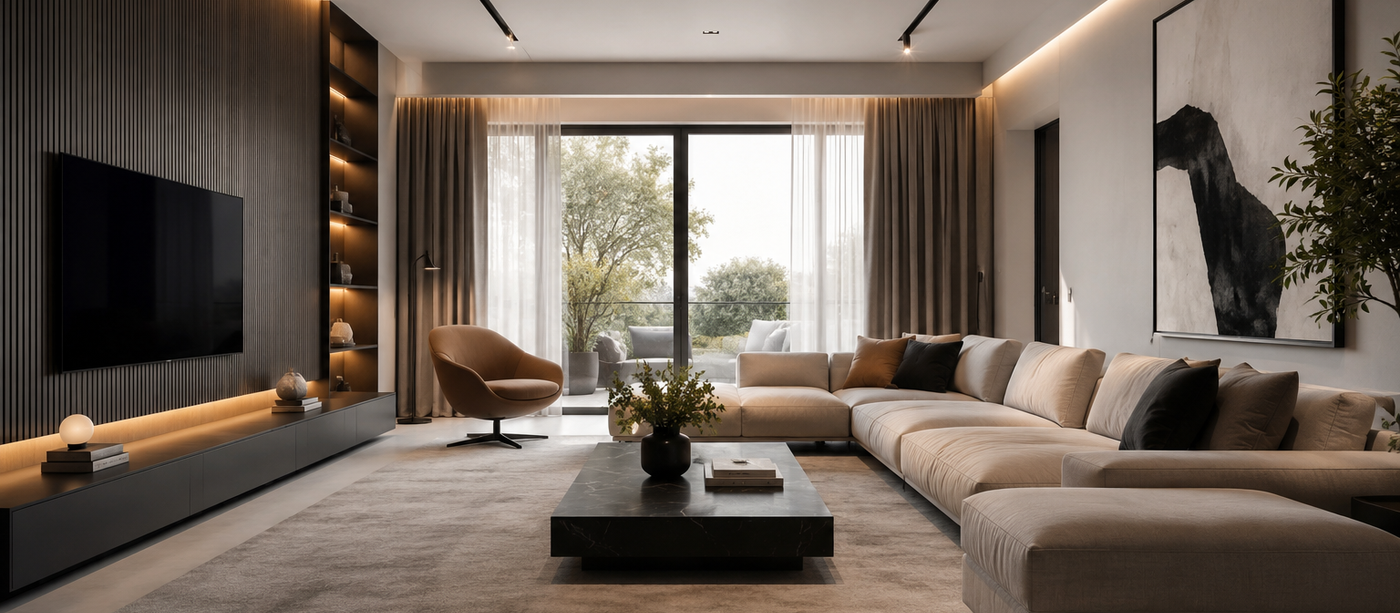
Contemporary Interior Design – A Complete Guide
Design Lens
Contemporary interior design isn't defined by a single set of rules. It reflects how we live today and continues to evolve as our lifestyles change.
The term contemporary interior design is often confused with modern interior design. Although the two styles share many characteristics—clean lines, functional layouts and a restrained use of decoration—they are not the same.
Modern interior design refers to a specific design movement that emerged during the first half of the twentieth century. Contemporary design, on the other hand, isn't tied to a particular historical period. It evolves continuously, adapting to new materials, technologies and ways of living.
This is why contemporary interiors from fifteen years ago often look very different from those being designed today. As architecture, furniture and lifestyle change, contemporary interiors change with them.
That flexibility is what makes the style so appealing.
Rather than following strict design rules, contemporary interiors combine timeless principles with current ideas, creating spaces that feel fresh without becoming overly trend-driven.
In this guide, you'll discover what defines contemporary interior design, how it differs from modern interiors, and how to create a home that feels elegant, comfortable and relevant for years to come.
What Is Contemporary Interior Design?
Unlike many design styles, contemporary interior design doesn't have a clear starting point in history.
Instead, it describes what is current in architecture and interior design at a given moment.
As design trends evolve, so does the style itself.
A decade ago contemporary interiors were often characterised by glossy finishes, sharp geometric forms and strong black-and-white contrasts.
Today's interiors look noticeably different.
Natural materials, warmer colour palettes, softer silhouettes and tactile textures have replaced many of the colder finishes that once dominated contemporary homes.
This constant evolution is what makes contemporary design unique.
Its goal isn't to follow every new trend but to adapt thoughtfully to changing lifestyles while maintaining balance, simplicity and functionality.
Design Lens
Contemporary interiors embrace change without losing their sense of harmony.
The Key Characteristics of Contemporary Interior Design
Although contemporary interiors continue to evolve, several principles remain consistent across most projects.
Flexibility
Perhaps the defining feature of contemporary design is its openness.
Rather than following one strict visual language, it borrows ideas from different styles—including Scandinavian, Japandi, Modern and even Industrial interiors.
What matters isn't where inspiration comes from, but how successfully different elements work together.
Designed for Everyday Living
Contemporary homes are created around the way people actually live.
Open-plan layouts, multifunctional spaces, generous kitchen islands and comfortable seating reflect modern lifestyles where work, relaxation and socialising often happen under the same roof.
Comfort is never treated as an afterthought.
Natural Light
Large windows have become one of the defining features of contemporary architecture.
Natural light isn't simply practical—it becomes part of the design itself.
Throughout the day it changes the appearance of materials, textures and colours, giving interiors a dynamic quality that artificial lighting alone cannot achieve.
Combining Materials
Unlike modern interior design, which often follows a more restrained material palette, contemporary interiors are comfortable mixing different textures.
Wood, natural stone, metal, glass, concrete and textured fabrics frequently appear together.
The key isn't limiting the number of materials but creating balance between them.
Colour Palette
Contemporary interiors have gradually moved away from the cool monochrome palettes that dominated the early 2000s.
Today's colour schemes feel noticeably warmer and more natural.
The most common colours include:
- warm white,
- soft beige,
- sand,
- taupe,
- warm grey,
- olive green,
- natural wood tones.
Bold colours still have their place, but they're usually introduced through furniture, artwork or decorative objects rather than large painted surfaces.
Instead of becoming the centre of attention, colour supports the overall atmosphere of the space.
Natural light, texture and carefully selected materials remain the real focus.
Design Lens
Contemporary interiors feel warm not because they use many colours, but because every colour has been chosen with intention.
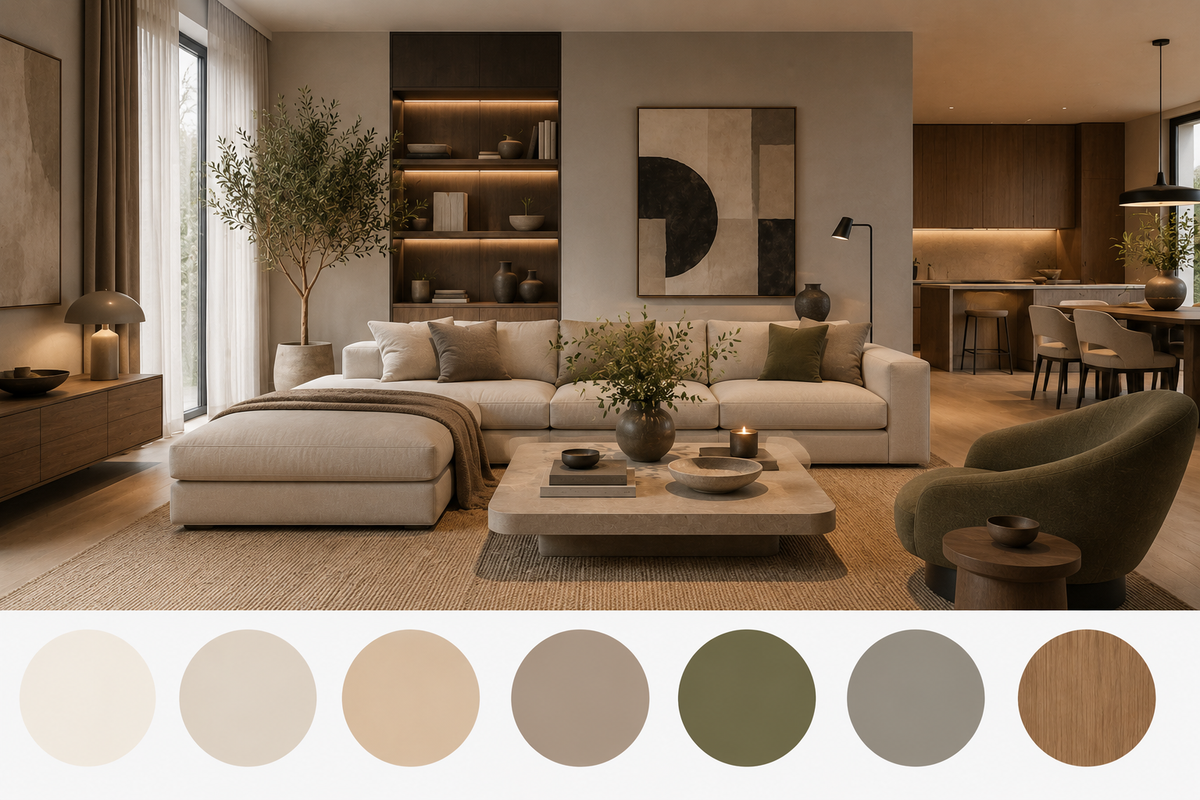 Contemporary Interior Design Colors
Materials
One of the defining features of contemporary interior design is its ability to combine different materials while maintaining a calm and cohesive appearance.
Instead of relying on a single dominant finish, contemporary interiors create contrast through texture. Smooth surfaces sit alongside rough stone, warm timber balances cool metal, and soft textiles introduce comfort without adding unnecessary visual clutter.
Wood
Wood remains one of the most important materials in contemporary interiors.
Oak, ash and walnut are particularly popular because they introduce warmth while preserving a clean architectural aesthetic.
Ribbed wood panels, natural veneers and solid timber furniture have become increasingly common, adding subtle texture without overwhelming the space.
Rather than treating wood as a decorative feature, contemporary interiors use it to create balance and soften harder materials.
Stone
Natural stone has become a defining material in contemporary homes.
While marble continues to be widely used, designers increasingly choose travertine, quartzite and limestone for their quieter appearance and organic texture.
Stone is no longer reserved for kitchens and bathrooms.
Coffee tables, shelving, fireplaces and statement furniture now frequently incorporate natural stone, allowing it to become part of the overall composition rather than a purely functional surface.
Metal
Metal introduces contrast and precision.
Black steel, brushed stainless steel and satin brass are among the most common finishes found in contemporary interiors.
Rather than becoming decorative features themselves, metal details help define furniture, lighting and architectural elements with subtle elegance.
Textiles
Soft furnishings bring warmth to spaces dominated by timber, stone and glass.
Linen, wool, cotton and bouclé remain some of the most popular choices because they add texture without relying on bold patterns or bright colours.
Instead of introducing visual complexity through prints, contemporary interiors often create depth by layering different natural textures.
Design Lens
Contemporary interiors feel rich because of their materials—not because of the number of colours they contain.
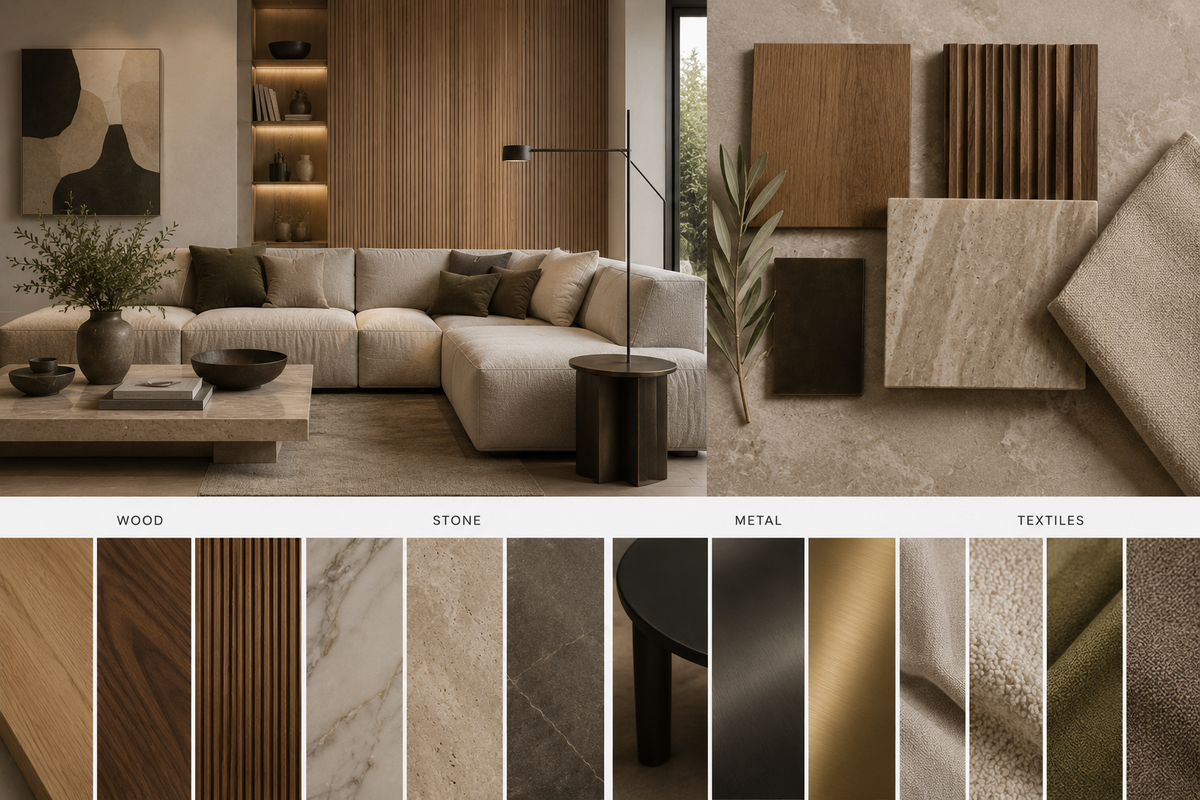 Contemporary Interior Design Materials
Furniture
Furniture in contemporary interiors is designed around the way people live today.
Homes have become places for working, relaxing, entertaining and spending time with family, so flexibility has become just as important as aesthetics.
Rather than filling rooms with furniture, contemporary interiors focus on choosing fewer, better pieces that respond to everyday life.
Softer Shapes
One of the biggest shifts in recent years has been the move away from sharp geometry.
Curved sofas, rounded coffee tables, sculptural lounge chairs and softened edges create interiors that feel more welcoming while maintaining a clean architectural appearance.
These organic forms balance the straight lines typically found in modern buildings.
Comfort
Comfort has become one of the defining characteristics of contemporary design.
Deep sofas, generous seating, ergonomic dining chairs and practical layouts reflect the idea that beautiful interiors should also be enjoyable to live in.
Design is no longer separated from everyday life.
Flexibility
Many contemporary homes incorporate furniture that adapts to changing needs.
Modular sofas, extendable dining tables, movable side tables and multifunctional storage make it easier for interiors to evolve over time without requiring complete redesigns.
Visual Lightness
Even larger furniture should avoid making a room feel heavy.
Raised legs, floating cabinets, open shelving and carefully considered spacing all contribute to a lighter, more spacious appearance.
Design Lens
Contemporary furniture doesn't compete for attention. It quietly supports the way people live.
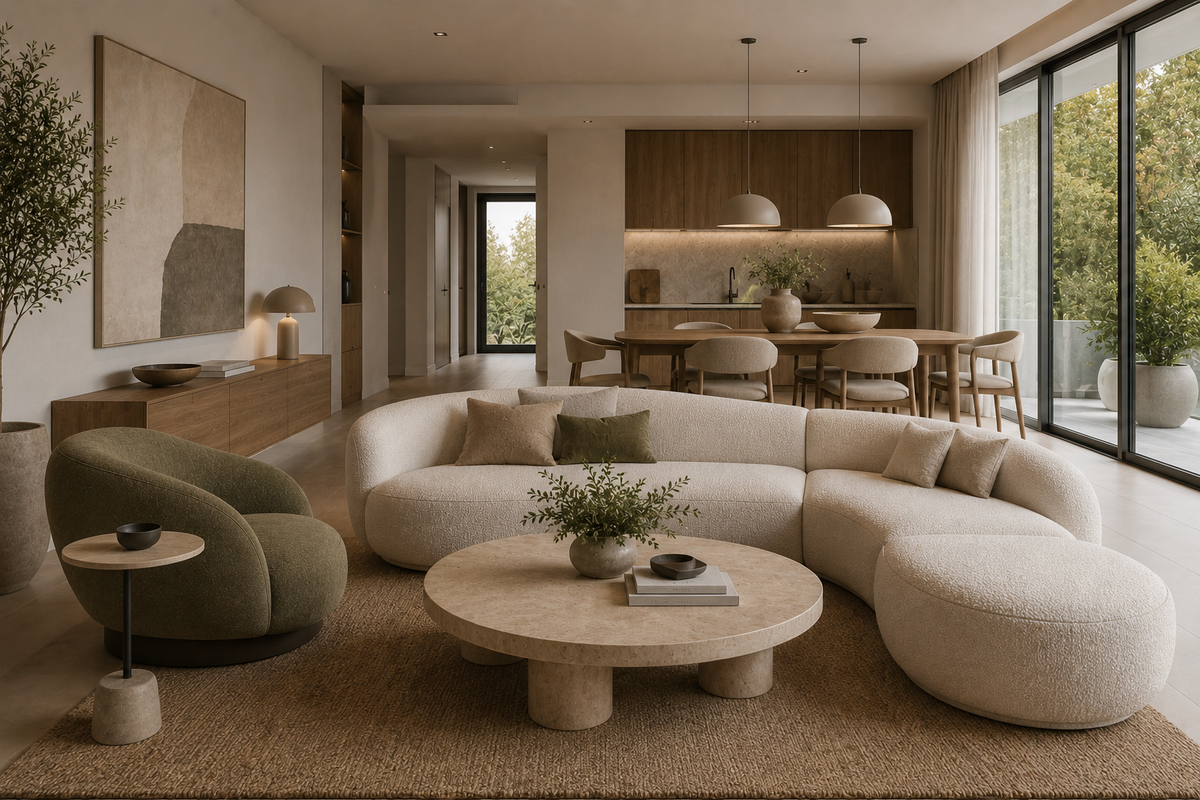 Contemporary Interior Design Furnitures
Lighting
Lighting plays a central role in contemporary interior design.
It shapes atmosphere, highlights materials and defines different zones within open-plan spaces.
Instead of relying on a single ceiling fixture, contemporary interiors usually combine multiple layers of lighting.
These often include:
- ambient lighting,
- task lighting,
- table lamps,
- floor lamps,
- wall lights,
- accent lighting.
Layering light allows a room to feel equally functional during the day and comfortable in the evening.
Colour Temperature
Warm white light between 2700 K and 3000 K has become the preferred choice for most living spaces.
It enhances natural materials, softens shadows and creates a more inviting atmosphere than cooler lighting.
Lighting as a Design Feature
Lighting is no longer treated purely as a practical necessity.
Pendant lights, floor lamps and table lamps increasingly function as sculptural objects that help define the character of a room.
Carefully chosen lighting can become a focal point even when it isn't switched on.
Decorative Objects
Contemporary interiors leave more room for personal expression than many traditional design styles.
Decorative objects help introduce individuality without disrupting the calm atmosphere of the space.
Rather than displaying many small accessories, contemporary interiors usually feature a limited number of carefully selected pieces.
These may include:
- handcrafted ceramic vases,
- decorative trays,
- sculptural lighting,
- books,
- artwork,
- candles,
- natural branches or plants.
Handmade objects are becoming increasingly popular because they introduce subtle imperfections and craftsmanship that contrast beautifully with clean architectural forms.
The goal isn't to fill every shelf.
It's to choose objects that feel meaningful and allow them enough space to be appreciated.
Design Lens
The most memorable contemporary interiors don't contain more decoration. They contain better decoration.
Common Mistakes
One of the greatest strengths of contemporary interior design is its flexibility. At the same time, that flexibility can easily become its biggest weakness. Without a clear vision, interiors often end up feeling like a collection of trends rather than a cohesive living space.
Following Every Trend
Contemporary design evolves over time, but that doesn't mean every new trend belongs in your home.
Furniture and finishes are long-term investments, while trends come and go remarkably quickly. Building your interior around timeless materials and introducing trends through accessories is usually a more sustainable approach.
Mixing Too Many Styles
Contemporary interiors often borrow elements from Scandinavian, Japandi, Modern or Industrial design.
The challenge is knowing when to stop.
Combining too many influences can make a room feel inconsistent instead of curated. Choosing one dominant direction and using others only as subtle inspiration usually leads to a much stronger result.
Overdecorating
Contemporary interiors leave room for personality, but they still value restraint.
Filling every shelf, table and wall with decorative objects quickly creates visual clutter and distracts from the architecture of the space.
A few carefully chosen pieces almost always create a stronger impression than dozens of small accessories.
Prioritising Appearance Over Function
Beautiful interiors should also support everyday life.
Poor storage, uncomfortable seating or impractical layouts become frustrating long after the excitement of a new renovation has faded.
The best contemporary homes are designed around the people who live in them, not around photographs.
Ignoring Lighting
Lighting is often treated as the final stage of a project, even though it has one of the biggest influences on how a room feels.
Poorly positioned fixtures or lighting with the wrong colour temperature can completely change the appearance of materials and colours.
Design Lens
The best contemporary interiors don't try to follow every trend. They choose the ones that genuinely improve everyday living.
How to Create a Contemporary Interior on a Budget
Creating a contemporary home doesn't require replacing everything at once.
In fact, the most successful interiors often evolve gradually over time.
Start by building a simple, neutral foundation.
Choose timeless furniture with clean lines, invest in good lighting and keep the colour palette calm. This makes it much easier to update the space later without starting from scratch.
If you're working with a limited budget, focus on the elements that have the greatest visual impact.
Simple improvements include:
- replacing cool white lighting with warm lighting,
- introducing natural textiles such as linen or wool,
- reducing visual clutter,
- choosing one larger artwork instead of several smaller pieces,
- adding larger plants,
- replacing inexpensive decorative accessories with fewer, higher-quality objects.
Often, removing unnecessary elements has a bigger impact than buying new ones.
How Decorative Objects Complete Contemporary Interiors
Decorative objects are where contemporary interiors become personal.
Rather than simply filling empty shelves, they introduce character, texture and individuality.
Handcrafted ceramics, sculptural lighting, decorative trays and natural stone objects work particularly well because they add visual interest without overwhelming the space.
Instead of scattering decorative pieces throughout a room, consider creating one carefully arranged composition on a coffee table, sideboard or console.
The space surrounding each object is just as important as the object itself.
Allowing decorative pieces room to breathe creates interiors that feel calm, balanced and intentional.
Design Lens
Contemporary interiors feel personal not because they contain more objects, but because every object has been chosen with care.
Frequently Asked Questions
What is the difference between contemporary and modern interior design?
Modern interior design refers to a specific design movement that emerged during the twentieth century. Contemporary interior design reflects current design trends and continues to evolve over time.
What colours work best in contemporary interiors?
Warm whites, soft beiges, taupe, warm greys, olive green and natural wood tones create a balanced and timeless palette. Stronger colours are usually introduced through furniture, artwork or decorative objects.
Is contemporary interior design minimalist?
Not necessarily.
While contemporary interiors often favour simplicity, they allow much more flexibility than minimalism. Comfort, texture and personal expression play a much larger role.
What materials define contemporary interiors?
Natural wood, stone, metal, glass and textured fabrics such as linen, wool and bouclé are among the most commonly used materials.
Can contemporary design work in small apartments?
Absolutely.
Open layouts, multifunctional furniture, thoughtful storage and a restrained colour palette help even compact homes feel more spacious and comfortable.
Can contemporary interiors combine different design styles?
Yes.
One of the defining characteristics of contemporary design is its ability to borrow ideas from other styles. Scandinavian, Japandi, Modern and Industrial influences often work particularly well together when united by a consistent colour palette and material selection.
Will a contemporary interior go out of style?
Because contemporary design continues to evolve, no interior will remain completely unchanged forever. However, building your home around timeless materials, quality furniture and balanced proportions makes it much easier to update over time without major renovations.