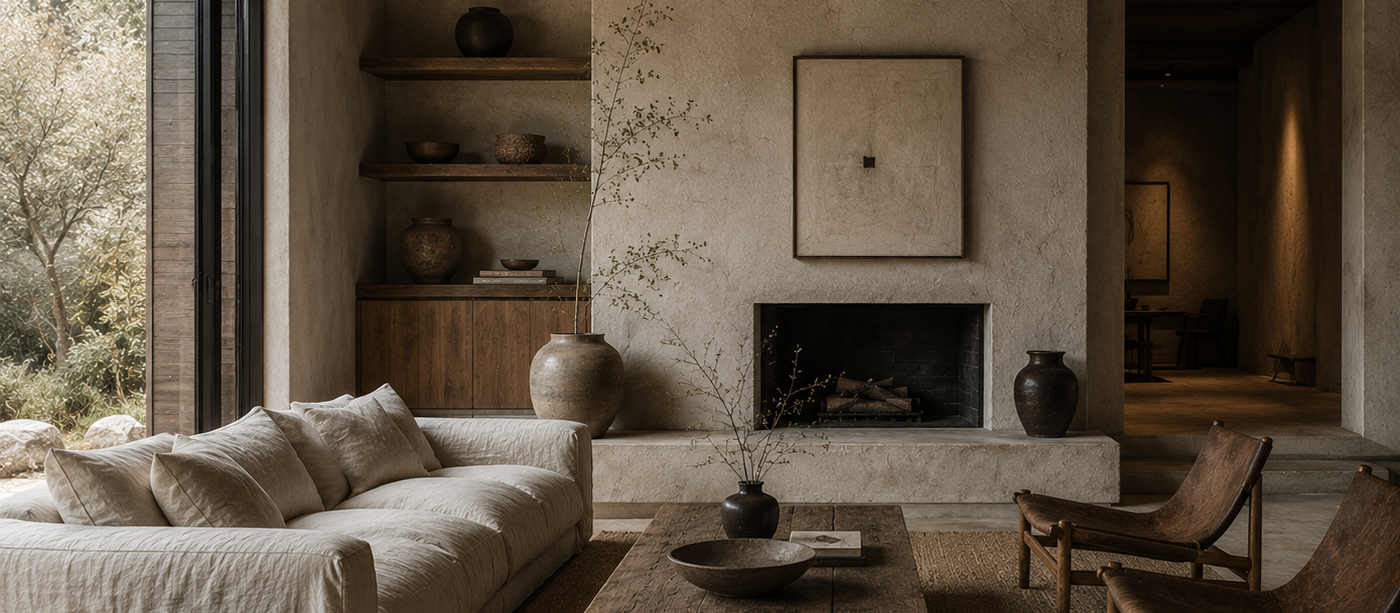
Wabi-Sabi Interior Design – A Complete Guide
Design Lens
Wabi-Sabi reminds us that beauty doesn't have to be perfect. Sometimes it can be found in simplicity, natural materials and the quiet marks left by time.
Although Wabi-Sabi is often described as an interior design style today, its origins reach much deeper. It is a Japanese philosophy that has shaped architecture, craftsmanship and everyday life for centuries by encouraging a different way of looking at beauty.
Instead of striving for flawless surfaces and perfect symmetry, Wabi-Sabi values authenticity, simplicity and the natural ageing of materials.
Applied to interiors, this philosophy creates homes that feel calm, balanced and deeply connected to nature.
Nothing appears excessive.
Nothing exists purely for decoration.
Every object has a purpose, and every material is appreciated for what it truly is.
Rather than resisting the passage of time, Wabi-Sabi embraces it.
Wood develops a richer patina, stone becomes softer through use and handmade ceramics gain character with every passing year.
In this guide, you'll discover what defines Wabi-Sabi interior design, which materials and colours best express its philosophy, and how to create a home that celebrates authenticity instead of perfection.
What Is Wabi-Sabi Interior Design?
Wabi-Sabi did not begin as an interior design style.
It is a traditional Japanese philosophy that has influenced architecture, craftsmanship, tea ceremonies and the appreciation of everyday objects for centuries.
At its heart lies the acceptance that nothing is permanent, nothing is perfect and nothing remains exactly the same forever.
Instead of hiding signs of age or natural variation, Wabi-Sabi encourages us to appreciate them.
A handmade ceramic bowl, weathered timber or natural stone becomes more beautiful because of its imperfections, not despite them.
When translated into contemporary interiors, this philosophy creates spaces that feel peaceful, honest and intentionally uncomplicated.
Furniture, materials and decorative objects are chosen carefully, allowing every element to contribute to the atmosphere without overwhelming it.
Design Lens
Wabi-Sabi doesn't search for perfection. It finds beauty in authenticity.
The Key Characteristics of Wabi-Sabi Interior Design
Although Wabi-Sabi is rooted in philosophy rather than decoration, several characteristics define interiors inspired by its principles.
Simplicity
Wabi-Sabi interiors are calm and uncluttered.
This doesn't mean empty rooms.
Instead, every object has been chosen with care and has a reason for being there.
Removing unnecessary items allows natural materials and craftsmanship to become the focus.
Natural Materials
Wood, stone, clay, linen, cotton and handcrafted ceramics form the foundation of the style.
Visible grain, uneven textures and handmade finishes are celebrated instead of concealed.
The beauty of the material comes from its authenticity.
Beauty in Imperfection
Perhaps the most recognisable principle of Wabi-Sabi is the appreciation of imperfection.
Subtle cracks in ceramics, irregular edges, weathered timber and visible signs of craftsmanship all contribute to the character of an interior.
These details tell the story of time rather than trying to erase it.
Calmness
Wabi-Sabi interiors never try to impress.
Their atmosphere comes from balance, natural light and carefully selected materials that encourage rest and reflection.
The result is a home that feels timeless rather than fashionable.
Colour Palette
The Wabi-Sabi colour palette is inspired directly by nature.
Instead of bold colours, it relies on soft, earthy tones that create a quiet backdrop for natural materials and changing light.
Typical colours include:
- warm white,
- cream,
- soft beige,
- sand,
- clay,
- taupe,
- warm grey,
- olive green,
- charcoal.
Colour is never the centre of attention.
Instead, it supports the natural texture of wood, stone and ceramics while allowing daylight to shape the atmosphere throughout the day.
Design Lens
In Wabi-Sabi interiors, colour doesn't demand attention. It allows materials and light to speak for themselves.
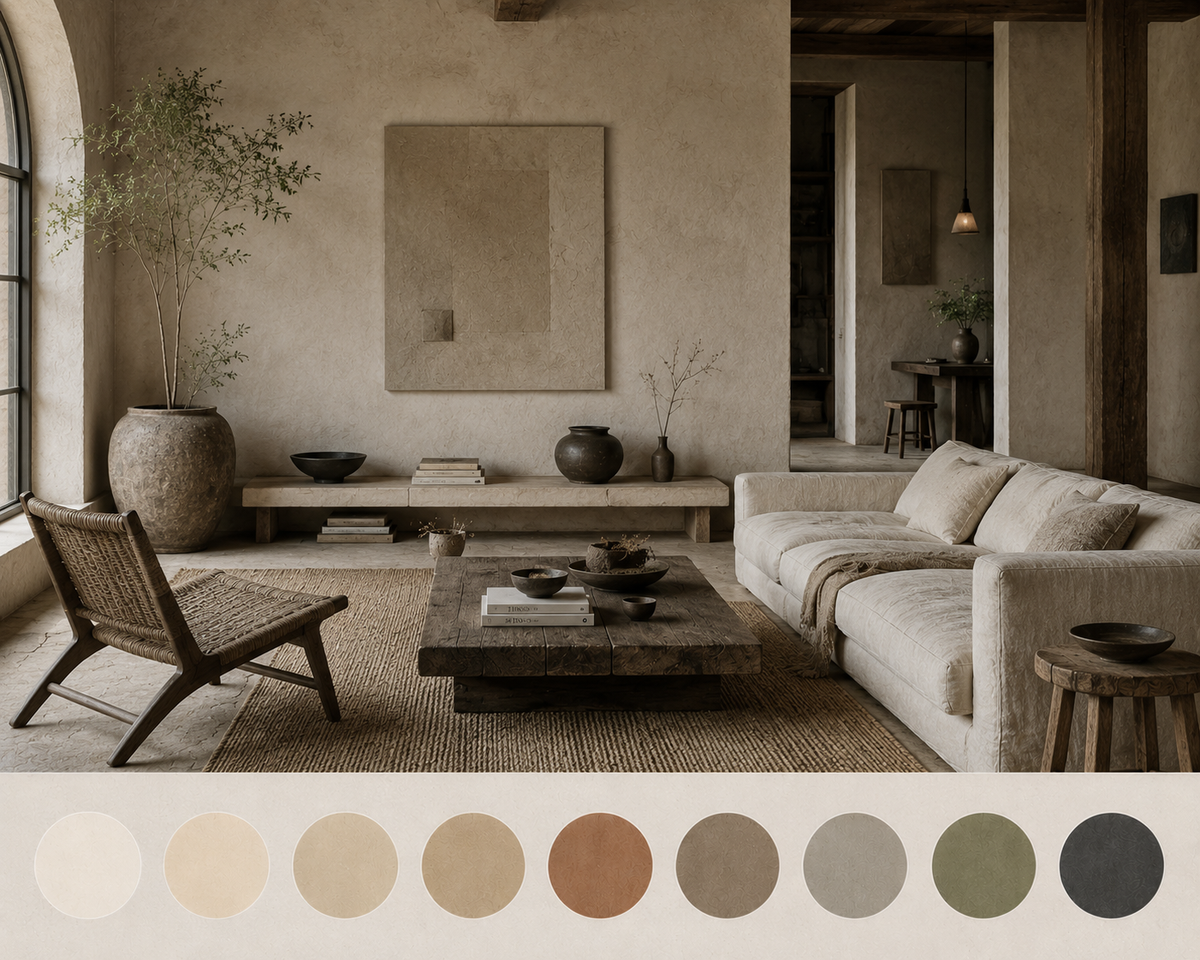 Wabi-Sabi Interior Design colors
Materials
Materials are the essence of Wabi-Sabi interiors.
Rather than seeking flawless finishes, the style values authenticity, texture and the way materials naturally change over time.
Ageing isn't something to hide.
It's part of what makes a home feel genuine.
Wood
Wood is one of the defining materials of Wabi-Sabi.
Species with visible grain and natural variation are preferred, finished with oils or matte treatments that preserve their character.
Knots, subtle cracks and colour variations aren't considered imperfections.
They tell the story of the material itself.
The less processed the timber appears, the more naturally it fits within the philosophy of Wabi-Sabi.
Stone
Stone introduces a sense of permanence and quiet strength.
Travertine, limestone, slate and other natural stones are commonly used because of their soft textures and understated colours.
Rather than selecting perfectly uniform slabs, Wabi-Sabi appreciates natural veining and gentle irregularities that make every piece unique.
Ceramics
Handcrafted ceramics are among the most recognisable elements of Wabi-Sabi interiors.
Uneven edges, subtle glazing variations and visible marks left by the maker are celebrated as expressions of craftsmanship.
Every object carries its own identity.
Textiles
Linen, cotton and wool provide softness and warmth.
Natural fibres with visible texture are preferred over perfectly smooth fabrics.
Instead of decorative patterns, visual interest comes from the weave, the movement of the fabric and the way it responds to light.
Design Lens
In Wabi-Sabi, materials don't become less beautiful with age. They become more meaningful.
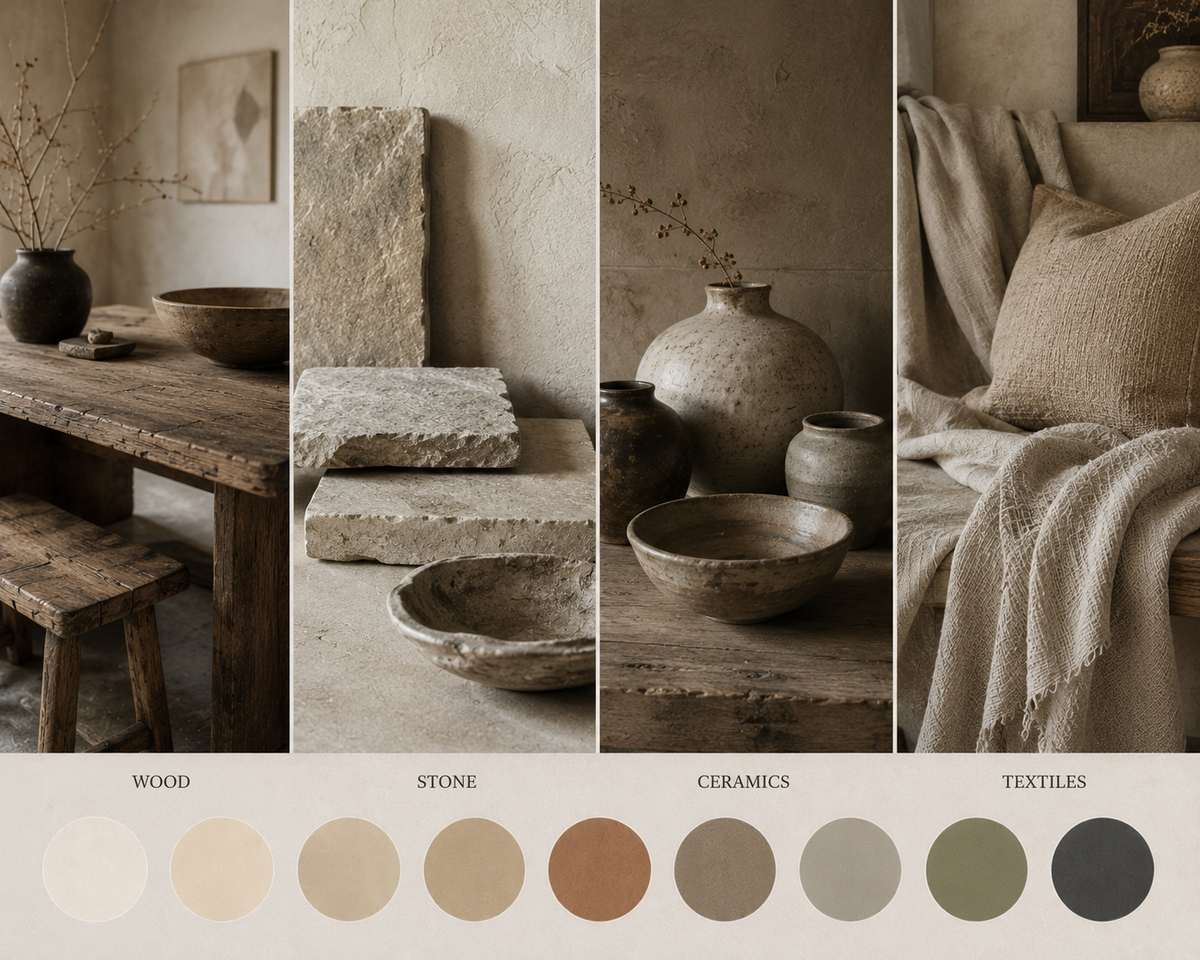 Wabi-Sabi Interior Design materials
Furniture
Furniture in Wabi-Sabi interiors is quiet, timeless and deeply connected to craftsmanship.
Rather than following trends, every piece is chosen to serve everyday life while ageing gracefully over time.
Simple Forms
Furniture tends to feature clean proportions without unnecessary ornament.
Soft edges, solid timber and understated silhouettes create a sense of calm without feeling empty or severe.
The goal isn't minimalism for its own sake.
It's creating space where every object has meaning.
Craftsmanship
Handcrafted furniture plays an important role.
Visible joinery, subtle imperfections and natural variations remind us that every piece has been made by human hands rather than mass-produced to perfection.
These details give furniture warmth and individuality.
Longevity
Wabi-Sabi encourages choosing furniture that will remain beautiful for decades.
Rather than replacing pieces as trends change, the philosophy values objects that gain character through everyday use.
Design Lens
In Wabi-Sabi, furniture isn't chosen to impress. It's chosen to accompany everyday life for many years.
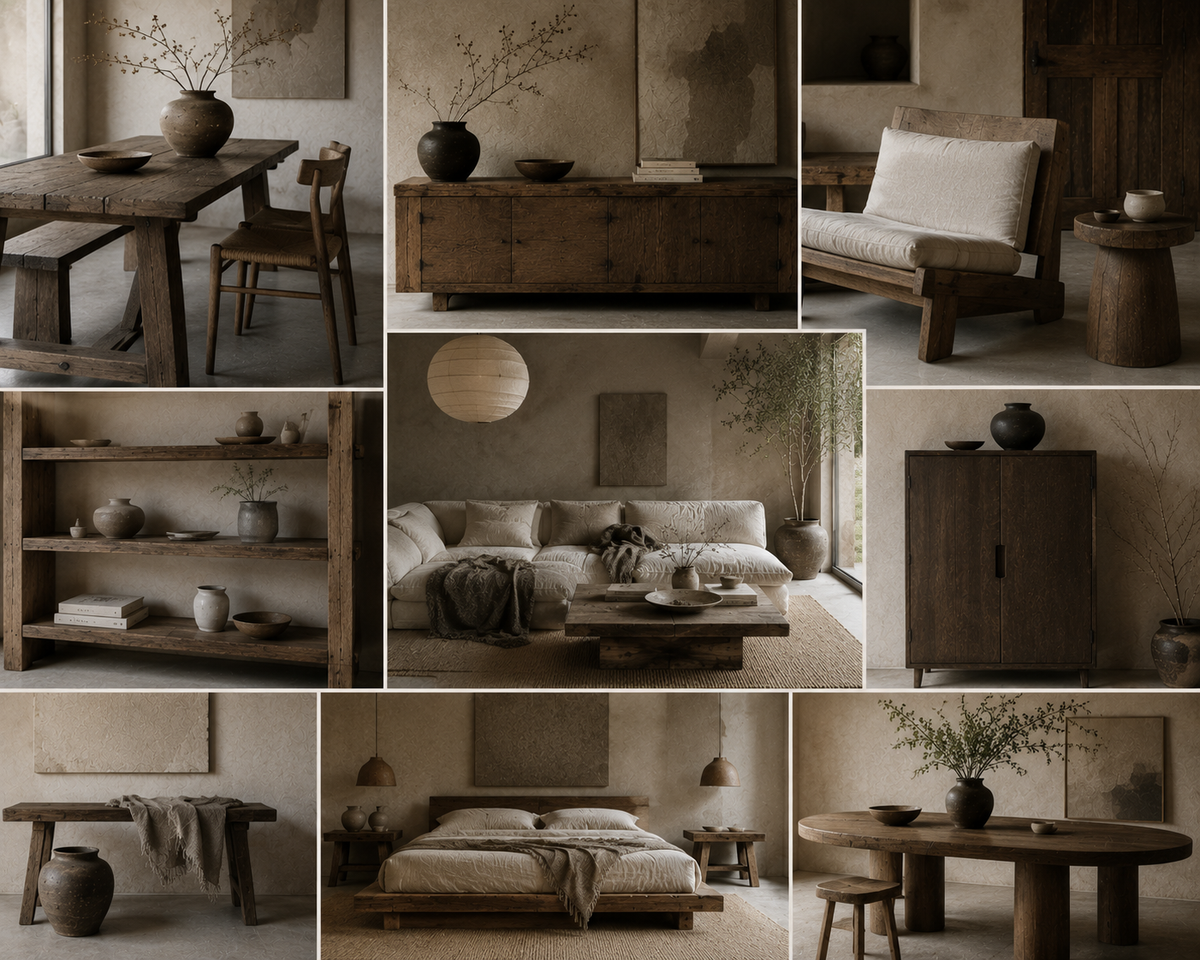 Wabi-Sabi Interior Design furniture
Lighting
Lighting in Wabi-Sabi interiors should feel soft and natural.
Its purpose isn't to dominate the room but to reveal the textures of timber, stone, clay and textiles throughout the day.
Layered lighting creates a calm atmosphere without harsh contrasts.
Typical light sources include:
- ceiling lighting,
- table lamps,
- floor lamps,
- wall lights,
- subtle ambient lighting.
Each contributes gently to the overall mood rather than becoming the centre of attention.
Colour Temperature
Warm lighting between 2700 K and 3000 K works best.
It enhances the earthy tones of natural materials while creating the quiet, comforting atmosphere associated with Wabi-Sabi interiors.
Lighting as Part of the Atmosphere
Lighting fixtures are selected for their simplicity and honesty.
Paper, ceramic, wood, linen and frosted glass all complement the philosophy by diffusing light softly instead of creating dramatic visual effects.
The atmosphere they create is more important than the fixture itself.
Decorative Objects
Decorative objects in Wabi-Sabi interiors exist to strengthen the connection between the home and nature.
Rather than filling shelves, each object is given enough space to be appreciated.
Typical decorative objects include:
- handcrafted ceramics,
- decorative trays,
- stone bowls,
- simple vases,
- branches,
- dried grasses,
- natural textiles.
Many of these objects are intentionally imperfect.
Their irregular forms, weathered surfaces and handmade qualities reflect the philosophy that beauty grows through time rather than despite it.
Design Lens
In Wabi-Sabi interiors, the most meaningful decorative objects are often the ones that quietly tell their own story.
Common Mistakes
Wabi-Sabi is often misunderstood as a minimalist style built around beige colours and empty rooms. In reality, it isn't defined by a particular aesthetic but by a philosophy that values authenticity over perfection.
The appearance of the interior is only the result of that way of thinking.
Striving for Perfection
Perhaps the greatest contradiction of Wabi-Sabi is trying to make everything look flawless.
Perfectly smooth surfaces, carefully staged accessories and interiors that resemble a showroom lose the authenticity that gives Wabi-Sabi its character.
Natural materials should be allowed to age, change and develop their own story.
Buying Artificially Aged Objects
Wabi-Sabi isn't about making new things look old.
Furniture or accessories that imitate wear often feel artificial.
Objects that naturally acquire a patina through years of everyday use carry far more meaning.
Using Too Many Decorative Objects
Wabi-Sabi doesn't reject decoration.
It simply encourages choosing fewer objects with greater care.
Each piece should have a purpose and enough surrounding space to be appreciated.
Too many accessories create visual noise that distracts from the calm atmosphere.
Sacrificing Comfort
Simplicity should never come at the expense of comfort.
Soft textiles, comfortable furniture and warm lighting are just as important as natural materials.
A Wabi-Sabi home should invite people to slow down and feel at ease.
Treating Wabi-Sabi as a Trend
Wabi-Sabi is not a decorating trend.
It is a long-standing philosophy that encourages thoughtful choices, respect for craftsmanship and appreciation of the passing of time.
Following its principles creates interiors that remain meaningful long after trends have disappeared.
Design Lens
Wabi-Sabi doesn't ask you to create a perfect home. It invites you to create one that becomes more beautiful with time.
How to Create a Wabi-Sabi Interior on a Budget
A Wabi-Sabi interior doesn't depend on expensive furniture or luxury materials.
Its character comes from thoughtful decisions rather than costly purchases.
You don't need to replace everything.
Often, simplifying the space and allowing natural materials to take the lead is enough.
A good place to begin includes:
- choosing natural timber,
- introducing linen or cotton textiles,
- adding handcrafted ceramics,
- replacing cool lighting with warm lighting,
- reducing unnecessary decoration,
- leaving more empty space around everyday objects.
Many of the most meaningful pieces may already be in your home.
Objects that have aged naturally often fit the philosophy of Wabi-Sabi better than brand-new accessories.
How Decorative Objects Complete Wabi-Sabi Interiors
Decorative objects should quietly reinforce the atmosphere of the space.
Rather than attracting attention, they celebrate craftsmanship, natural materials and the passage of time.
Handmade ceramic vases, decorative trays, stone bowls and simple lighting made from natural materials all fit beautifully within a Wabi-Sabi interior.
Each object is given enough space to reveal its texture, shape and subtle imperfections.
The empty space surrounding an object is just as important as the object itself.
It allows every piece to become part of a calm, balanced composition.
Design Lens
In Wabi-Sabi interiors, decorative objects aren't valued because they're perfect. They're valued because they're real.
Frequently Asked Questions
What is Wabi-Sabi interior design?
Wabi-Sabi is an interior design philosophy inspired by a traditional Japanese way of thinking that appreciates simplicity, authenticity and the beauty of natural ageing. It creates calm spaces centred around natural materials and carefully chosen objects.
Is Wabi-Sabi the same as Japandi?
No.
Although both styles are influenced by Japanese aesthetics, Japandi combines Japanese and Scandinavian design principles. Wabi-Sabi focuses more deeply on the appreciation of imperfection, craftsmanship and the natural passage of time.
What colours work best in Wabi-Sabi interiors?
Warm white, cream, soft beige, sand, clay, taupe, warm grey, olive green and charcoal create the calm, earthy palette most closely associated with Wabi-Sabi.
What materials define Wabi-Sabi interiors?
Natural timber, stone, clay, handcrafted ceramics, linen, cotton and wool are among the most characteristic materials. Visible texture and natural ageing are considered part of their beauty.
Can Wabi-Sabi work in a small apartment?
Absolutely.
Its restrained palette, limited number of carefully chosen objects and emphasis on natural light help even compact interiors feel calm and spacious.
Is Wabi-Sabi the same as minimalism?
Not exactly.
Minimalism focuses on reducing possessions, while Wabi-Sabi is centred on appreciating authenticity, craftsmanship and the emotional value of everyday objects. A Wabi-Sabi home may contain few objects, but each one has meaning.
What decorative objects suit Wabi-Sabi interiors?
Handcrafted ceramics, decorative trays, stone bowls, simple vases, natural textiles, branches and dried grasses all complement the style beautifully. The emphasis should always remain on authenticity, natural materials and thoughtful restraint.