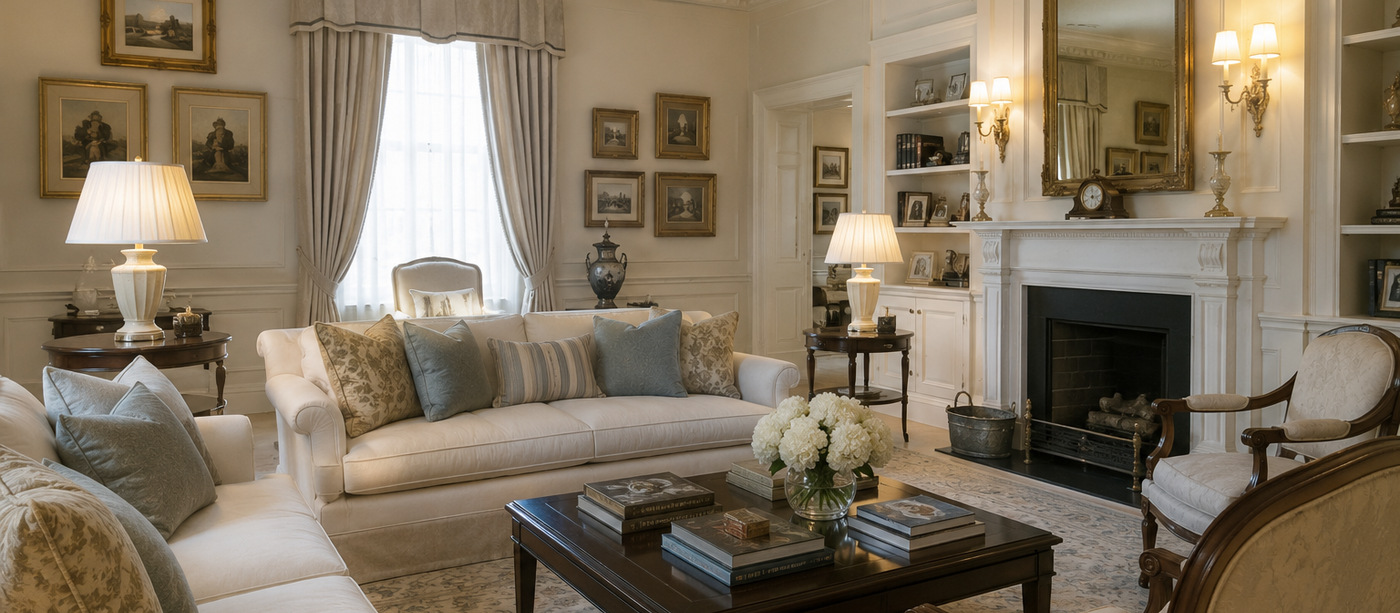
Classic Interior Design – A Complete Guide
Design Lens
Classic interior design proves that elegance never goes out of style. Its beauty comes from harmony, balanced proportions and materials that remain timeless for generations.
Classic interior design has represented refined living for centuries. Inspired by European architecture and traditional craftsmanship, it is built around symmetry, carefully balanced proportions and exceptional materials.
Although its origins reach far beyond most contemporary interior styles, classic design continues to feel relevant today.
Its lasting appeal doesn't come from changing trends.
Instead, it is based on design principles that have stood the test of time and continue to create interiors that feel calm, elegant and beautifully balanced.
Modern interpretations of classic interiors are also far more restrained than the richly decorated historical spaces that originally inspired them.
Rather than recreating palaces or grand estates, today's Classic interiors combine timeless architectural principles with contemporary comfort and practicality.
The result is a home that feels sophisticated without appearing overly formal.
In this guide, you'll discover what defines Classic interior design, which materials and colours shape the style, and how to create interiors inspired by timeless European elegance.
What Is Classic Interior Design?
Classic interior design is built upon the principles of harmony, balance and proportion.
It draws inspiration from traditional European architecture and craftsmanship, where symmetry, carefully considered layouts and high-quality materials have long been regarded as the foundation of beautiful interiors.
Every element has its place.
Furniture, lighting and decorative objects work together to create spaces that feel calm, organised and naturally elegant.
Although contemporary Classic interiors are generally simpler than their historical predecessors, they continue to follow the same design philosophy.
Rather than chasing short-lived trends, Classic design focuses on creating interiors that remain beautiful and relevant for decades.
Design Lens
Classic interior design doesn't rely on excessive decoration. Its elegance comes from balance, proportion and timeless craftsmanship.
The Key Characteristics of Classic Interior Design
Classic interiors can be recognised through several defining principles that have remained relevant for generations.
Symmetry
Balance is one of the most important characteristics of Classic interiors.
Matching table lamps, paired armchairs, symmetrical layouts and carefully positioned furniture create a strong sense of order throughout the space.
Timeless Elegance
Classic interiors aren't designed around trends.
Instead, they rely on furniture with graceful proportions, refined detailing and materials chosen for their lasting quality.
The result is an interior that continues to feel elegant year after year.
Premium Natural Materials
Natural timber, stone, fine textiles and beautifully crafted details define the style.
Quality always takes priority over quantity, allowing every material to contribute to the overall sense of refinement.
Harmony
Every colour, material and piece of furniture is carefully selected to complement the others.
Nothing feels accidental or overpowering.
The entire interior works together as one balanced composition.
Colour Palette
The colour palette of Classic interiors is refined, understated and timeless.
Neutral shades provide an elegant backdrop that allows architectural details and natural materials to stand out.
Typical colours include:
- warm white,
- cream,
- beige,
- soft grey,
- taupe,
- olive green,
- navy blue,
- burgundy,
- natural wood tones.
Stronger colours are generally introduced through upholstered furniture, curtains or carefully chosen decorative accents, while the overall atmosphere remains balanced and sophisticated.
Design Lens
In Classic interiors, colour creates elegance through harmony rather than contrast.
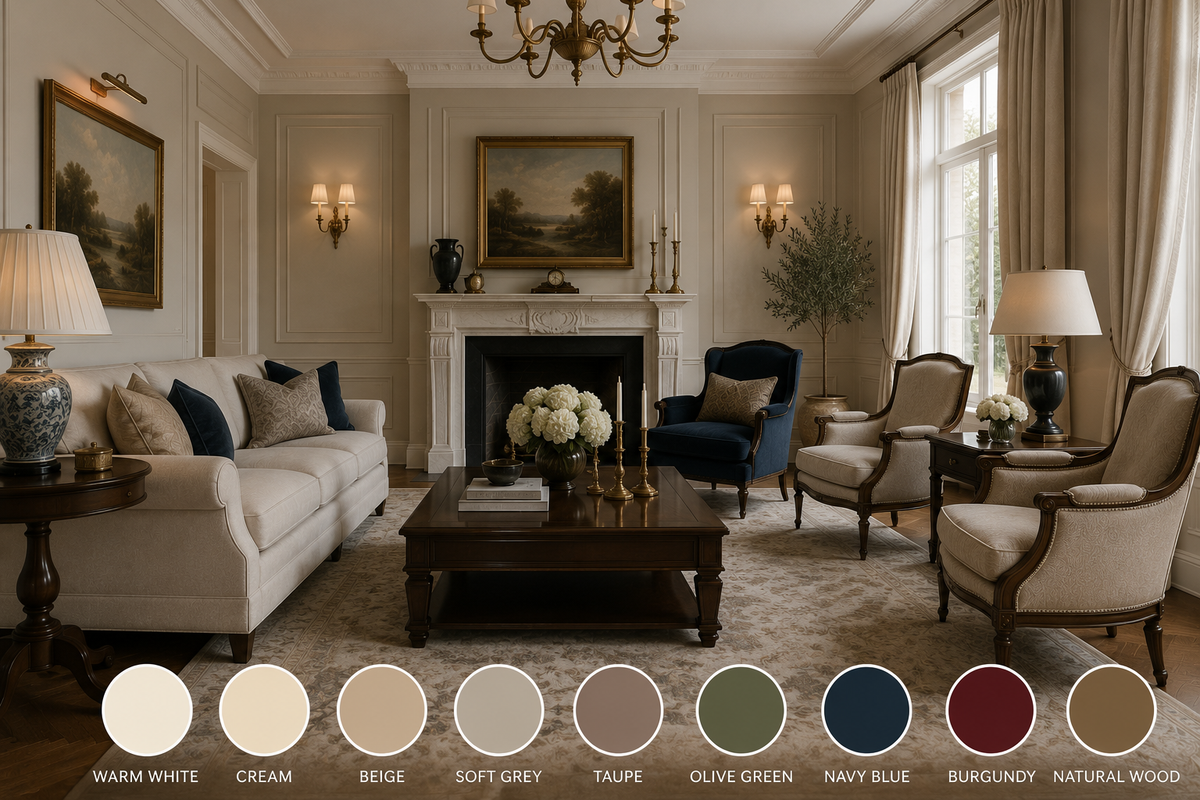 Classic Interior Design colors
Materials
Materials are one of the defining characteristics of Classic interiors.
Rather than relying on decorative finishes, the style creates elegance through natural materials, exceptional craftsmanship and lasting quality.
Every surface is chosen not only for its appearance but also for the way it ages over time.
Wood
Wood has always played a central role in Classic interior design.
Oak, walnut, cherry and ash are among the most frequently used species, bringing warmth and refinement to the space.
Visible grain and carefully finished surfaces highlight the natural beauty of the material without unnecessary ornament.
Well-crafted wooden furniture is designed to last for generations.
Stone
Natural stone has long been associated with timeless elegance.
Marble, limestone, granite and travertine appear on fireplaces, flooring, worktops and architectural details.
Their subtle veining and natural variation give each surface a unique character while maintaining the calm sophistication that defines Classic interiors.
Textiles
Classic interiors make extensive use of premium fabrics.
Linen, cotton, wool, velvet and silk introduce comfort while reinforcing the refined atmosphere of the room.
Patterns, when used, tend to remain subtle and understated, allowing texture and craftsmanship to take centre stage.
Metal
Metal is used sparingly as an elegant finishing detail.
Brass, aged bronze, polished nickel and chrome appear in lighting, hardware, mirrors and furniture accents.
Rather than drawing attention to themselves, these finishes quietly enhance the overall composition.
Design Lens
In Classic interiors, elegance begins with natural materials and exceptional craftsmanship.
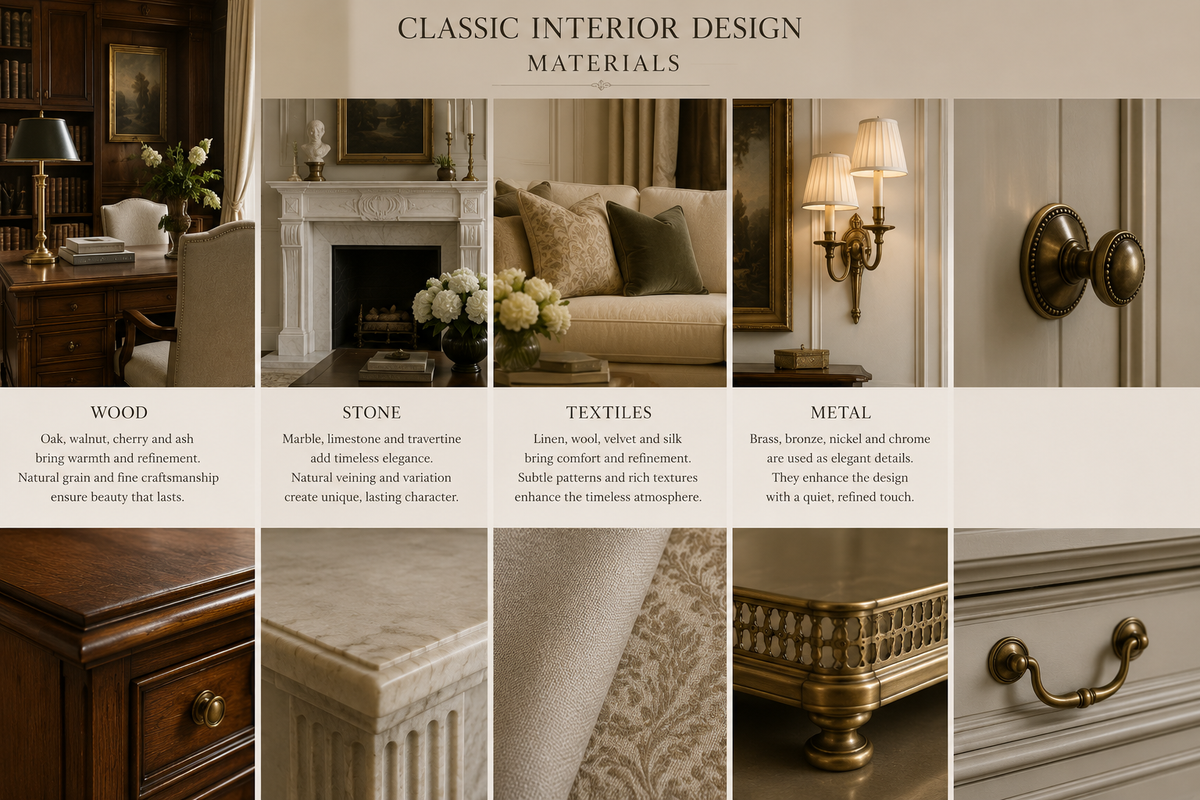 Classic Interior Design materials
Furniture
Furniture in Classic interiors is timeless, balanced and beautifully proportioned.
Rather than following changing trends, each piece is designed to remain relevant for decades.
Elegant Proportions
Classic furniture is recognised by its balanced proportions and graceful lines.
Decorative details are present but carefully restrained, creating furniture that feels refined without becoming overly ornate.
The emphasis is always on harmony rather than excess.
Comfort
Classic interiors are designed to be lived in.
Generous sofas, upholstered armchairs and solid dining tables combine elegance with everyday comfort, creating spaces that feel welcoming as well as sophisticated.
Longevity
Furniture is selected with durability in mind.
Solid timber, premium upholstery and expert craftsmanship ensure that each piece continues to look beautiful after years of daily use.
Rather than replacing furniture frequently, Classic interiors encourage investing in pieces that become part of the home for generations.
Design Lens
In Classic interiors, furniture reflects timeless craftsmanship rather than passing fashion.
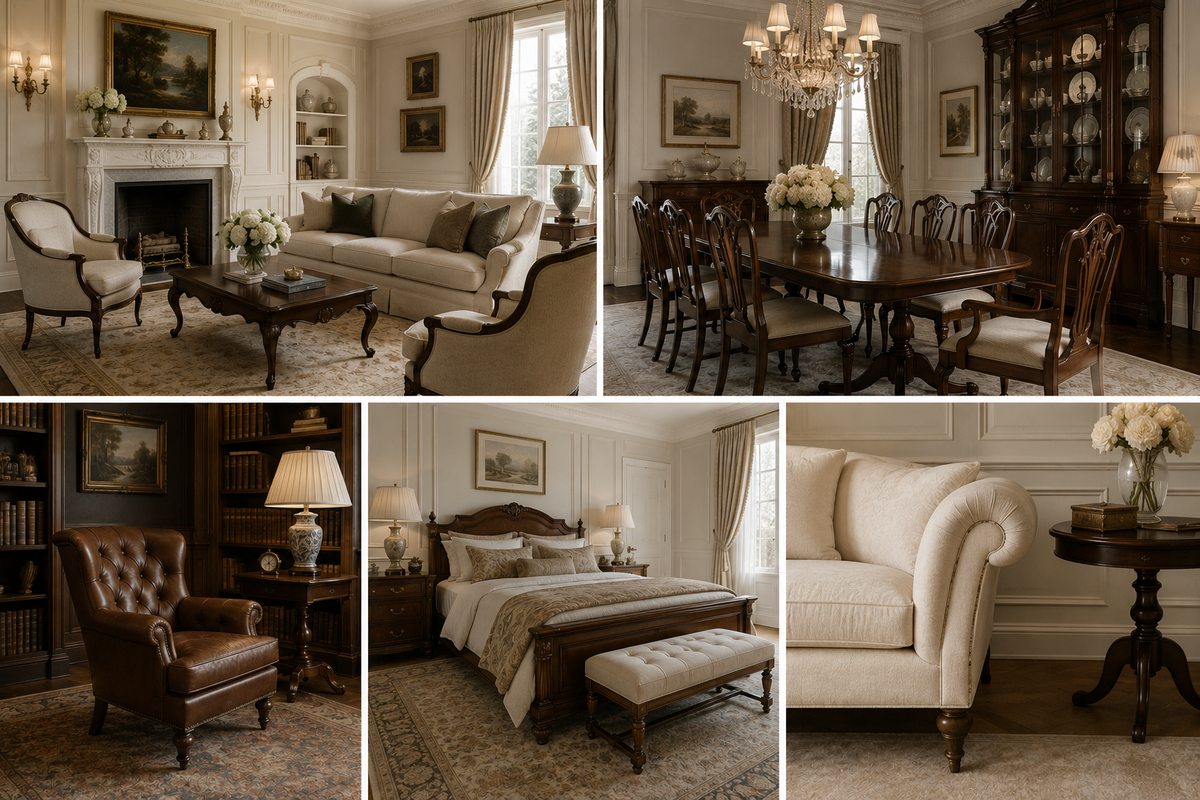 Classic Interior Design furniture
Lighting
Lighting serves both practical and decorative purposes in Classic interiors.
Its role is to enhance architectural details, highlight natural materials and create a warm, welcoming atmosphere.
Typical lighting includes:
- chandeliers,
- table lamps,
- floor lamps,
- wall lights,
- subtle accent lighting.
Using several layers of lighting allows the interior to feel elegant throughout the day while providing flexibility for different activities.
Colour Temperature
Warm lighting between 2700 K and 3000 K complements timber, stone and premium textiles particularly well.
It creates the soft, inviting atmosphere traditionally associated with Classic interiors.
Lighting as Part of the Architecture
Lighting fixtures often become elegant architectural features.
Glass shades, fabric lampshades, brass details and timeless silhouettes contribute to the refined character of the space without dominating it.
Decorative Objects
Decorative objects should reinforce the elegance of the interior rather than compete with it.
Balance and restraint remain essential.
Typical decorative objects include:
- ceramic vases,
- decorative trays,
- stone bowls,
- mirrors,
- artwork,
- books,
- elegant lighting.
Each object is carefully positioned to contribute to the overall composition.
Rather than filling every available surface, Classic interiors allow decorative pieces enough space to be appreciated individually.
Design Lens
In Classic interiors, decorative objects should quietly reinforce the harmony of the space.
Common Mistakes
Classic interior design is often misunderstood as a style filled with heavy furniture and excessive ornament. In reality, its greatest strength lies in balance, proportion and timeless elegance rather than visual excess.
Adding Too Many Decorative Details
One of the most common mistakes is filling the room with elaborate ornaments, decorative mouldings and accessories.
Classic interiors value refinement, but they also rely on restraint.
A carefully selected collection of elegant objects creates a far more sophisticated result than decorating every available surface.
Ignoring Balance
Symmetry is one of the foundations of Classic design.
Random furniture placement or an uneven distribution of decorative objects can quickly disrupt the sense of harmony that defines the style.
Carefully balanced layouts help create calm, elegant interiors.
Choosing Low-Quality Materials
Classic interiors are built around craftsmanship and longevity.
Imitations of timber or stone often reduce the timeless character of the space.
When working within a budget, it's usually better to use fewer materials of higher quality than many lower-quality alternatives.
Sacrificing Comfort
A Classic interior should never feel formal to the point of being uncomfortable.
Generous seating, practical layouts and warm lighting are just as important as elegant furniture and architectural details.
Beautiful interiors should also support everyday life.
Recreating Historical Interiors Too Literally
Contemporary Classic interiors aren't designed to imitate palaces or period houses.
Instead, they reinterpret traditional proportions and craftsmanship in a way that suits modern living.
Combining timeless principles with contemporary comfort creates interiors that feel elegant without becoming outdated.
Design Lens
Classic interiors don't preserve the past. They preserve timeless design principles that remain relevant today.
How to Create a Classic Interior on a Budget
A Classic interior doesn't need to be completed all at once.
The style is built gradually through thoughtful choices and carefully selected materials.
Instead of buying many decorative pieces, focus on creating a balanced foundation.
Good places to begin include:
- choosing furniture with timeless proportions,
- introducing natural timber,
- using a calm, neutral colour palette,
- investing in high-quality textiles,
- adding warm layered lighting,
- selecting fewer decorative objects with lasting appeal.
Classic interiors are defined far more by consistency and craftsmanship than by the overall budget.
How Decorative Objects Complete Classic Interiors
Decorative objects should reinforce the elegance of the architecture rather than become the centre of attention.
Ceramic vases, decorative trays, stone bowls, mirrors, artwork, elegant lighting and carefully selected books all contribute to a refined atmosphere.
Quality is always more important than quantity.
Giving decorative objects enough surrounding space allows every piece to become part of a balanced composition instead of creating visual clutter.
Design Lens
In Classic interiors, decorative objects should enhance harmony rather than compete with it.
Frequently Asked Questions
What is Classic interior design?
Classic interior design is a timeless design style inspired by traditional European architecture and craftsmanship. It focuses on symmetry, balanced proportions, premium materials and elegant furniture that remains relevant for generations.
What colours work best in Classic interiors?
Warm white, cream, beige, soft grey, taupe, olive green, navy blue, burgundy and natural wood tones are among the colours most closely associated with Classic interiors.
What materials define Classic interiors?
Natural timber, marble, limestone, granite, linen, cotton, wool, velvet and refined metal finishes such as brass and polished nickel all contribute to the timeless elegance of the style.
Can Classic interiors work in modern homes?
Absolutely.
Contemporary interpretations of Classic design combine traditional proportions with modern comfort, making the style suitable for both contemporary houses and apartments.
Can Classic design be combined with other interior styles?
Yes.
Classic interiors work particularly well with Contemporary, Quiet Luxury and Modern Classic styles, creating elegant spaces that feel both timeless and current.
Does Classic interior design ever go out of style?
One of its greatest strengths is its longevity.
Because it is based on proportion, craftsmanship and natural materials rather than trends, Classic interiors remain elegant regardless of changing fashions.
What decorative objects suit Classic interiors?
Ceramic vases, decorative trays, stone bowls, mirrors, artwork, elegant lighting and carefully selected books all complement Classic interiors beautifully. Choosing fewer, high-quality decorative objects creates a more refined and timeless result.