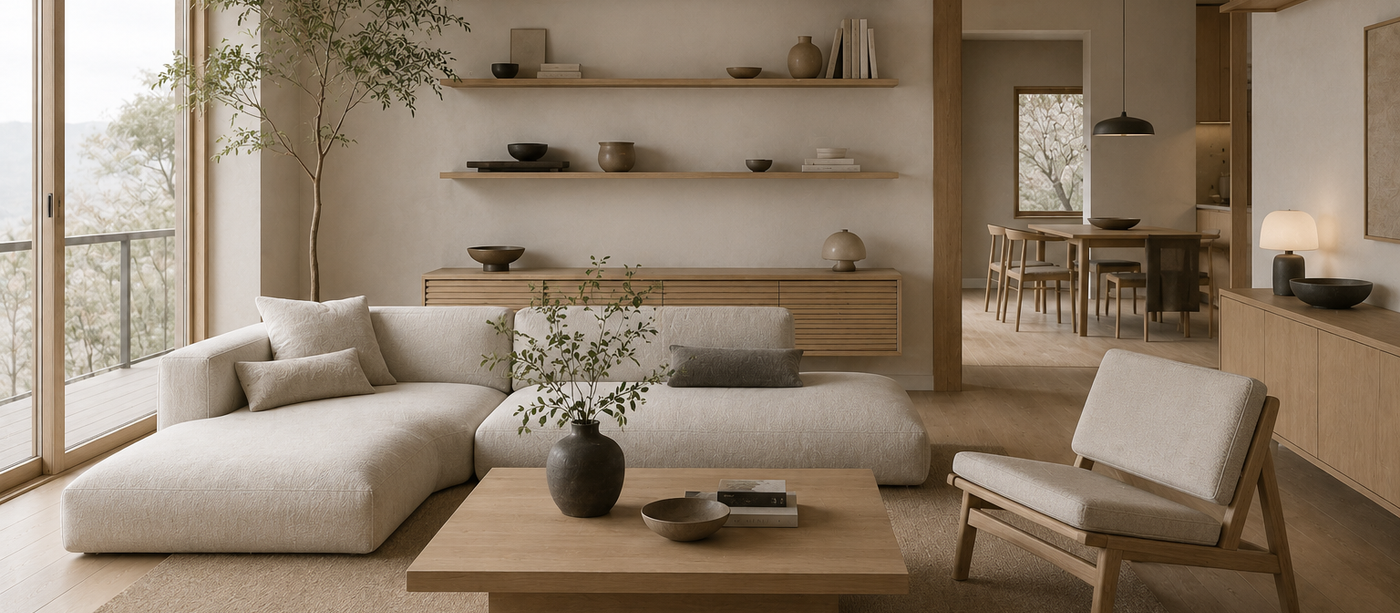
Japandi Interior Design – A Complete Guide
Design Lens
Japandi proves that a home doesn't need to be filled with objects to feel warm, welcoming and complete.
Although the term Japandi is relatively new, the philosophy behind it has quickly become one of the most influential approaches in contemporary interior design. By combining Scandinavian functionality with Japanese simplicity, Japandi creates spaces that feel calm, balanced and deeply connected to nature.
From Scandinavian design, it borrows comfort, practicality and an appreciation for everyday living.
From Japanese aesthetics, it adopts restraint, harmony and the belief that beauty can be found in natural materials and quiet simplicity.
The result isn't a compromise between two styles.
It's a new design language that blends the strengths of both traditions into interiors that encourage slower, more mindful living.
Rather than trying to impress through decoration, Japandi focuses on creating homes that feel peaceful, timeless and comfortable to live in every day.
In this guide, you'll discover what defines Japandi interior design, which materials and colours best reflect its philosophy, and how to create a home inspired by balance, craftsmanship and nature.
What Is Japandi Interior Design?
Japandi is a contemporary design style inspired by two philosophies that share more similarities than differences.
Scandinavian design values functionality, comfort and everyday practicality.
Japanese interiors emphasise simplicity, balance and a deep respect for natural materials.
Both approaches believe that well-designed objects should be useful, beautifully made and able to remain relevant for many years.
This shared appreciation for craftsmanship and quality is what makes Japandi feel so timeless.
Rather than copying traditional Japanese or Scandinavian interiors, Japandi combines their core principles to create spaces that feel modern while remaining deeply connected to nature.
Design Lens
In Japandi, fewer objects don't mean less life. They create more room for what truly matters.
The Key Characteristics of Japandi Interior Design
Although Japandi draws inspiration from two different cultures, it has developed a clear identity of its own.
Calmness
Japandi interiors never compete for attention.
Balanced proportions, carefully selected furniture and uncluttered spaces create rooms that naturally encourage relaxation and slow the pace of everyday life.
Natural Materials
Materials are the foundation of the style.
Wood, stone, linen, cotton and handcrafted ceramics create warmth without relying on bold colours or decorative patterns.
Natural grain, texture and subtle imperfections are celebrated rather than hidden.
Functionality
Like Scandinavian design, Japandi believes that every object should serve a purpose.
Furniture is comfortable, durable and designed for everyday living.
Decoration is never added simply for the sake of filling empty space.
Balance
Balance is perhaps the defining principle of Japandi.
Light and dark timber, soft textiles, natural stone and carefully controlled contrast work together to create interiors that feel harmonious without becoming monotonous.
Colour Palette
Japandi colour palettes are inspired directly by nature.
Instead of bright or highly saturated colours, the style relies on calm, earthy tones that create a sense of peace throughout the home.
Common colours include:
- warm white,
- soft beige,
- taupe,
- sand,
- light and medium wood tones,
- olive green,
- sage green,
- charcoal,
- warm black.
Unlike traditional Scandinavian interiors, Japandi often introduces stronger contrast by combining lighter materials with darker wood, charcoal or black accents.
Colour is never the centre of attention.
Instead, it supports natural materials, daylight and the carefully balanced composition of the room.
Design Lens
Japandi doesn't create atmosphere through colour alone. It creates it through light, materials and thoughtfully designed space.
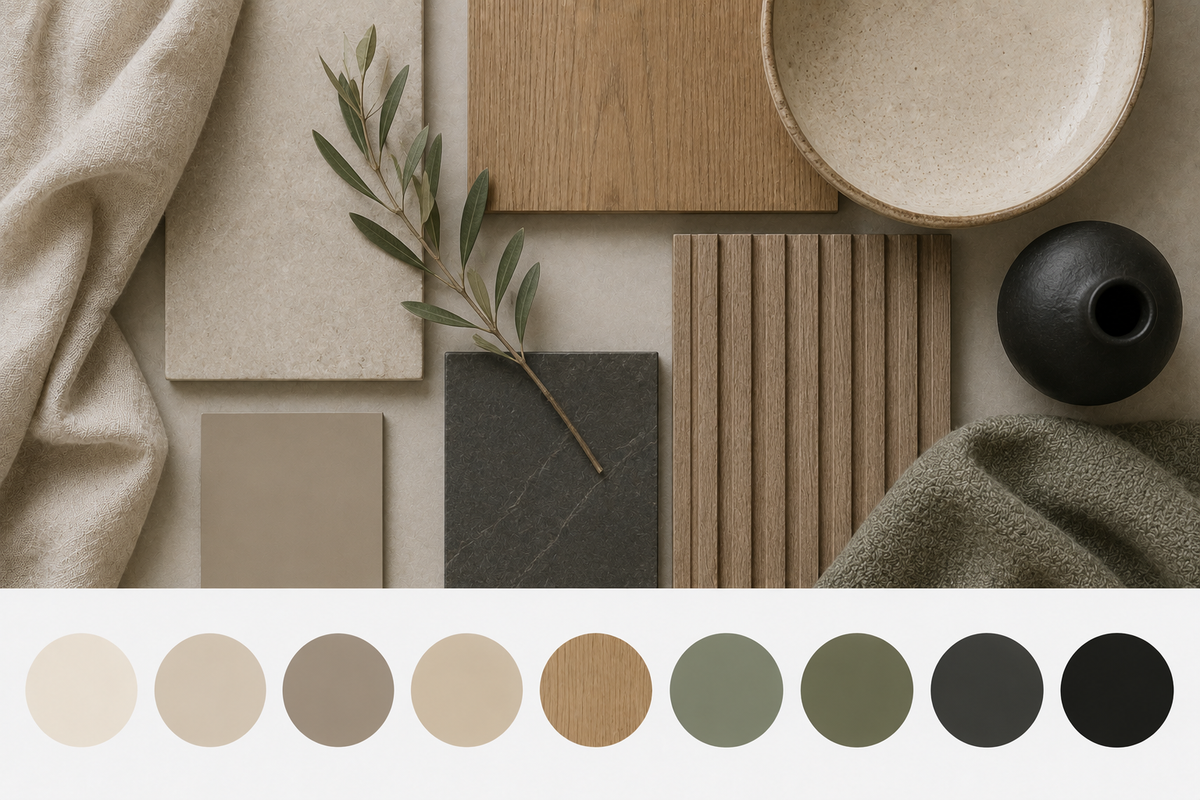 Japandi Interior Design Colors
Materials
In Japandi interiors, materials define the atmosphere far more than decorative objects.
Rather than introducing visual interest through colour or ornament, Japandi relies on the natural beauty of wood, stone, textiles and handcrafted surfaces. Texture becomes one of the most important design elements.
Authenticity matters above all.
Wood should look like wood.
Stone should look like stone.
Linen should keep its natural texture instead of appearing perfectly smooth.
Wood
Wood is the defining material of Japandi interiors.
Oak, ash and walnut are among the most common choices, often finished with natural oils or matte coatings that preserve the character of the grain.
Unlike traditional Scandinavian interiors, Japandi also embraces darker timber, adding depth and contrast while maintaining a calm overall palette.
Rather than hiding imperfections, the natural texture of wood becomes part of the design.
Stone
Stone introduces balance and permanence.
Travertine, limestone, slate and other natural stones are frequently used for coffee tables, countertops, basins and decorative objects.
Their quiet textures complement timber beautifully, creating interiors that feel grounded without becoming visually heavy.
Ceramics
Handcrafted ceramics are one of the signature elements of Japandi.
Slightly irregular shapes, subtle glazing variations and visible signs of craftsmanship are appreciated rather than corrected.
Every piece feels unique, reinforcing the idea that beauty can exist in natural variation.
Textiles
Soft natural textiles bring warmth to the clean architectural forms.
Linen, cotton and wool are the most common choices, introducing texture without relying on decorative patterns.
Layering different natural fabrics creates depth while maintaining the calm, understated character of the room.
Design Lens
In Japandi, beauty comes from authenticity rather than perfection.
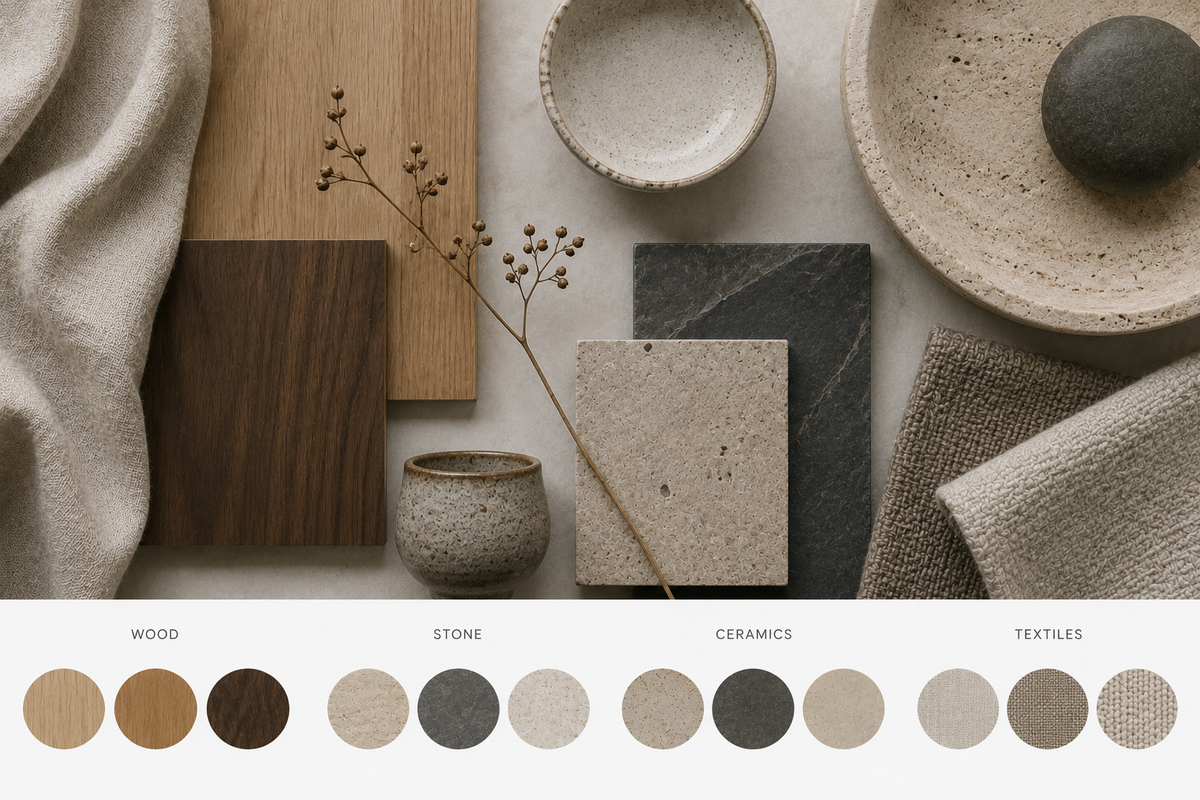 Japandi Interior Design Materials
Furniture
Japandi furniture combines Scandinavian comfort with Japanese simplicity.
The result is furniture that feels elegant without appearing formal and comfortable without becoming oversized.
Every piece is carefully considered.
Nothing feels unnecessary.
Low, Grounded Forms
One of the defining characteristics of Japandi furniture is its lower profile.
Low coffee tables, beds and storage units create interiors that feel calm and visually connected to the floor—a principle inspired by traditional Japanese living.
This also enhances the sense of openness throughout the room.
Clean Lines
Furniture silhouettes remain simple and understated.
Sharp geometry is often softened with gently rounded corners, subtle curves and refined proportions that make interiors feel warm rather than rigid.
Quality Over Quantity
Japandi encourages buying fewer pieces of higher quality.
A solid timber dining table or a beautifully crafted chair is valued far more than filling a room with unnecessary furniture.
This philosophy supports slower consumption and interiors designed to last for many years.
Design Lens
In Japandi, every piece of furniture should have a purpose, a place and enough space around it to be appreciated.
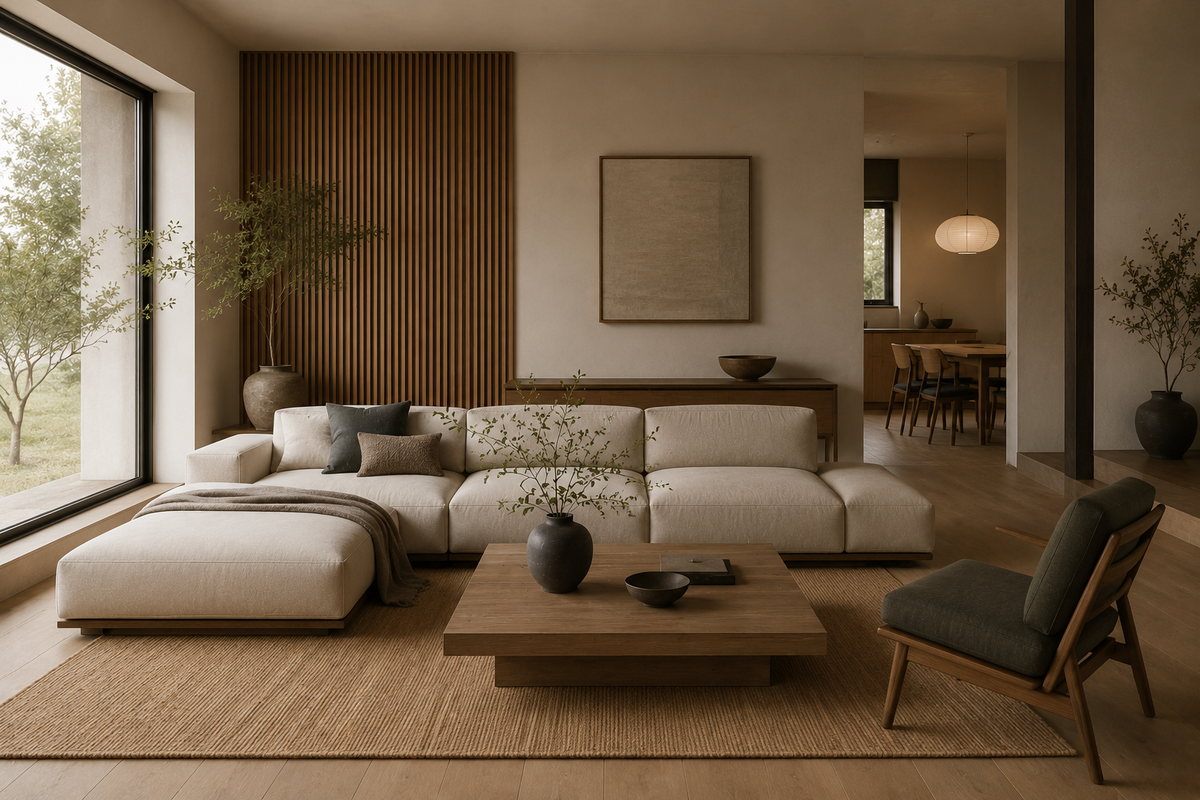 Japandi Interior Design Furniture
Lighting
Lighting in Japandi interiors is designed to create a sense of calm.
Instead of bright, uniform illumination, the focus is on soft, layered light that highlights natural materials and creates gentle transitions between different areas of the home.
Rather than relying on one central fixture, several light sources work together.
These typically include:
- ceiling lighting,
- table lamps,
- floor lamps,
- wall lights,
- subtle accent lighting.
Layered lighting allows interiors to feel equally peaceful during the day and after sunset.
Colour Temperature
Warm light between 2700 K and 3000 K complements wood, stone and natural textiles while creating the relaxed atmosphere associated with Japandi interiors.
Cool lighting is generally avoided because it reduces the warmth of natural materials.
Lighting as Part of the Interior
Lighting fixtures are chosen not only for their function but also for their form.
Paper shades, wood, ceramic, linen and frosted glass are frequently used to diffuse light softly while reinforcing the natural character of the space.
Rather than becoming dramatic statement pieces, Japandi lamps contribute quietly to the overall harmony of the room.
Decorative Objects
Japandi interiors use remarkably few decorative objects, but every one of them has a purpose.
Instead of filling empty shelves, accessories help reinforce the calm atmosphere and introduce craftsmanship into the space.
Typical decorative objects include:
- handcrafted ceramics,
- decorative trays,
- stone bowls,
- simple vases,
- dried branches,
- paper lanterns,
- natural textiles.
Many of these objects celebrate subtle irregularities created during the making process.
Rather than seeking perfect symmetry, Japandi values craftsmanship and individuality.
The space surrounding decorative objects is just as important as the objects themselves.
This restraint allows every piece to become part of a balanced composition instead of competing for attention.
Design Lens
Japandi interiors don't rely on decoration to create beauty. They allow beautiful objects to exist without distraction.
Common Mistakes
Japandi appears effortless, but creating that sense of balance requires careful decisions. Many interiors described as Japandi are simply minimalist spaces with light wood and neutral colours, missing the warmth and philosophy that define the style.
The most common mistakes usually come from focusing on appearance instead of the principles behind it.
Creating a Space That Feels Too Cold
Reducing the number of objects doesn't automatically create a Japandi interior.
Without natural materials, soft textiles and carefully planned lighting, a room can quickly feel empty rather than peaceful.
Japandi should encourage relaxation—not resemble an art gallery or a showroom.
Replacing Natural Materials
Authenticity is one of the foundations of Japandi.
Wood-effect laminates, glossy finishes and synthetic fabrics rarely achieve the same atmosphere as real timber, natural stone or linen.
Choosing fewer genuine materials is almost always a better solution than filling a room with artificial alternatives.
Using Too Many Decorative Objects
Japandi doesn't reject decoration.
It simply encourages choosing decorative pieces more carefully.
A handful of handcrafted objects displayed with intention creates a much stronger impression than shelves filled with accessories.
Avoiding Contrast
Many people associate Japandi with pale colours only.
In reality, darker timber, charcoal, black accents and natural stone are often used to introduce depth and balance.
Without contrast, interiors can begin to feel flat and lacking in character.
Filling the Room with Furniture
Space is one of the essential elements of Japandi.
Furniture should never occupy every available corner.
Leaving generous space between objects allows natural light, materials and proportions to become part of the overall composition.
Design Lens
Japandi isn't about owning less. It's about choosing better.
How to Create a Japandi Interior on a Budget
Creating a Japandi home doesn't require an expensive renovation.
The style is built on thoughtful choices rather than expensive purchases.
Start with a calm, neutral foundation.
Natural wall colours, simple furniture and warm lighting create a timeless base that can gradually evolve over time.
If you're updating an existing interior, focus on a few meaningful improvements instead of replacing everything at once.
Good places to begin include:
- reducing unnecessary decoration,
- introducing natural textiles,
- replacing cool lighting with warm lighting,
- choosing ceramic or wooden accessories instead of plastic,
- adding indoor plants or simple branches,
- investing in one well-crafted piece instead of several inexpensive ones.
Small, intentional changes often transform a room more effectively than a complete redesign.
How Decorative Objects Complete Japandi Interiors
Decorative objects play a quiet but important role in Japandi interiors.
Rather than becoming focal points themselves, they reinforce the calm atmosphere and celebrate craftsmanship.
Handmade ceramics, decorative trays, stone bowls, sculptural lighting and simple vases all fit naturally within the style.
Many of these objects intentionally retain subtle irregularities created during the making process.
Those imperfections make every piece unique and strengthen the connection between the interior and the natural world.
Just as important as the objects themselves is the empty space around them.
That space allows each piece to breathe and become part of a carefully balanced composition.
Design Lens
In Japandi, decorative objects aren't chosen to impress. They're chosen to create a sense of calm.
Frequently Asked Questions
What is Japandi interior design?
Japandi is a contemporary design style that combines Scandinavian functionality with Japanese simplicity. It focuses on natural materials, craftsmanship, balance and calm, creating interiors that feel warm, timeless and uncluttered.
How is Japandi different from Scandinavian interior design?
While both styles value simplicity and natural materials, Japandi introduces stronger Japanese influences through lower furniture, darker timber, greater restraint and a deeper appreciation for handcrafted objects and natural imperfections.
Is Japandi the same as minimalism?
No.
Minimalism focuses primarily on reducing the number of possessions. Japandi is more concerned with balance, craftsmanship and surrounding yourself with objects that are both useful and meaningful.
What colours work best in Japandi interiors?
Warm white, soft beige, taupe, sand, olive green, sage green, charcoal and natural wood tones create the calm, earthy palette associated with the style.
What materials define Japandi interiors?
Wood, natural stone, linen, cotton, wool and handcrafted ceramics are among the most characteristic materials. Matte finishes and visible natural textures are preferred over glossy surfaces.
Is Japandi suitable for small apartments?
Yes.
Simple layouts, carefully selected furniture and a restrained colour palette make Japandi particularly effective in smaller homes, where creating a sense of calm and openness is especially important.
Will Japandi go out of style?
Although the name is relatively new, the principles behind Japandi—quality craftsmanship, natural materials, functionality and timeless design—are unlikely to lose their relevance. These values extend far beyond changing interior design trends.