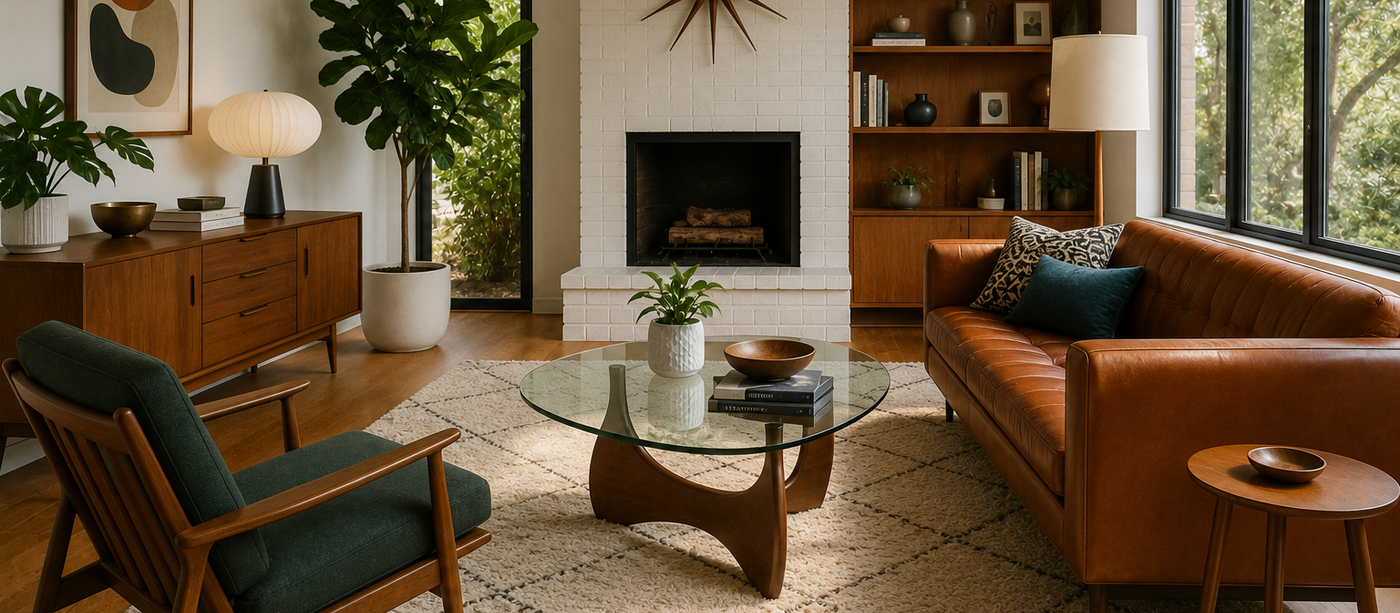
Mid-Century Modern Interior Design – A Complete Guide
Design Lens
Mid-Century Modern proves that great design doesn't age. More than half a century later, its most iconic furniture still feels remarkably contemporary.
Although Mid-Century Modern originated in the middle of the twentieth century, it remains one of the most influential design movements in the history of interiors and furniture.
Emerging during a period of rapid social and technological change, designers began creating furniture that combined functionality, simplicity and modern manufacturing techniques. Their goal was to design beautiful objects that could improve everyday life rather than simply decorate a room.
Many of the world's most recognisable furniture designs were born during this period.
The work of designers such as Charles and Ray Eames, Eero Saarinen, Isamu Noguchi and Hans Wegner continues to influence contemporary interiors, with many of their original designs still in production today.
Despite its roots in the 1940s, 50s and 60s, Mid-Century Modern doesn't feel nostalgic.
Its clean proportions, natural materials and timeless approach to design allow it to fit effortlessly into modern homes.
In this guide, you'll discover what defines Mid-Century Modern interior design, which materials and colours shape the style, and how to create interiors inspired by one of the most influential design movements of the twentieth century.
What Is Mid-Century Modern Interior Design?
Mid-Century Modern is a design movement that developed primarily between the mid-1940s and the late 1960s.
It emerged in response to changing lifestyles and advances in manufacturing, encouraging designers to create furniture that was practical, affordable and beautifully designed.
Heavy ornament disappeared.
In its place came lighter proportions, cleaner lines and furniture designed around the needs of everyday living.
Many of the movement's greatest designers—including Charles and Ray Eames, Eero Saarinen, Isamu Noguchi and Hans Wegner—created pieces that are still regarded as icons of modern design.
It's also important to distinguish Mid-Century Modern from Modern interior design.
While the two names are often confused, Mid-Century Modern refers to a specific historical movement and its distinctive approach to furniture, materials and interior architecture.
Design Lens
Mid-Century Modern doesn't recreate the past. It demonstrates that truly good design remains relevant for generations.
The Key Characteristics of Mid-Century Modern Interior Design
Mid-Century Modern is recognised for its balance of elegance, functionality and simplicity.
These principles continue to define the style decades after it first appeared.
Lightweight Forms
One of the style's most recognisable characteristics is its light visual appearance.
Slim proportions, tapered wooden legs and carefully balanced furniture make interiors feel open without sacrificing comfort.
Even larger storage units often appear surprisingly elegant.
Functionality
Every object is designed with a clear purpose.
Beauty and practicality exist together, with furniture carefully proportioned to improve everyday life rather than simply decorate a room.
Many pieces designed more than sixty years ago remain exceptionally comfortable today.
Organic Shapes
Although Mid-Century Modern embraces simplicity, it also introduces gentle curves and flowing forms.
Rounded armchairs, oval tables and sculptural lighting soften interiors while adding visual interest without unnecessary ornament.
Timeless Design
Perhaps the greatest achievement of Mid-Century Modern is its longevity.
Rather than following short-lived trends, designers created furniture that continues to feel contemporary decades later.
The enduring popularity of these pieces demonstrates the lasting value of thoughtful design.
Colour Palette
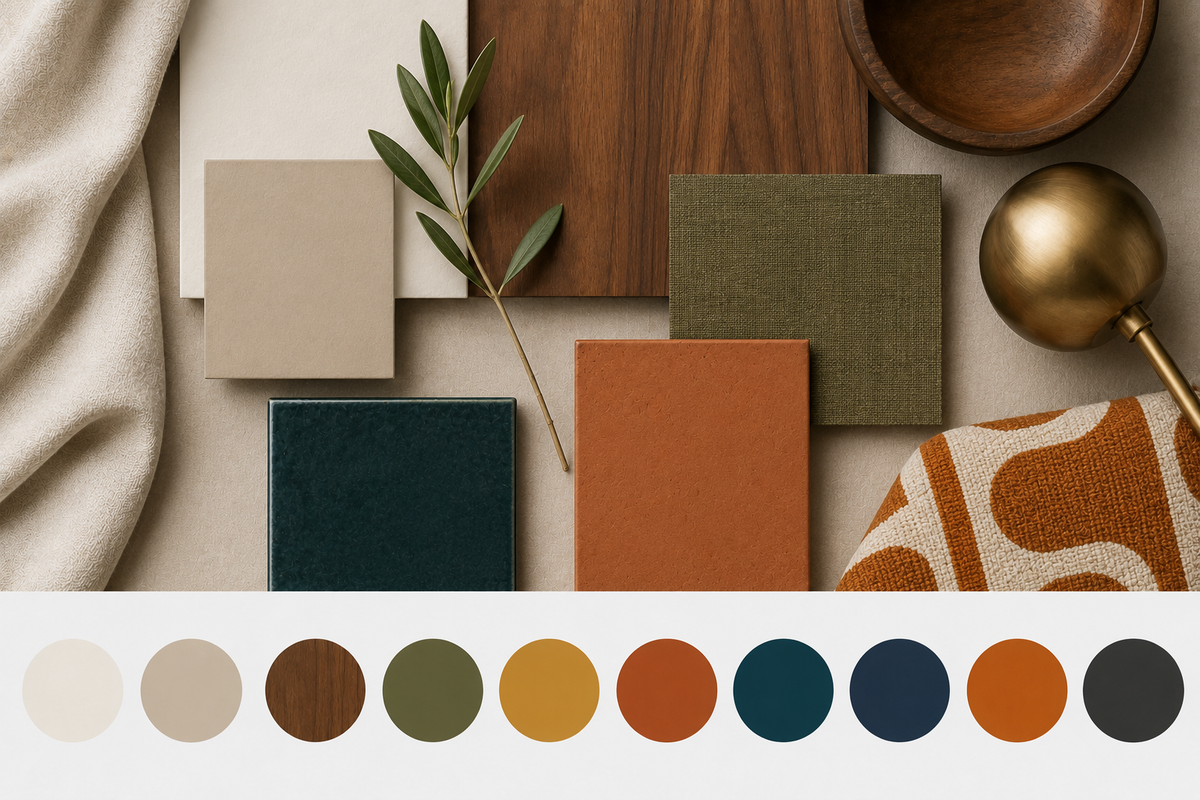
Compared with many contemporary styles, Mid-Century Modern uses a richer and more expressive colour palette.
Neutral backgrounds are often complemented by bold accent colours inspired by the optimism of post-war design.
Common colours include:
- warm white,
- beige,
- walnut wood tones,
- olive green,
- mustard yellow,
- terracotta,
- petrol blue,
- navy blue,
- burnt orange,
- charcoal.
These stronger colours usually appear on upholstered furniture, artwork or carefully selected accessories, while the overall palette remains balanced and harmonious.
Design Lens
In Mid-Century Modern, colour enhances great design—it never competes with it.
 Mid-Century Modern Interior Design Colors
Materials
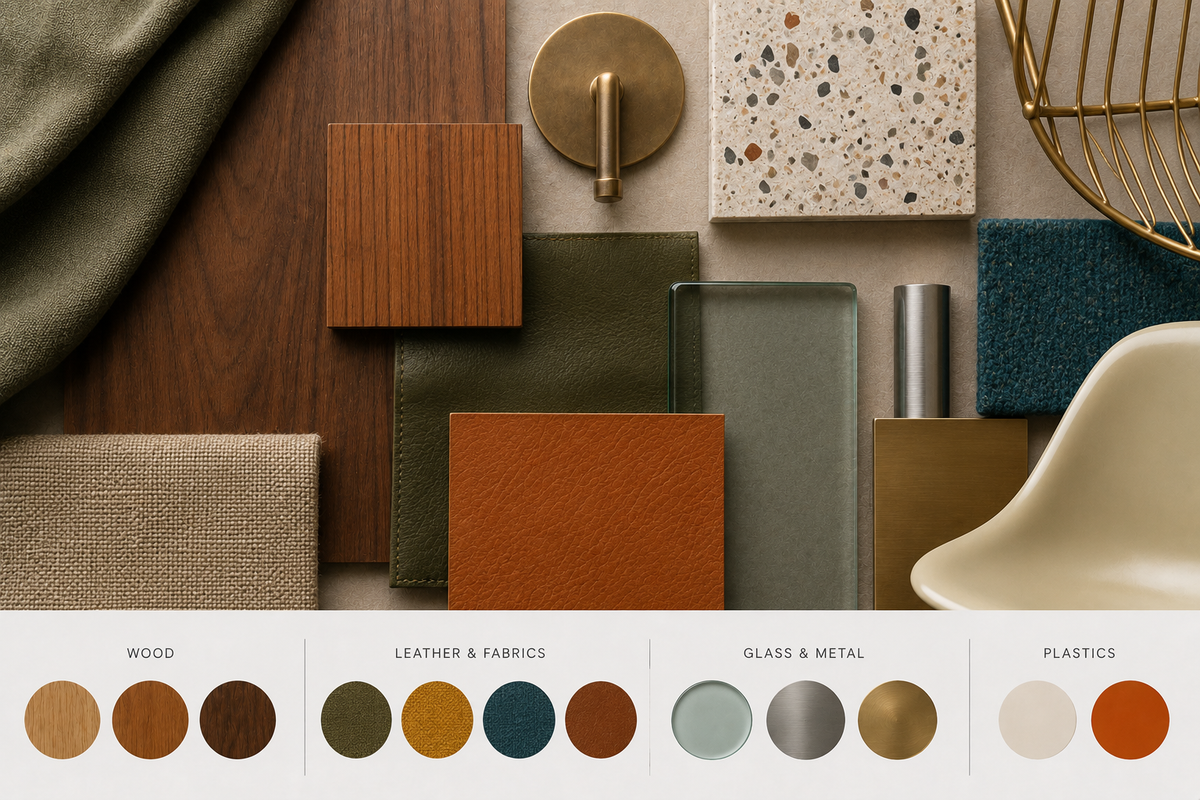
Materials are just as important as furniture in Mid-Century Modern interiors.
Designers of the period combined natural timber with innovative materials, creating interiors that felt lighter, more functional and more modern than anything that came before.
That combination remains one of the defining characteristics of the style today.
Wood
Wood is undoubtedly the most important material in Mid-Century Modern interiors.
Walnut, teak, oak and rosewood are among the most recognisable choices, bringing warmth while highlighting the clean lines of the furniture.
Natural grain is never hidden beneath heavy finishes.
Instead, matte surfaces allow the beauty of the timber to become part of the design itself.
Leather and Textiles
Upholstered furniture often features wool, linen or leather.
Alongside neutral shades, Mid-Century Modern also embraces richer colours such as olive green, mustard yellow, petrol blue and burnt orange—tones that became closely associated with post-war design.
Comfort and durability remain just as important as appearance.
Glass and Metal
Mid-Century Modern embraced new manufacturing techniques, allowing designers to experiment with materials such as glass, aluminium, steel and brass.
Rather than dominating the interior, metal usually appears as a refined detail that complements the warmth of natural wood.
Moulded Materials
One of the movement's greatest innovations was the creative use of moulded plywood, fibreglass and plastic.
These materials made it possible to produce lightweight furniture with flowing organic forms that had previously been difficult to achieve.
Many of the era's most iconic chairs continue to be manufactured using these techniques today.
Design Lens
Mid-Century Modern demonstrates that innovative materials can coexist beautifully with natural timber.
 Mid-Century Modern Interior Design Materials
Furniture
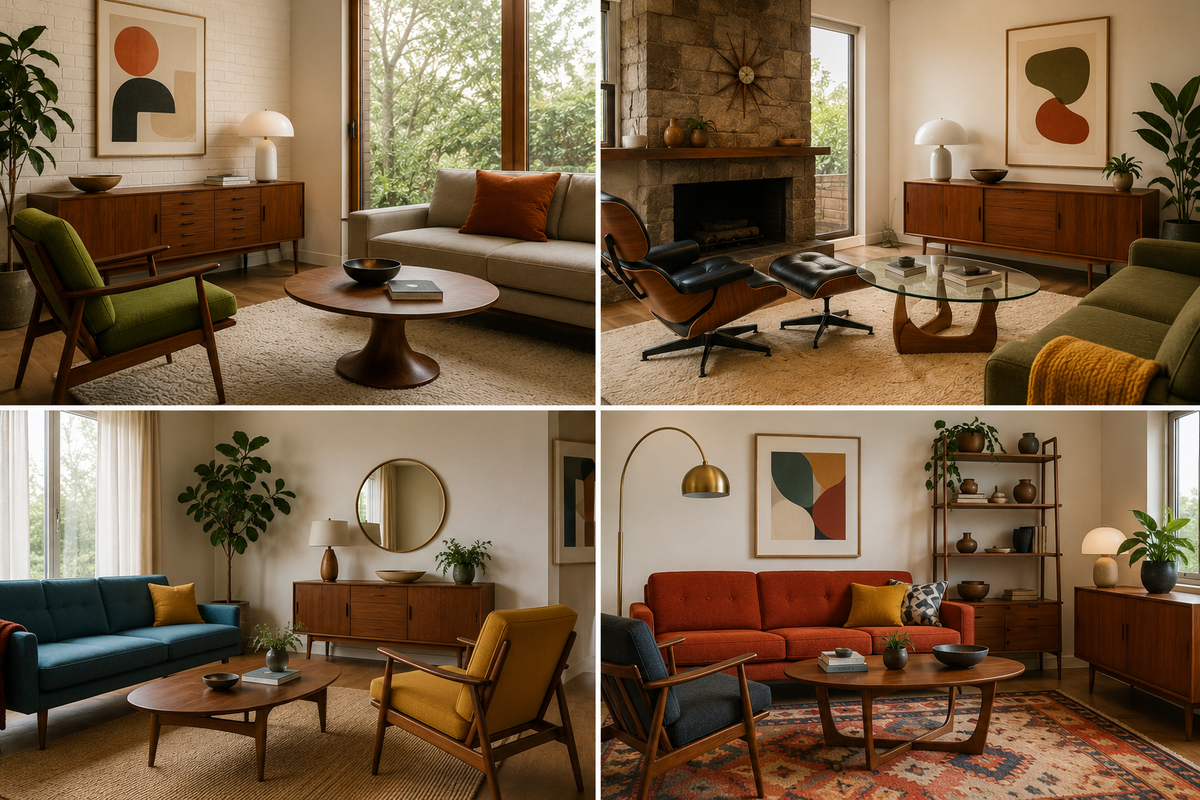
Furniture is undoubtedly the defining feature of Mid-Century Modern interiors.
Many pieces designed more than sixty years ago remain in production today and continue to influence contemporary furniture design around the world.
Slim Proportions
Lightweight silhouettes and tapered wooden legs are among the most recognisable characteristics of the style.
These elegant proportions prevent even larger pieces from feeling visually heavy.
The result is furniture that feels open, balanced and timeless.
Design Icons
Mid-Century Modern introduced some of the most celebrated furniture ever created.
The lounge chair by Charles and Ray Eames, the Tulip Table by Eero Saarinen and the Noguchi Coffee Table remain internationally recognised examples of timeless industrial design.
Their continued popularity proves that exceptional design doesn't become outdated.
Function and Comfort
Mid-Century Modern furniture was designed to improve everyday life.
Ergonomics, comfort and practical use were considered just as important as aesthetics.
This philosophy explains why so many original designs still feel remarkably contemporary today.
Design Lens
The best Mid-Century Modern furniture feels effortless because every detail has been carefully considered.
 Mid-Century Modern Interior Design Furniture
Lighting
Lighting plays both a functional and decorative role in Mid-Century Modern interiors.
Many lamps created during this period became design icons in their own right.
Typical lighting includes:
- pendant lights,
- table lamps,
- floor lamps,
- wall lights,
- multi-arm chandeliers.
Their forms are often simple but instantly recognisable.
Clean geometry is softened by gentle curves, creating lighting that feels sculptural without becoming overly decorative.
Colour Temperature
Warm lighting between 2700 K and 3000 K complements walnut timber, rich upholstery and brass details particularly well.
It enhances the inviting atmosphere that defines Mid-Century Modern interiors.
Lighting as Design
Many Mid-Century Modern lighting designs remain highly influential today.
Globe shades, cone-shaped lampshades and elegant geometric structures continue to inspire contemporary designers more than half a century after they were first introduced.
Decorative Objects
Decorative objects complete Mid-Century Modern interiors without competing with the furniture.
The emphasis remains on good design rather than excessive decoration.
Typical accessories include:
- ceramic vases,
- decorative trays,
- abstract artwork,
- books,
- sculptural objects,
- indoor plants,
- designer lighting.
Many decorative pieces introduce stronger colours or organic forms that contrast beautifully with the clean lines of the furniture.
As with the rest of the style, restraint is essential.
A small number of thoughtfully selected objects creates a far stronger impression than filling every shelf.
Design Lens
In Mid-Century Modern interiors, well-designed everyday objects often become the most beautiful decoration.
Common Mistakes
Mid-Century Modern has remained popular for decades, but it's often misunderstood. The style isn't about filling a room with vintage furniture. It's about combining timeless design, functionality and carefully balanced proportions.
Turning It Into a Retro Interior
One of the most common mistakes is trying to recreate a home from the 1950s or 60s.
The best Mid-Century Modern interiors combine iconic furniture with contemporary architecture and modern everyday living.
The goal isn't historical accuracy.
It's timeless design.
Using Too Many Bold Colours
Mustard yellow, petrol blue, burnt orange and olive green are all closely associated with Mid-Century Modern.
However, they work best as carefully placed accents rather than dominating the entire room.
A calm, neutral foundation allows these colours to have much greater impact.
Choosing Furniture Only for Its Appearance
Mid-Century Modern designers placed enormous importance on ergonomics.
Beautiful furniture should also be comfortable.
Selecting visually attractive pieces that aren't enjoyable to use goes against one of the movement's core principles.
Adding Too Many Decorative Objects
Mid-Century Modern interiors feel carefully curated rather than heavily decorated.
A few well-designed accessories usually create a stronger impression than shelves filled with decorative items.
Furniture should remain the visual focus.
Replacing Natural Wood
Warm timber is one of the defining characteristics of Mid-Century Modern.
Replacing it with artificial finishes or low-quality imitations often removes much of the warmth and authenticity that makes the style so enduring.
Design Lens
Mid-Century Modern isn't about collecting furniture from the past. It's about surrounding yourself with design that remains relevant today.
How to Create a Mid-Century Modern Interior on a Budget
Creating a Mid-Century Modern home doesn't require purchasing original furniture from the 1950s.
The overall feeling of the style comes from thoughtful proportions, quality materials and timeless design rather than collector's pieces.
A good place to start is by choosing a few key elements.
Consider:
- furniture with tapered wooden legs,
- natural timber finishes,
- one or two bold accent colours,
- warm layered lighting,
- limiting decorative accessories,
- investing in timeless, well-designed furniture rather than following short-lived trends.
Mid-Century Modern interiors are usually built gradually.
Thoughtful choices matter far more than owning expensive originals.
How Decorative Objects Complete Mid-Century Modern Interiors
Decorative objects should complement the furniture rather than compete with it.
The strongest visual impact comes from a combination of well-designed furniture, natural materials and carefully selected accessories.
Ceramic vases, decorative trays, sculptural objects, abstract artwork and designer lighting all fit naturally within the style.
Indoor plants also play an important role, introducing softness and creating contrast with the clean architectural lines of the furniture.
As with most timeless interiors, restraint remains essential.
Leaving space around decorative objects allows each piece to become part of a balanced composition.
Design Lens
In Mid-Century Modern interiors, beautiful design is often the decoration itself.
Frequently Asked Questions
What is Mid-Century Modern interior design?
Mid-Century Modern is a design movement that developed primarily between the 1940s and the 1960s. It combines clean lines, functional furniture, organic forms and natural materials to create interiors that remain timeless today.
How is Mid-Century Modern different from Modern interior design?
Modern interior design describes a broader design philosophy, while Mid-Century Modern refers to a specific historical movement. It is recognised for its tapered furniture legs, organic shapes, warm timber and iconic twentieth-century furniture design.
What colours work best in Mid-Century Modern interiors?
Warm white, beige, walnut wood tones, olive green, mustard yellow, terracotta, petrol blue, navy blue, burnt orange and charcoal are among the colours most closely associated with the style.
What wood is commonly used in Mid-Century Modern interiors?
Walnut, teak, rosewood and oak are among the most characteristic choices. Their rich natural tones help create the warmth that defines the style.
Can Mid-Century Modern work in contemporary homes?
Absolutely.
Its timeless proportions, functional furniture and natural materials allow Mid-Century Modern pieces to integrate beautifully into contemporary architecture.
Do I need original vintage furniture?
No.
Many contemporary manufacturers produce high-quality furniture inspired by classic Mid-Century Modern designs. Good proportions, quality craftsmanship and natural materials are far more important than owning original pieces.
What decorative objects suit Mid-Century Modern interiors?
Ceramic vases, decorative trays, sculptural lighting, abstract artwork, books and indoor plants all complement the style. Choosing fewer, carefully selected objects creates a more authentic Mid-Century Modern interior than filling the room with vintage accessories.