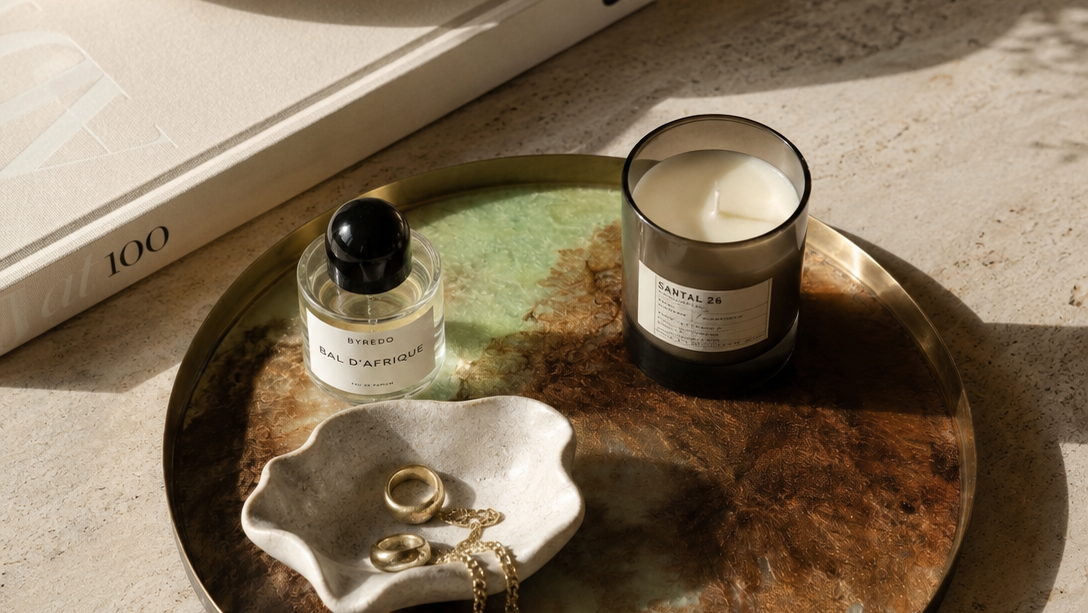
Just a few years ago, decorative trays were seen mostly as practical accessories. They appeared on coffee tables, dressers or bathroom counters and served mainly as organizational pieces.
Today, their role looks completely different.
Modern interiors are moving away from excessive decoration and random accessories. Instead, the focus has shifted toward carefully selected objects that bring texture, atmosphere and a stronger visual identity into a space. This is one of the reasons decorative trays have returned in a completely new form - more sculptural, more intentional and much more connected to contemporary design aesthetics.
Interior trends for 2026 are strongly centered around organic shapes, tactile materials and objects that feel handcrafted rather than mass-produced. More spaces now feature irregular forms, visible textures and pieces that add depth without overwhelming the room.
Minimalism is still present, but it has evolved into something warmer and more personal. Instead of sterile interiors, designers are creating spaces that feel softer, layered and emotionally connected to everyday life.
Decorative trays fit naturally into this direction. Especially trays with sculptural silhouettes, textured surfaces and biomorphic forms inspired by stone, minerals and fluid structures found in nature.
In contemporary interiors, decorative trays rarely serve a purely practical purpose anymore. They have become part of the visual composition of a room.
On a coffee table, they help organize candles, books, ceramics and decorative objects while making the entire arrangement feel more intentional and cohesive. In bedrooms and dressing areas, trays are often used for perfumes, jewelry, watches and everyday essentials. Vanity trays inspired by luxury hotels and boutique interiors have become especially popular in recent years.
Decorative trays are also increasingly present in bathrooms, where they help organize skincare products, candles and dispensers while creating a more elevated, spa-like atmosphere.
Near the entrance of a home, they function as elegant catch-all pieces for keys, sunglasses and small everyday objects.
At the same time, many contemporary trays are designed to exist as standalone decorative pieces. Organic lines, irregular edges and expressive textures make some objects feel closer to small sculptures than traditional home accessories.
One of the strongest directions in modern interior design is the move away from rigid geometry toward softer and more natural forms. Rounded silhouettes, asymmetry and nature-inspired structures are becoming increasingly common not only in furniture, but also in decorative objects and lighting design.
This shift is closely connected to the growing popularity of functional art - objects that combine utility with a strong visual presence.
Modern luxury interiors are no longer built around excess. Today, the emphasis is placed on craftsmanship, material quality, texture and individuality. Because of that, decorative trays have become more than accessories. They are now used as part of the atmosphere and identity of a space.
This is also why they continue to appear not only in living rooms, but also in bedrooms, bathrooms, dressing areas and boutique-inspired interiors.
The growing popularity of decorative trays reflects a wider desire for calmer, more intentional and more personal spaces. Interiors are expected to feel functional while still expressing character and emotion through carefully selected objects.
Pieces that combine practicality with sculptural design are likely to remain an important part of interior styling well beyond 2026 - especially those that feel less like mass-produced decor and more like collectible functional art.