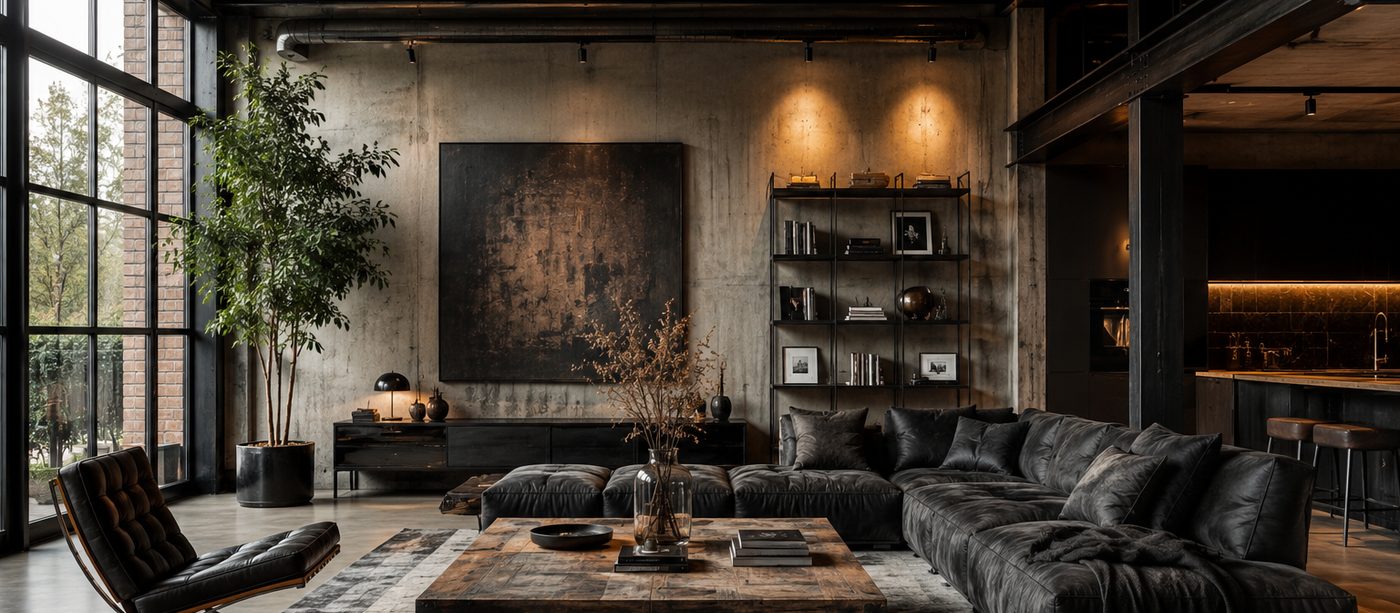
Industrial Interior Design – A Complete Guide
Design Lens
Industrial interior design proves that beauty can be found in the materials that buildings are usually designed to hide.
Industrial design wasn't created as a decorative trend.
It emerged when abandoned factories and warehouses began to be transformed into homes during the middle of the twentieth century. Instead of covering brick walls, concrete ceilings or exposed steel structures, architects left them visible, allowing the building itself to become part of the interior.
What was once considered purely functional gradually became one of the defining characteristics of the space.
Today, industrial interiors no longer aim to recreate old factories.
Instead, they borrow the honesty of industrial architecture while adapting it to the comfort of contemporary living.
The result is a style that feels bold, timeless and authentic without sacrificing everyday functionality.
In this guide, you'll discover what defines industrial interior design, which materials and colours shape the style, and how to create interiors inspired by loft architecture without turning your home into an imitation warehouse.
What Is Industrial Interior Design?
Industrial interior design has its roots in the conversion of former factories, warehouses and industrial buildings into residential spaces.
These buildings offered generous ceiling heights, large factory windows, open layouts and exposed structural elements that were never intended to become decorative features.
Rather than concealing brickwork, concrete or visible pipework, designers embraced them as part of the architecture.
This honesty became one of the defining principles of industrial interiors.
Today, very few people actually live in converted factories.
Instead, contemporary industrial interiors reinterpret these architectural characteristics, bringing their raw materials and functional approach into modern homes and apartments.
Design Lens
Industrial design doesn't hide the structure of a building. It celebrates it.
The Key Characteristics of Industrial Interior Design
Although industrial interiors continue to evolve, several defining principles remain unchanged.
Raw Materials
Concrete, brick, steel, timber and glass form the foundation of industrial interiors.
Instead of covering or disguising these materials, the style allows their natural texture and imperfections to become visible.
The materials themselves create much of the room's visual interest.
Open Spaces
Industrial interiors are closely associated with spacious, open-plan layouts.
Living rooms, kitchens and dining areas often flow together with very little visual separation.
Even in smaller homes, maintaining an open feeling through thoughtful layouts and restrained furniture helps capture the spirit of the style.
Exposed Structure
Steel beams, concrete columns, exposed ventilation ducts and visible pipework are treated as architectural features rather than elements to hide.
They remind us of the building's original purpose while adding depth and authenticity to the interior.
Functionality
Every object should serve a purpose.
Industrial design avoids unnecessary ornament and instead focuses on durable materials, practical furniture and timeless construction.
Colour Palette
The colour palette of industrial interiors is inspired directly by the materials found in historic industrial buildings.
Common colours include:
- charcoal,
- anthracite,
- black,
- concrete grey,
- brick red,
- rust,
- natural wood tones,
- deep green,
- warm white.
Although industrial interiors are often associated with darker colours, balance is essential.
Natural light, warm timber and lighter walls help soften the raw materials, creating spaces that feel comfortable rather than harsh.
Design Lens
In industrial interiors, colour doesn't dominate the space. It supports the character of the materials that define it.
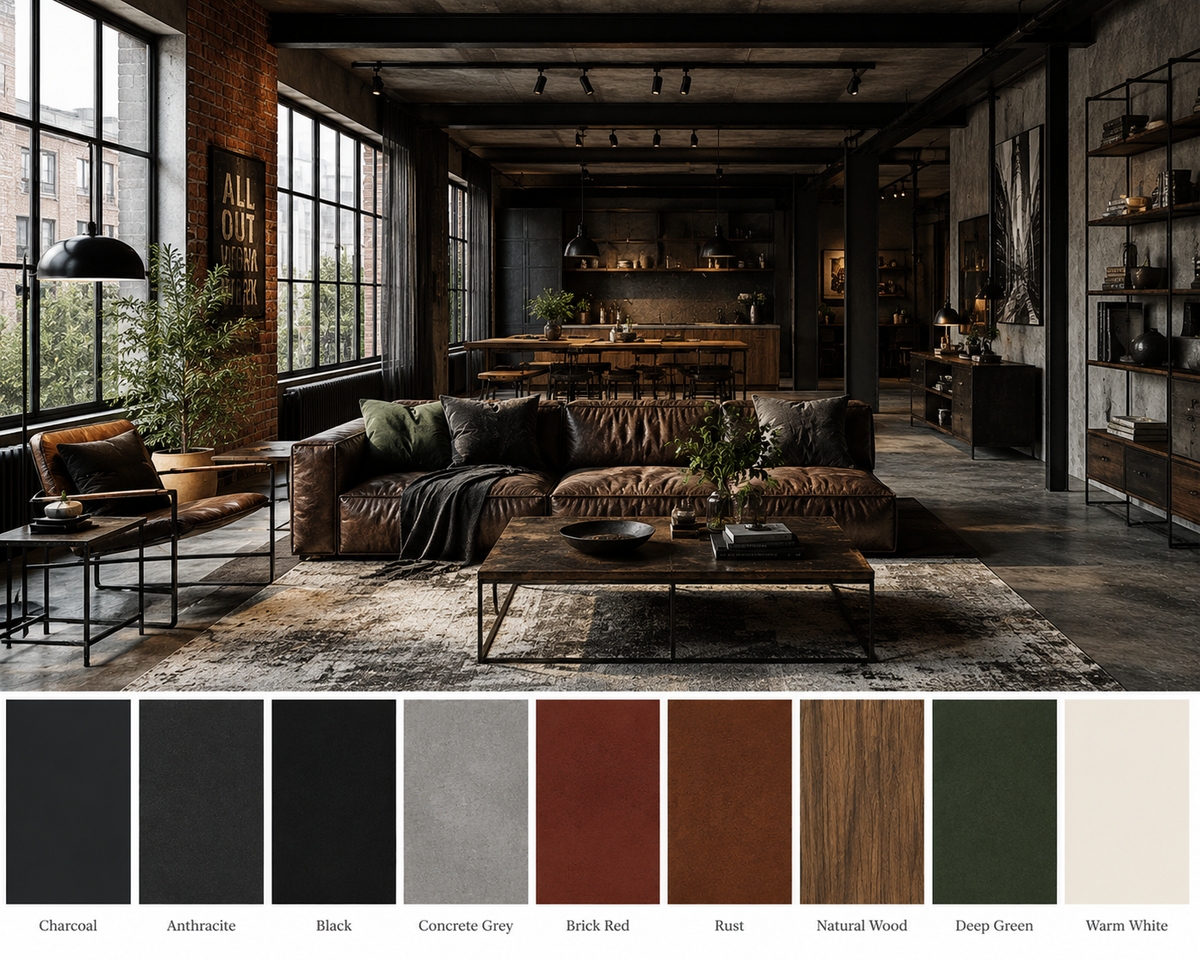 Industrial Interior Design colors
Materials
Materials are the defining feature of industrial interiors.
Rather than relying on decoration, industrial design creates character through exposed surfaces and honest construction. Concrete, brick, steel and timber aren't hidden—they become the visual language of the space.
Authenticity is more important than perfection.
Scratches, irregular textures and signs of age often add more character than flawless finishes.
Concrete
Concrete is one of the most recognisable materials in industrial interiors.
It appears on floors, walls, ceilings and even kitchen worktops.
Rather than aiming for a perfectly smooth finish, subtle variations in colour and texture help reinforce the raw character of the material.
Concrete provides a neutral backdrop that allows timber and metal details to stand out.
Brick
Exposed brick has become an icon of industrial design.
Original brickwork brings authenticity and history to a space, but carefully chosen brick slips can create a similar effect in contemporary homes.
Instead of covering multiple walls, one exposed brick surface is often enough to become a strong architectural feature.
Steel and Metal
Steel gives industrial interiors their unmistakable structure.
Black powder-coated steel, raw metal and brushed finishes frequently appear in shelving, staircases, table frames, lighting fixtures and window partitions.
Rather than acting as decoration, metal expresses the construction of each object.
Wood
Wood balances the colder appearance of concrete and steel.
Oak, ash and reclaimed timber are particularly popular because their natural grain introduces warmth without reducing the industrial character of the space.
Matte finishes help preserve the authenticity of the material.
Design Lens
Industrial interiors don't hide materials. They allow them to tell the story of the space.
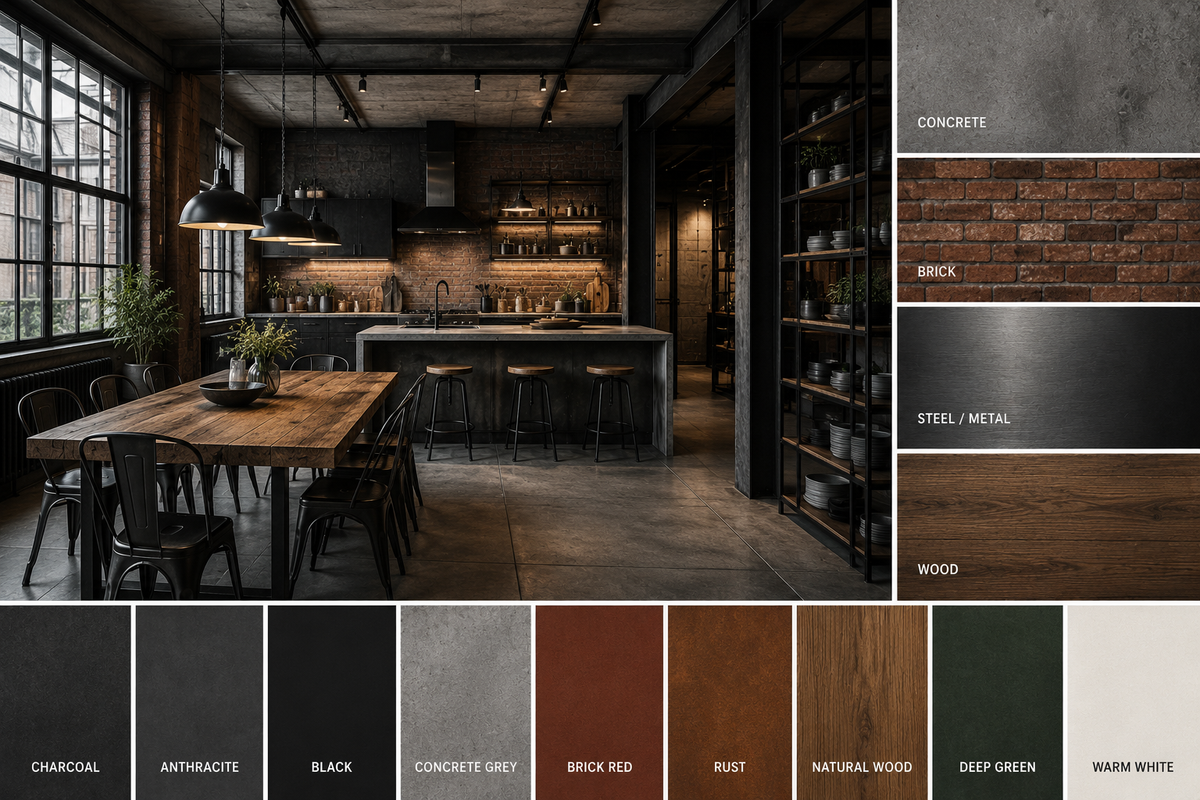 Industrial Interior Design materials
Furniture
Industrial furniture is simple, durable and functional.
Instead of decorative details, its character comes from strong construction, honest materials and timeless proportions.
Simple Geometry
Tables, shelving units and storage furniture typically feature clean, geometric forms.
Wood and steel are often combined, creating furniture that feels solid while remaining visually balanced.
The emphasis is always on structure rather than ornament.
Durability
Industrial furniture is designed to last.
Solid timber, steel frames and high-quality craftsmanship allow furniture to age naturally while maintaining its character.
Signs of everyday use are often seen as part of the material rather than imperfections.
Functionality
Every piece should have a clear purpose.
Open shelving provides accessible storage, large dining tables encourage gathering, and comfortable sofas soften the raw architecture without competing with it.
Industrial interiors always prioritise practical living over decoration.
Design Lens
In industrial interiors, good design begins with honest construction.
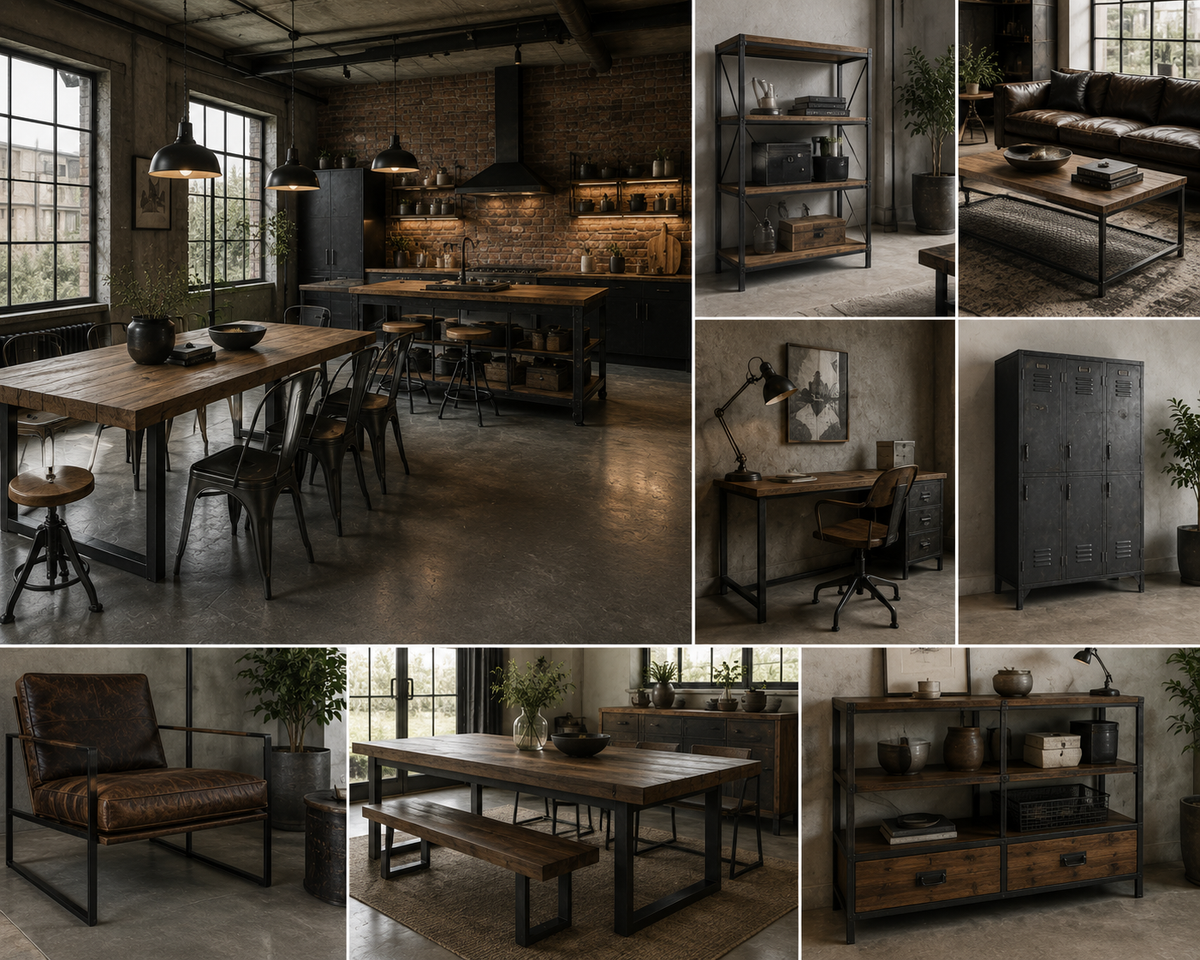 Industrial Interior Design furniture
Lighting
Lighting plays a vital role in balancing the raw materials found throughout industrial interiors.
It highlights the texture of brick and concrete while making large spaces feel warmer and more comfortable.
Rather than depending on a single ceiling fixture, industrial interiors typically combine several layers of lighting.
These often include:
- ceiling lighting,
- pendant lights above dining tables or kitchen islands,
- wall lights,
- table lamps,
- floor lamps.
Layered lighting creates atmosphere while allowing different parts of the room to serve different functions.
Colour Temperature
Warm lighting between 2700 K and 3000 K works particularly well in industrial interiors.
It softens concrete and steel while bringing warmth to timber surfaces and exposed brick.
Lighting as a Design Feature
Lighting fixtures often become some of the most recognisable objects in industrial interiors.
Metal shades, exposed bulbs, black steel frames and simple geometric forms reference the style's industrial origins while remaining perfectly suited to contemporary homes.
Modern interpretations increasingly combine these industrial materials with softer, sculptural forms that create a more refined atmosphere.
Decorative Objects
Industrial interiors use decoration with restraint.
The architecture itself remains the focal point, while decorative objects simply reinforce its character.
Typical accessories include:
- metal bowls,
- decorative trays,
- handcrafted ceramics,
- books,
- framed artwork or photography,
- large indoor plants,
- sculptural lighting.
Rather than filling shelves with small objects, industrial interiors rely on fewer, carefully chosen pieces made from honest materials.
Giving each object enough surrounding space allows both the architecture and the decorative elements to stand out naturally.
Design Lens
In industrial interiors, decoration should complement the architecture—not compete with it.
Common Mistakes
Industrial interiors have a strong visual identity, but it's surprisingly easy to overdo them. The goal isn't to recreate an old factory. It's to borrow the honesty of industrial architecture while creating a home that's comfortable to live in.
The best industrial interiors always balance raw materials with warmth and functionality.
Creating a Space That Feels Too Cold
Concrete, steel and exposed brick can quickly make an interior feel harsh if they're not balanced properly.
Natural timber, warm textiles and layered lighting soften the space while preserving its industrial character.
Contrast is what gives industrial interiors their appeal.
Adding Too Many Industrial Accessories
Metal clocks, vintage signs, exposed pipes and factory-inspired decorations can easily turn an interior into a themed set.
Industrial design isn't about collecting objects that look industrial.
The architecture and materials should remain the main focus.
Using Artificial Materials
Low-quality concrete effects, unrealistic brick panels or wood imitations often reduce the authenticity of the space.
When working with a limited budget, it's usually better to use fewer materials and choose finishes that look honest and natural.
Relying Too Heavily on Dark Colours
Black, charcoal and steel grey are characteristic of industrial interiors, but using too much of them can make a room feel smaller and less inviting.
Natural timber, lighter walls and generous daylight help create a much better balance.
Sacrificing Comfort
Industrial interiors should never feel uncomfortable.
Soft sofas, upholstered dining chairs and natural textiles bring warmth to the space without compromising its architectural character.
Design Lens
The best industrial interiors don't try to look like factories. They create homes inspired by them.
How to Create an Industrial Interior on a Budget
Creating an industrial interior doesn't require living in a converted warehouse.
Many of the defining characteristics of the style can be introduced gradually.
Focus first on materials and lighting rather than decoration.
Simple improvements often have the biggest impact.
Good places to start include:
- choosing furniture that combines wood and metal,
- replacing cool lighting with warm lighting,
- introducing one exposed brick or concrete feature wall,
- reducing unnecessary decoration,
- adding natural textiles,
- keeping layouts open and uncluttered.
Industrial interiors feel most authentic when they evolve naturally rather than trying to imitate a loft overnight.
How Decorative Objects Complete Industrial Interiors
Decorative objects should support the architecture rather than dominate it.
Industrial interiors already have strong visual character through their materials, so accessories should be used sparingly.
Handcrafted ceramics, decorative trays, stone bowls, sculptural lighting and simple metal objects work particularly well because they complement the raw finishes without competing for attention.
Large indoor plants also introduce softness and contrast, making industrial spaces feel more balanced.
Just as important as the decorative objects themselves is the empty space around them.
Allowing individual pieces room to stand on their own helps preserve the clean, architectural feeling that defines the style.
Design Lens
In industrial interiors, decorative objects should highlight the space—not distract from it.
Frequently Asked Questions
What is industrial interior design?
Industrial interior design is inspired by the conversion of former factories and warehouses into homes. It combines raw materials, exposed architectural elements and functional furniture to create interiors that feel authentic and timeless.
What is the difference between industrial and loft style?
The two terms are often used interchangeably, but they are not exactly the same. Loft originally refers to a home created inside a converted industrial building, while industrial design describes the aesthetic inspired by those spaces.
What colours work best in industrial interiors?
Charcoal, black, concrete grey, brick red, rust, deep green, warm white and natural wood tones create the classic industrial palette.
What materials define industrial interiors?
Concrete, brick, steel, glass and natural timber are the defining materials. They are typically left exposed or finished in ways that preserve their authentic appearance.
Can industrial design work in a small apartment?
Yes.
Open layouts, carefully chosen furniture and a restrained material palette allow industrial design to work surprisingly well even in compact homes.
Can industrial interiors be combined with other styles?
Absolutely.
Industrial interiors pair particularly well with Modern, Contemporary and Organic Modern design. Natural wood, warm lighting and sculptural furniture help create softer interpretations of the style.
What decorative objects suit industrial interiors?
Handcrafted ceramics, decorative trays, stone bowls, sculptural lighting, books and simple metal accessories all complement industrial interiors. Fewer, well-chosen objects almost always create a stronger result than filling the room with industrial-themed decorations.