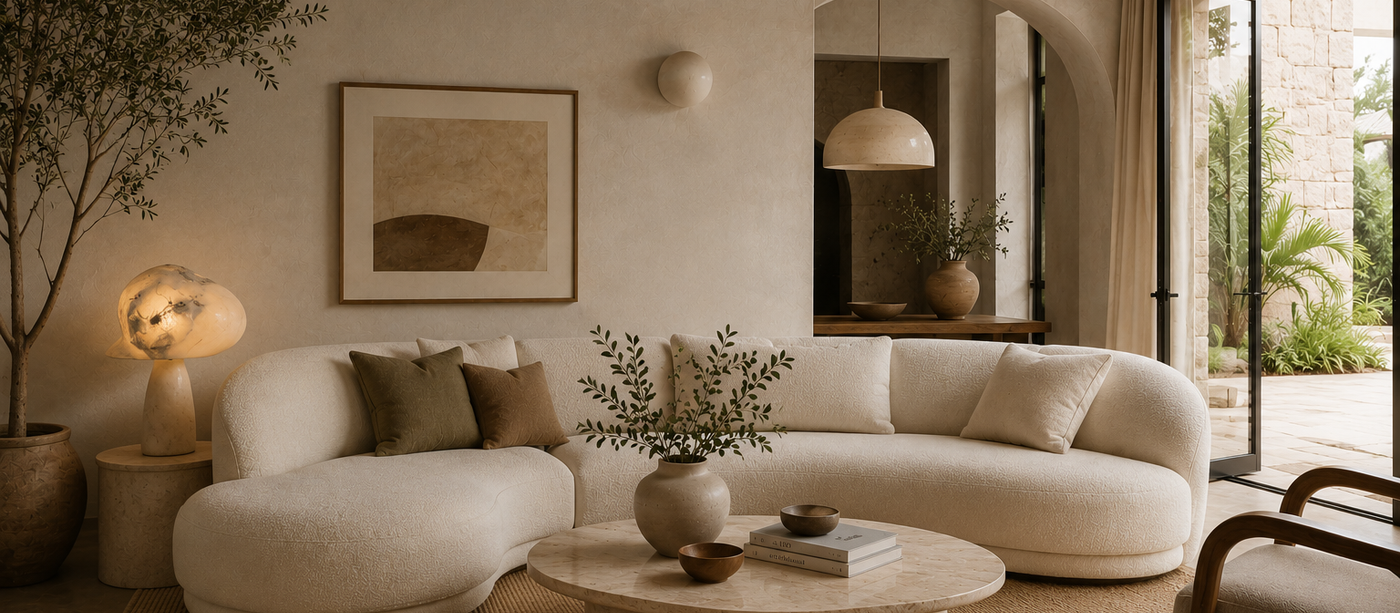
Organic Modern Interior Design – A Complete Guide
Design Lens
Organic Modern proves that contemporary interiors don't have to feel cold. By combining clean architecture with natural materials, they create spaces that are calm, warm and deeply connected to nature.
Over the past decade, Organic Modern has become one of the most influential directions in contemporary interior design. While modern architecture remains its foundation, the style introduces something that many minimalist interiors have traditionally lacked—warmth.
Instead of relying on sharp geometry and perfectly polished surfaces, Organic Modern embraces natural textures, sculptural forms and materials that become more beautiful with age.
The result is a home that feels refined without becoming formal.
Clean architectural lines remain, but they're softened by wood, stone, linen and carefully selected handcrafted objects.
This balance between contemporary design and nature explains why Organic Modern has become increasingly popular in luxury homes, boutique hotels and high-end residential projects around the world.
In this guide, you'll discover what defines Organic Modern interior design, which materials and colours shape the style, and how to create interiors that feel timeless, comfortable and naturally elegant.
What Is Organic Modern Interior Design?
Organic Modern isn't the opposite of modern design.
It's its natural evolution.
Instead of focusing solely on clean geometry and minimal decoration, Organic Modern introduces softer forms, tactile materials and a stronger connection with nature.
Modern architecture still provides the foundation.
Open floor plans, generous glazing and uncluttered spaces remain essential.
What changes is the way those spaces are finished.
Natural timber, textured stone, linen, clay, handcrafted ceramics and sculptural objects replace colder, more industrial finishes.
The result is an interior that feels contemporary while remaining warm and inviting.
Rather than trying to imitate nature, Organic Modern allows natural materials to become an essential part of the architecture itself.
Design Lens
In Organic Modern, nature isn't decoration. It's one of the building blocks of the interior.
The Key Characteristics of Organic Modern Interior Design
Although Organic Modern continues to evolve, several principles define the style.
Organic Forms
Perhaps the most recognisable feature of Organic Modern is the use of soft, flowing shapes.
Curved sofas, rounded coffee tables, sculptural lighting and irregular mirrors introduce movement and balance into spaces dominated by contemporary architecture.
Many of these forms are inspired directly by shapes found in nature.
Natural Materials
Wood, stone, linen, wool, clay and handcrafted ceramics define the atmosphere of the interior.
Rather than hiding texture, Organic Modern celebrates it.
The grain of timber, the veining of stone and the weave of natural fabrics become decorative elements in their own right.
Sculptural Design
Furniture and lighting often blur the line between functional objects and sculpture.
Every piece remains practical, but its form is carefully considered, allowing everyday objects to contribute to the overall character of the space.
Balance
Despite its expressive materials and sculptural forms, Organic Modern interiors never feel overwhelming.
A restrained colour palette, generous natural light and carefully chosen proportions create spaces that feel calm, balanced and timeless.
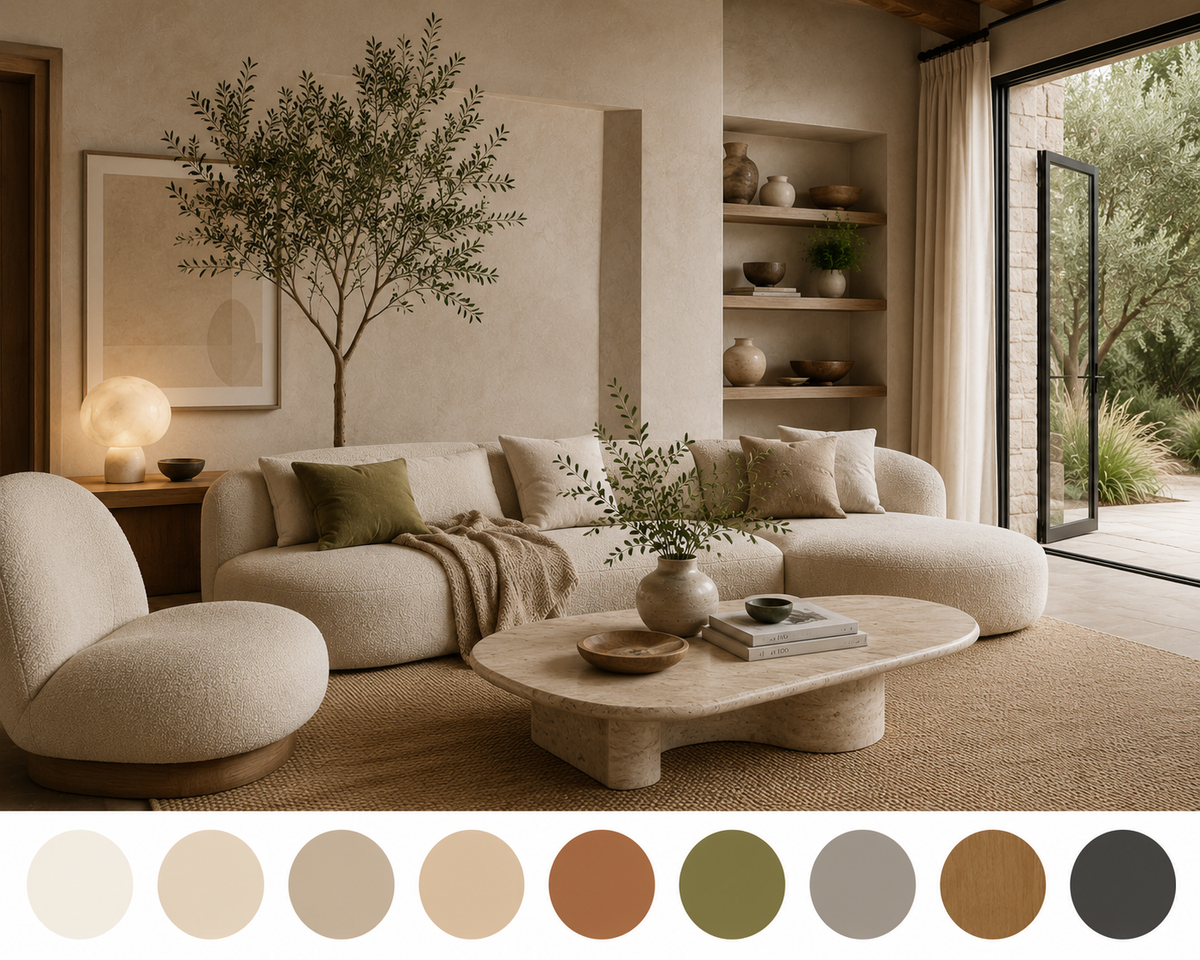
Colour Palette
Organic Modern interiors draw their colours directly from nature.
Instead of strong contrasts or highly saturated tones, the palette focuses on earthy shades that complement natural materials.
Typical colours include:
- warm white,
- cream,
- soft beige,
- taupe,
- sand,
- clay,
- olive green,
- warm grey,
- natural wood tones,
- charcoal.
Rather than relying on colour to create visual interest, Organic Modern uses texture, light and material variation to add depth throughout the space.
Design Lens
In Organic Modern, colour provides the backdrop. Materials and form tell the story.
 Organic Modern Interior Design colors
Materials
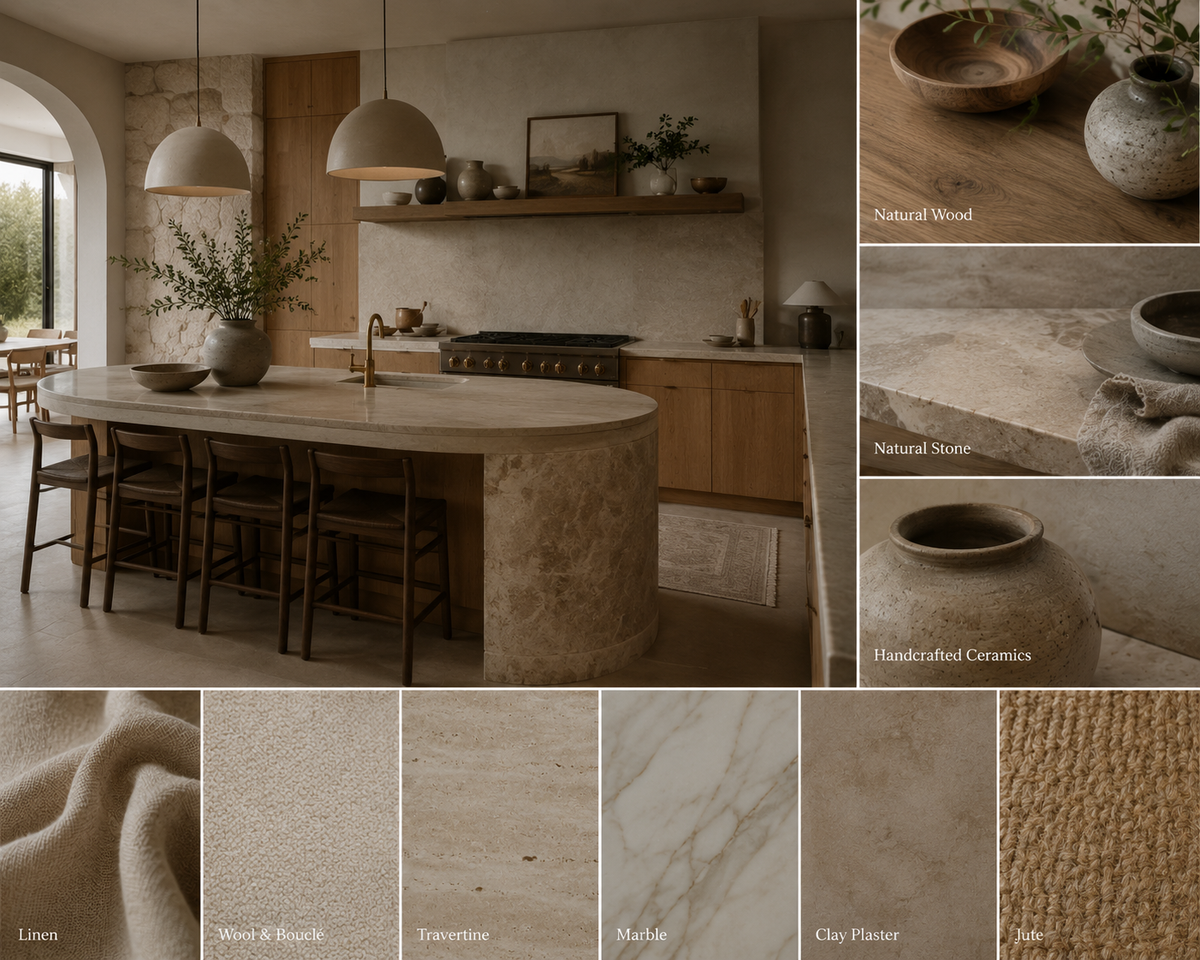
Materials are the foundation of Organic Modern interiors.
Rather than relying on decorative patterns or bold colours, the style creates character through texture. Timber, stone, linen and handcrafted ceramics work together to make even the simplest spaces feel warm and inviting.
Authenticity is essential.
Materials should look and feel natural rather than overly processed or artificially perfected.
Wood
Wood is the defining material of Organic Modern interiors.
Oak, ash and walnut are among the most common choices, bringing warmth while preserving the clean architectural character of the space.
Matte finishes are preferred because they highlight the natural grain instead of hiding it beneath glossy coatings.
Knots, subtle colour variations and visible texture are celebrated as part of the material's beauty.
Stone
Stone plays an equally important role.
Travertine, limestone, marble with gentle veining and quartzite frequently appear throughout Organic Modern interiors.
They're used not only for kitchen worktops but also for coffee tables, side tables, fireplaces and sculptural decorative pieces.
Their raw texture creates a beautiful contrast with softer fabrics.
Textiles
Linen, wool, cotton and bouclé introduce warmth and comfort.
Rather than using bold patterns, Organic Modern relies on richly textured fabrics that interact naturally with daylight.
Layering different textures creates visual depth while maintaining the calm atmosphere that defines the style.
Ceramics
Handcrafted ceramics perfectly reflect the philosophy of Organic Modern.
Slight irregularities, subtle glazing variations and visible signs of craftsmanship make every piece unique.
Instead of striving for perfect symmetry, Organic Modern embraces the individuality of handmade objects.
Design Lens
The most beautiful materials are the ones that remain true to their natural character.
 Organic Modern Interior Design materials
Furniture
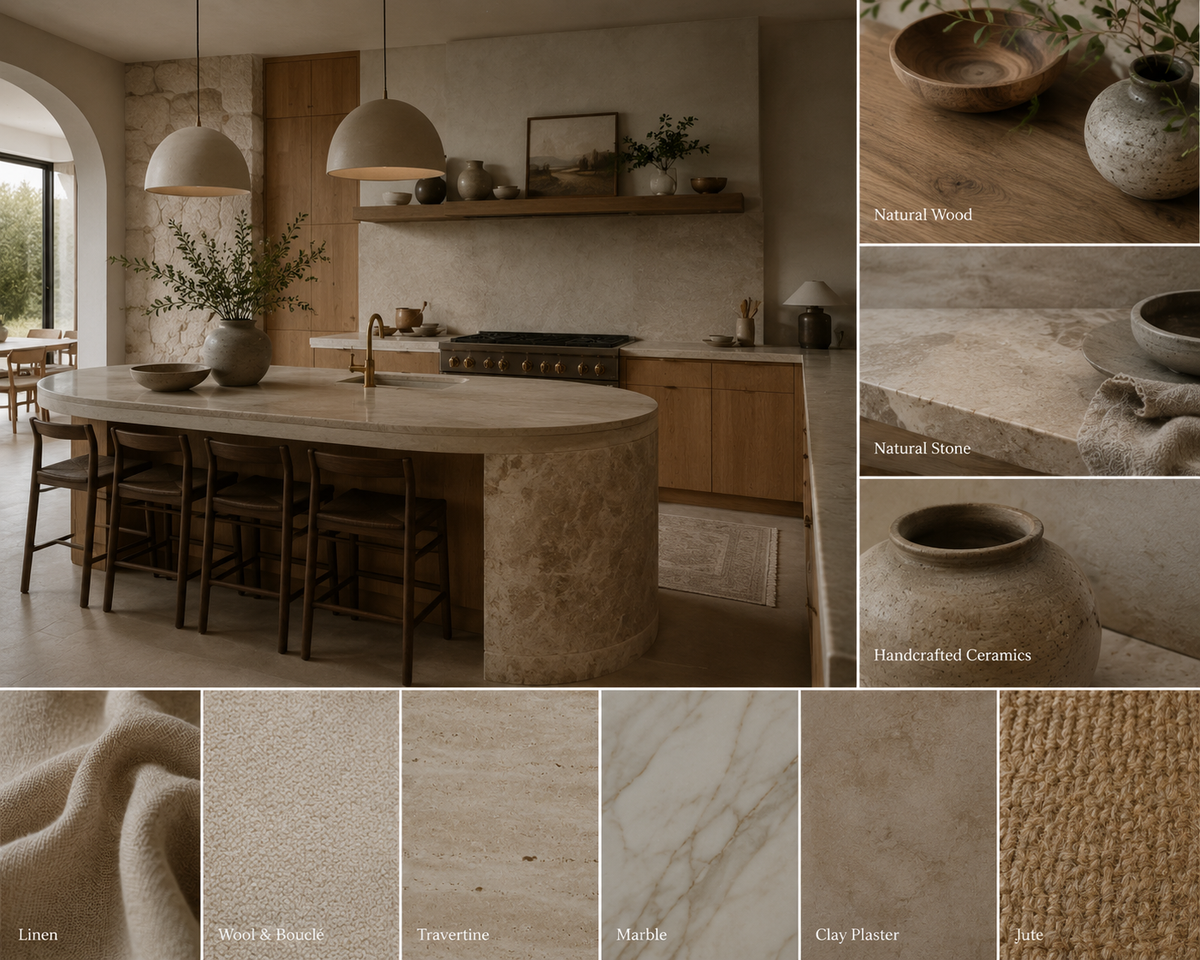
Furniture in Organic Modern interiors combines contemporary simplicity with sculptural design.
Instead of relying on decoration, individual pieces become visually interesting through their proportions, materials and organic silhouettes.
Sculptural Forms
One of the defining characteristics of Organic Modern is the use of furniture that feels almost sculptural.
Curved sofas, rounded coffee tables, softly shaped armchairs and organic mirrors introduce movement while softening the clean lines of contemporary architecture.
These flowing forms are often inspired by shapes found in nature.
Comfort
Organic Modern isn't designed to be admired from a distance.
It creates homes that invite people to slow down and relax.
Deep seating, generous upholstery and natural materials make interiors feel comfortable without sacrificing elegance.
Timeless Design
Furniture is selected with longevity in mind.
Simple forms, high-quality craftsmanship and natural materials allow pieces to remain relevant long after passing trends have disappeared.
Rather than replacing furniture frequently, Organic Modern encourages investing in fewer, better-made objects.
Design Lens
In Organic Modern, furniture should feel as comfortable as it looks.
 Organic Modern Interior Design furniture
Lighting
Lighting is one of the most important elements in Organic Modern interiors.
It reveals the texture of timber, highlights natural stone and brings warmth to neutral colour palettes.
Instead of depending on one central ceiling light, Organic Modern interiors combine multiple layers of lighting.
These typically include:
- ceiling lighting,
- table lamps,
- floor lamps,
- wall lights,
- subtle accent lighting.
Layered lighting creates a softer atmosphere while allowing materials to become the visual focus.
Colour Temperature
Warm lighting between 2700 K and 3000 K enhances natural materials and creates the calm atmosphere associated with Organic Modern interiors.
Cool lighting is generally avoided because it reduces the warmth and depth of timber, stone and textiles.
Lighting as Sculpture
Lighting fixtures often become sculptural objects themselves.
Organic shapes, textured ceramics, natural stone, frosted glass and handcrafted materials transform lamps into functional works of art that continue to define the space even when switched off.
Decorative Objects
Decorative objects complete an Organic Modern interior by reinforcing its connection with nature.
Rather than filling empty shelves, carefully chosen pieces introduce texture, craftsmanship and sculptural form.
Common decorative objects include:
- handcrafted ceramic vases,
- decorative trays,
- stone bowls,
- sculptural objects,
- natural branches,
- books,
- organically shaped lighting.
Every object is given room to breathe.
Instead of displaying many accessories, Organic Modern interiors rely on a small number of carefully selected pieces that naturally draw attention through their material and form.
Design Lens
The most beautiful decorative objects in Organic Modern interiors look as though they could have been shaped by nature itself.
Common Mistakes
Organic Modern feels effortless, but creating that balance requires thoughtful decisions. The style isn't simply about adding natural materials to a modern interior. It's about finding harmony between contemporary architecture, organic forms and carefully selected textures.
Creating a Space That Feels Too Minimal
One of the most common mistakes is removing so much that the interior begins to feel empty rather than welcoming.
Organic Modern isn't about eliminating personality.
Natural materials, soft textiles and sculptural objects are what give the space its warmth.
Using Too Many Materials
The style celebrates natural materials, but that doesn't mean every type of stone and every wood species should appear in the same room.
Limiting the material palette creates a calmer interior and allows each texture to stand out.
Forgetting Organic Shapes
Light timber and neutral walls alone don't create an Organic Modern interior.
Soft curves, sculptural furniture and flowing silhouettes are essential for balancing the clean architectural lines of contemporary spaces.
Without them, the room can feel closer to traditional minimalism.
Filling Every Surface
Decorative objects should complement the architecture rather than compete with it.
A few carefully selected handcrafted pieces usually create a much stronger impression than shelves filled with accessories.
Negative space is just as important as the objects themselves.
Ignoring Natural Light
Organic Modern relies heavily on daylight to reveal the texture of timber, stone and textiles.
Heavy curtains, poor lighting design or cool artificial lighting can dramatically reduce the warmth that defines the style.
Design Lens
Organic Modern isn't about recreating nature. It's about allowing nature to become part of the architecture.
How to Create an Organic Modern Interior on a Budget
Organic Modern doesn't require a complete renovation.
The style is built through thoughtful choices made over time rather than expensive purchases made all at once.
Start by creating a calm, neutral foundation.
Warm wall colours, natural timber and simple furniture provide a timeless base that can gradually evolve.
If you're updating an existing room, focus on the elements that have the greatest impact.
Good places to begin include:
- introducing natural wood,
- replacing cool lighting with warm lighting,
- adding linen or wool textiles,
- reducing unnecessary decoration,
- choosing one or two sculptural statement pieces,
- introducing larger plants or natural branches.
Organic Modern isn't created by adding more.
It's created by selecting better.
How Decorative Objects Complete Organic Modern Interiors
Decorative objects play an important role in Organic Modern interiors, but they should never dominate the space.
Instead, they reinforce the connection between architecture and nature.
Handcrafted ceramics, decorative trays, stone bowls, sculptural lighting and organically shaped objects naturally complement the restrained palette of the interior.
The materials themselves often become the decoration.
The grain of timber, the texture of stone and the subtle imperfections of handmade ceramics create visual interest without relying on excessive ornament.
Just as important is the space surrounding every object.
Allowing decorative pieces room to breathe gives the interior its calm, gallery-like quality while preserving warmth and comfort.
Design Lens
In Organic Modern, decorative objects don't compete with the architecture. They quietly complete it.
Frequently Asked Questions
What is Organic Modern interior design?
Organic Modern is a contemporary design style that combines modern architecture with natural materials, sculptural forms and earthy colours. It creates interiors that feel calm, warm and closely connected to nature.
How is Organic Modern different from Modern interior design?
Modern interior design focuses on clean geometry and functional simplicity. Organic Modern builds on those principles while introducing softer forms, natural textures and handcrafted materials that create a warmer atmosphere.
Is Organic Modern the same as Japandi?
No.
Both styles value natural materials and simplicity, but Japandi is influenced by Scandinavian and Japanese design philosophies. Organic Modern is generally more sculptural, uses stronger material contrasts and places greater emphasis on expressive forms.
What colours work best in Organic Modern interiors?
Warm white, cream, beige, taupe, clay, olive green, warm grey, charcoal and natural wood tones create the earthy palette that defines the style.
What materials define Organic Modern interiors?
Wood, natural stone, linen, wool, cotton, clay and handcrafted ceramics are among the most characteristic materials. Matte finishes and visible natural textures are preferred throughout the interior.
Can Organic Modern work in small apartments?
Absolutely.
A restrained palette, carefully selected furniture and abundant natural light help even compact spaces feel calm, spacious and comfortable.
What decorative objects suit Organic Modern interiors?
Handcrafted ceramic vases, decorative trays, stone bowls, sculptural lighting and objects inspired by organic forms all complement the style beautifully. The emphasis should always remain on quality, natural materials and thoughtful composition rather than quantity.