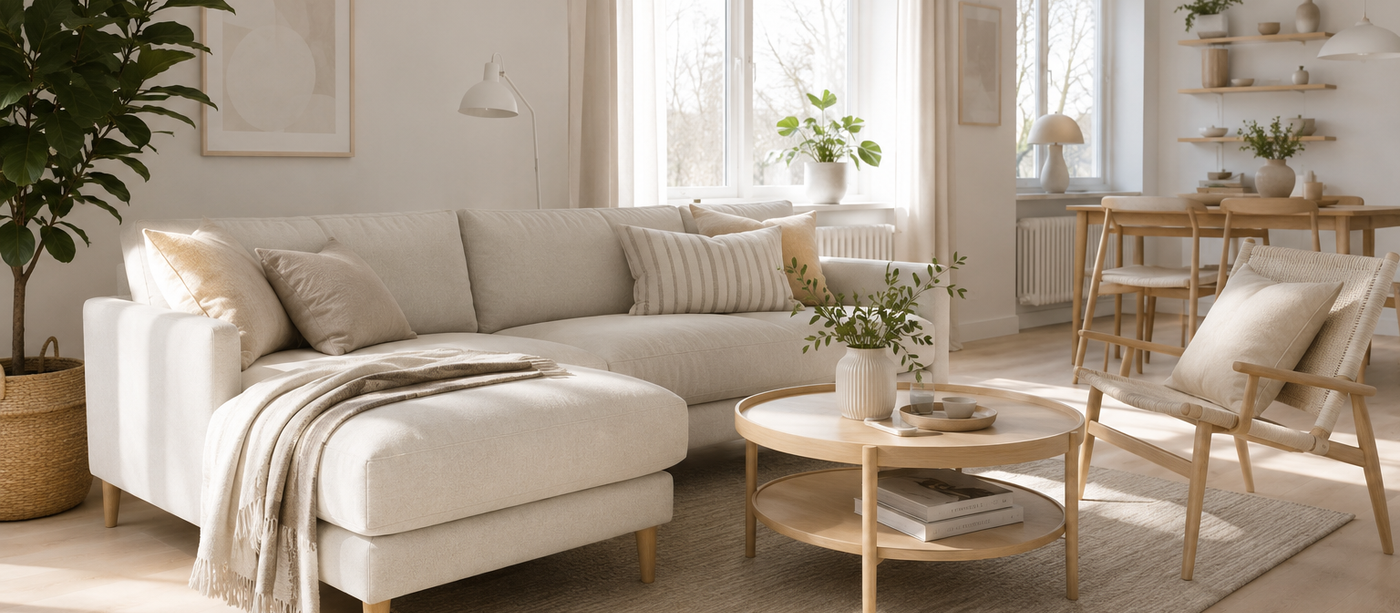
Scandinavian Interior Design – A Complete Guide
Design Lens
Scandinavian interior design was never created to impress. It was created to make everyday life brighter, calmer and more comfortable.
For decades, Scandinavian interior design has remained one of the world's most influential design styles. Its popularity comes not only from its clean aesthetic, but from the philosophy behind it.
At its core, Scandinavian design is about creating homes that are both beautiful and practical.
Long winters and limited daylight across Northern Europe shaped the way homes were designed. Interiors needed to maximise natural light, feel warm during the coldest months and provide spaces where everyday life could be enjoyed.
This way of thinking transformed simplicity into a design principle rather than a visual trend.
Today, Scandinavian interiors are recognised for their bright colour palettes, natural materials and functional furniture. Yet their greatest strength lies in balancing beauty with everyday comfort.
In this guide, you'll discover what defines Scandinavian interior design, which colours and materials work best, and how to create a home that feels warm, timeless and effortless to live in.
What Is Scandinavian Interior Design?
Scandinavian interior design originated in Sweden, Denmark, Norway and Finland, where climate has always played an important role in the way homes are designed.
Long, dark winters encouraged the use of light colours, large windows and natural materials to make interiors feel brighter and more inviting.
Functionality quickly became just as important as appearance.
Furniture was designed to last for many years, everyday objects served practical purposes and unnecessary decoration was kept to a minimum.
These principles continue to define Scandinavian interiors today.
Rather than following short-lived trends, the style focuses on timeless solutions that remain relevant regardless of changing fashions.
Design Lens
Scandinavian interiors prove that simplicity can feel warm, welcoming and deeply personal.
The Key Characteristics of Scandinavian Interior Design
Although Scandinavian interiors have evolved over time, several principles remain at the heart of the style.
Bright, Light-Filled Spaces
Natural light is one of the most valuable elements in Scandinavian homes.
Large windows, light window treatments and bright colour palettes help maximise daylight throughout the year, making interiors feel more open and spacious.
Functionality
Every object should have a purpose.
Furniture is designed to make everyday life easier rather than simply decorate a room. Storage is practical, layouts are efficient and comfort always comes before unnecessary ornament.
Warmth and Comfort
Despite their simplicity, Scandinavian interiors never feel cold.
Natural timber, soft textiles, warm lighting and carefully chosen accessories create inviting spaces where people genuinely enjoy spending time.
This philosophy is closely connected to the Danish concept of hygge—finding comfort and happiness in everyday moments at home.
A Strong Connection to Nature
Nature is present throughout Scandinavian interiors.
Wood, linen, wool, stone and indoor plants all help strengthen the relationship between the home and the natural world.
Instead of competing with nature, Scandinavian design celebrates it.
Colour Palette
Scandinavian interiors are built around light, calm and balanced colour palettes.
The most commonly used colours include:
- white,
- warm white,
- soft beige,
- light grey,
- sand,
- pale natural wood tones,
- muted colours inspired by nature.
Black is often introduced as a subtle accent through lighting, furniture details or picture frames, creating gentle contrast without dominating the space.
The goal isn't to make colour the focal point.
Instead, the palette provides a calm backdrop that allows natural light, materials and craftsmanship to become the centre of attention.
Design Lens
A Scandinavian interior doesn't feel bright because it's completely white. It feels bright because every colour works together with natural light.
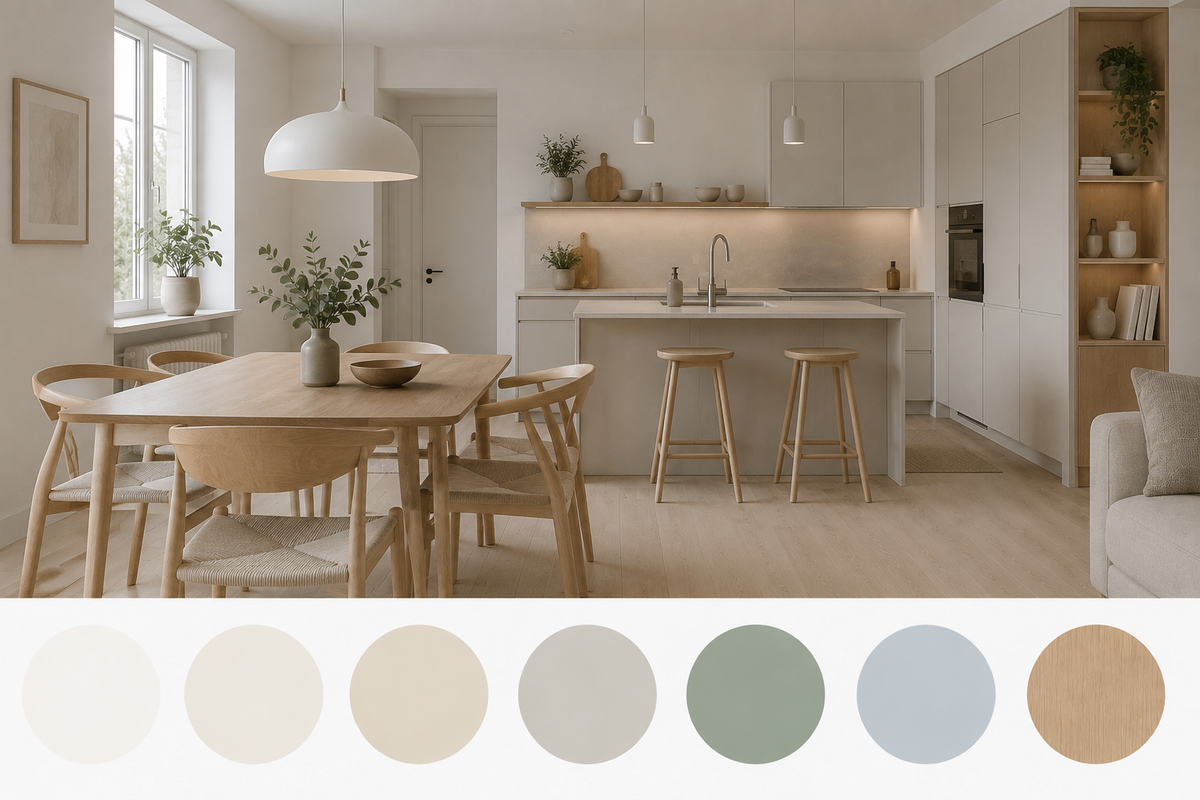 Scandinavian Interior Design colors
Materials
Natural materials are at the heart of Scandinavian interior design. Rather than relying on decorative finishes or bold patterns, the style celebrates materials that age beautifully and develop character over time.
The goal isn't to create luxury through expensive finishes, but to create warmth through authenticity.
Wood
Wood is undoubtedly the defining material of Scandinavian interiors.
Light species such as oak, ash, birch and pine are used extensively for flooring, furniture and cabinetry, bringing warmth while maintaining the bright appearance that characterises the style.
Instead of hiding the grain beneath heavy stains or glossy finishes, Scandinavian design allows the natural beauty of timber to remain visible.
The result is an interior that feels calm, honest and connected to nature.
Stone
Stone plays a more subtle role than wood but is becoming increasingly common in contemporary Scandinavian homes.
Natural stone is often introduced through kitchen worktops, coffee tables or decorative accessories, adding texture and durability without overwhelming the space.
Its quiet appearance complements timber beautifully while bringing balance to lighter interiors.
Textiles
Soft textiles are essential for creating the sense of comfort Scandinavian homes are known for.
Linen, cotton, wool and bouclé add warmth while introducing texture that prevents neutral interiors from feeling flat.
Rather than using bold prints, Scandinavian interiors rely on the richness of natural fibres to create visual interest.
Ceramics and Glass
Handcrafted ceramics and simple glass objects reflect the Scandinavian appreciation for craftsmanship.
Slight imperfections, subtle textures and handmade finishes give decorative pieces a sense of authenticity that perfectly complements the simplicity of the surrounding architecture.
Design Lens
Scandinavian interiors don't hide the beauty of natural materials. They allow them to become part of everyday life.
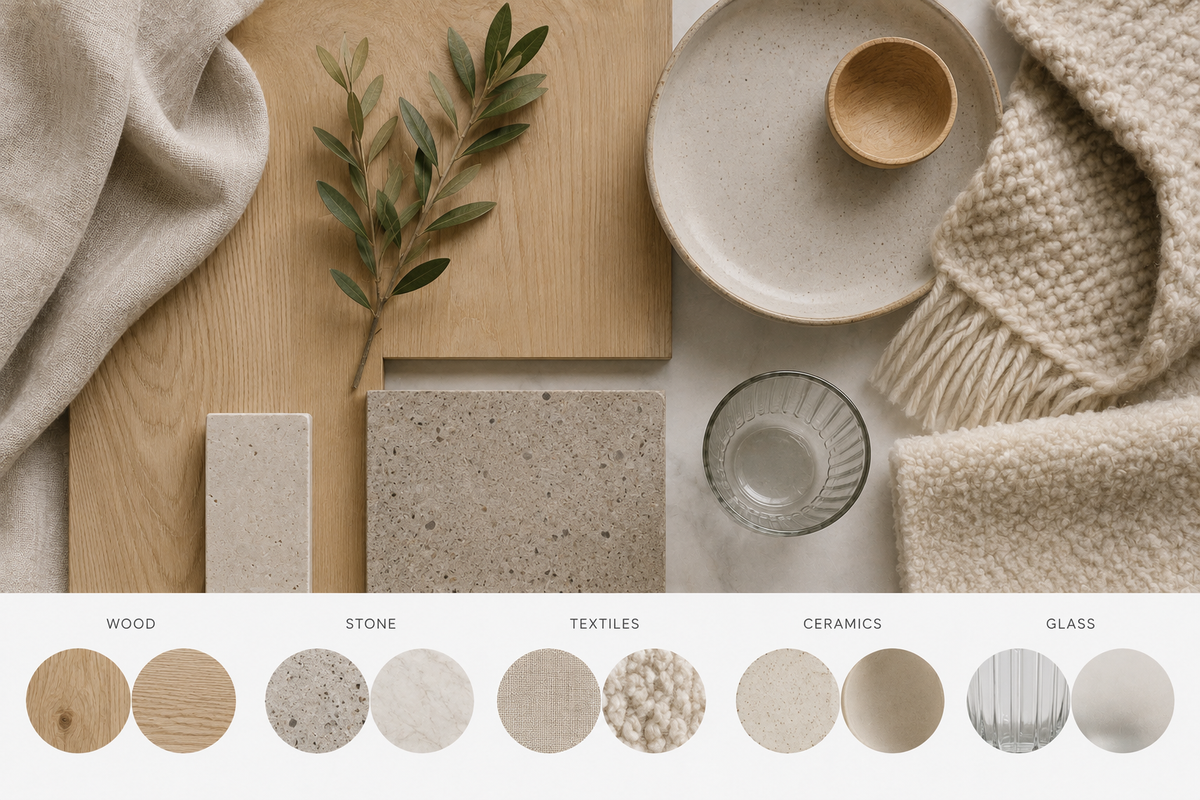 Scandinavian Interior Design materials
Furniture
Scandinavian furniture has become recognised worldwide for combining beauty with practicality.
Rather than following passing trends, it focuses on timeless proportions, quality craftsmanship and everyday comfort.
Clean, Lightweight Forms
Furniture typically features simple silhouettes with slim legs, rounded corners and carefully balanced proportions.
These lighter forms help interiors feel open and spacious, particularly in smaller homes where natural light is especially valuable.
Functionality
Every piece of furniture should have a purpose.
Storage solutions are practical without appearing bulky, dining tables are designed for everyday use and sofas prioritise comfort just as much as appearance.
Good Scandinavian design is never purely decorative.
Timeless Design
One of the reasons Scandinavian furniture remains so popular is its longevity.
Simple forms and natural materials rarely feel outdated, allowing well-designed pieces to stay relevant for decades rather than seasons.
Instead of replacing furniture frequently, Scandinavian interiors encourage investing in fewer, better-made pieces.
Design Lens
Scandinavian furniture proves that good design doesn't need to shout. It quietly improves everyday life.
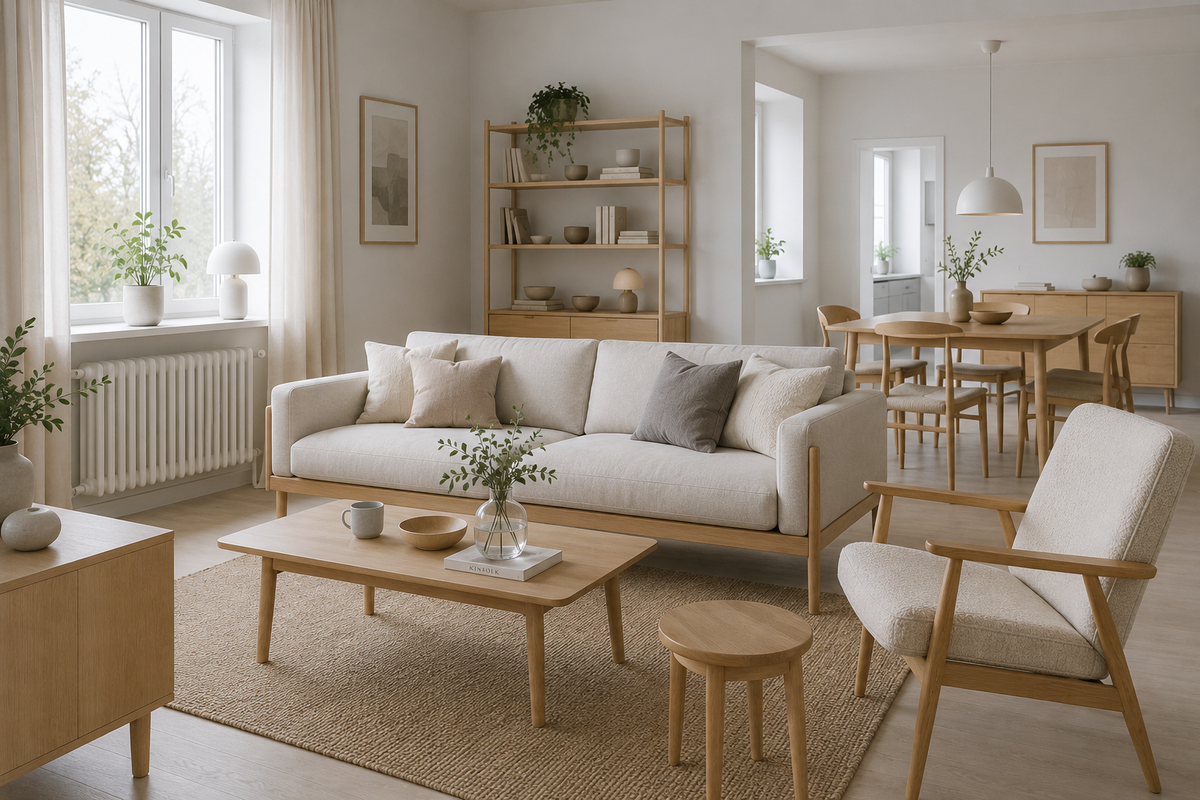 Scandinavian Interior Design furniture
Lighting
Lighting has always played an essential role in Scandinavian homes.
With limited daylight during much of the year, artificial lighting becomes just as important as natural light in creating comfortable living spaces.
Instead of relying on a single ceiling fixture, Scandinavian interiors typically combine multiple light sources throughout the room.
These often include:
- ceiling lighting,
- table lamps,
- floor lamps,
- wall lights,
- candles or soft decorative lighting.
Layering light creates a warm atmosphere while allowing different moods throughout the day.
Colour Temperature
Warm lighting between 2700 K and 3000 K complements natural materials particularly well.
It enhances the colour of wood, softens shadows and creates the cosy atmosphere that Scandinavian interiors are known for.
Lighting as Part of the Interior
Lighting fixtures are chosen just as carefully as furniture.
Simple pendant lights, sculptural floor lamps and understated table lamps often become design features in their own right while maintaining the restrained elegance of the overall space.
Decorative Objects
Decorative objects complete a Scandinavian interior without overwhelming it.
Rather than filling shelves with accessories, the focus is on choosing a few meaningful pieces that contribute to the atmosphere of the room.
Typical Scandinavian decorative objects include:
- handcrafted ceramic vases,
- decorative trays,
- candles,
- linen textiles,
- books,
- artwork,
- indoor plants.
Natural materials remain the common thread.
Leaving space around decorative objects is just as important as selecting them, allowing each piece to become part of a calm and balanced composition.
Design Lens
Scandinavian interiors aren't defined by how many decorative objects they contain, but by how thoughtfully each one has been chosen.
Common Mistakes
Scandinavian interiors may appear simple, but achieving the right balance requires careful planning. The style isn't defined by white walls alone. Its character comes from the relationship between light, natural materials and everyday functionality.
Creating a Space That Feels Too Cold
White is an important part of Scandinavian design, but using too much of it without introducing warmth can make a room feel sterile rather than inviting.
Natural timber, soft textiles and warm lighting help create the cosy atmosphere the style is known for.
Replacing Natural Materials
Substituting real wood, linen or wool with synthetic alternatives often removes much of the warmth that defines Scandinavian interiors.
Natural materials develop character over time and contribute to the relaxed, authentic feeling of the space.
Using Too Many Decorative Objects
Scandinavian interiors are comfortable, but never cluttered.
A few carefully selected accessories create a stronger impression than shelves filled with decorative items.
Leaving empty space around objects allows each piece to stand out while maintaining the calm appearance of the room.
Choosing Cold Lighting
Cool white lighting can make timber appear lifeless and reduce the sense of comfort.
Warm lighting around 2700–3000 K complements natural materials far better and creates the inviting atmosphere associated with Scandinavian homes.
Prioritising Style Over Comfort
Beautiful furniture should also be enjoyable to use.
An elegant chair that isn't comfortable or a dining table that's too small for everyday life goes against one of the core principles of Scandinavian design—creating homes that genuinely improve daily living.
Design Lens
Scandinavian interiors aren't designed to look perfect. They're designed to feel like home.
How to Create a Scandinavian Interior on a Budget
One of the reasons Scandinavian design has become so popular is that it doesn't depend on expensive materials or luxury furniture.
A calm, functional interior can be created gradually by focusing on the right priorities.
Start with a light, neutral foundation.
White or warm beige walls, natural wood furniture and simple lighting create a timeless base that can easily evolve over time.
If you're updating an existing room, even small changes can make a noticeable difference.
Consider:
- replacing cool lighting with warm lighting,
- introducing linen or cotton textiles,
- reducing visual clutter,
- adding larger indoor plants,
- replacing plastic accessories with natural materials,
- choosing fewer but higher-quality decorative objects.
Scandinavian interiors rarely become better by adding more.
They improve by creating balance.
How Decorative Objects Complete Scandinavian Interiors
Decorative objects bring warmth and personality to Scandinavian homes.
Rather than acting as the main attraction, they help reinforce the calm atmosphere created by natural materials and thoughtful design.
Handcrafted ceramics, decorative trays, wooden bowls, candles and sculptural lighting all complement the style beautifully.
Indoor plants also play an important role by strengthening the connection between the home and nature.
The key is restraint.
Giving decorative objects enough surrounding space allows each piece to contribute to the room without creating unnecessary visual noise.
Design Lens
Scandinavian interiors feel welcoming not because they contain more decoration, but because every object has a purpose.
Frequently Asked Questions
What defines Scandinavian interior design?
Scandinavian interior design combines simplicity, functionality and natural materials. Bright interiors, practical furniture and warm, comfortable spaces are its defining characteristics.
What colours work best in Scandinavian interiors?
White, warm white, soft beige, light grey and pale natural wood tones create the classic Scandinavian palette. Black is often introduced as a subtle accent.
What type of wood is most commonly used?
Oak, ash, birch and pine are among the most popular choices. Their light appearance helps interiors feel brighter while maintaining a strong connection to nature.
Is Scandinavian design suitable for small apartments?
Yes.
Light colours, functional furniture and efficient storage solutions make Scandinavian design particularly well suited to smaller homes.
Can Scandinavian interiors be combined with other styles?
Absolutely.
Scandinavian interiors work especially well with Japandi, Modern and Organic Modern design because they share similar values of simplicity, craftsmanship and natural materials.
Is Scandinavian interior design minimalist?
Not exactly.
Although Scandinavian interiors avoid unnecessary clutter, their goal isn't minimalism. Comfort, warmth and everyday functionality are just as important as simplicity.
Does a Scandinavian interior have to be completely white?
No.
While bright colours remain characteristic of the style, warm beiges, soft greys and natural wood tones are equally common. The goal is to create a light, harmonious atmosphere rather than an entirely white interior.